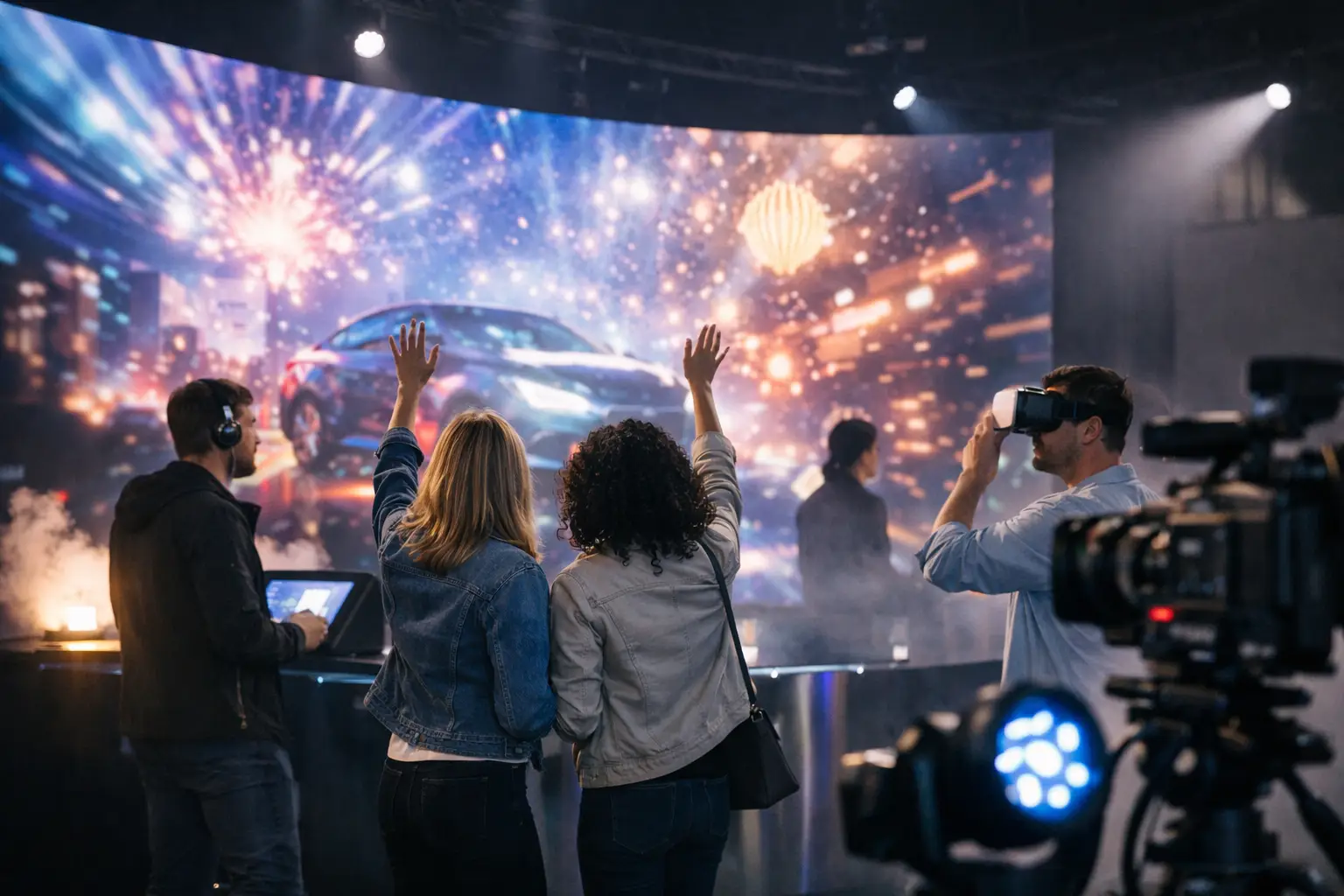
A great brand activation can lose its impact in seconds if guests cannot hear the host, see the content or understand where to go next. AV for brand activations is not simply a matter of putting speakers and screens in a room. It is the production layer that makes a campaign feel credible, energetic and worth sharing.
Whether you are launching a product, opening a new location, hosting a charity partnership or taking a pop-up experience on the road, every technical choice affects how people experience the brand. The strongest activations make the technology feel effortless to the guest, while the planning behind it is anything but casual.
Start with the guest journey, not the equipment list
The brief should begin with a simple question: what do you want people to do, feel or remember? A product demonstration needs clear speech and close-up visuals. A high-energy public event may need DJ-led music, intelligent lighting and a focal point that draws people in from across the venue. A corporate launch may require a more controlled environment, with presentation playback, radio microphones and discreet production support.
This is why a standard AV package is rarely the right answer. The venue, audience size, event timing and campaign objective all matter. An activation in a busy shopping centre has very different sound challenges from an invite-only evening in a hotel function suite. Outdoors, wind, daylight, power access and weather protection become part of the technical plan. Indoors, sightlines, room acoustics and existing lighting can determine what will actually work.
A production partner should ask about the audience flow as well as the running order. Where will people first encounter the activation? Where will the key message be delivered? Is there a queueing area, a stage moment, a photo opportunity or a live demonstration? These details shape the placement of speakers, screens, lighting and microphones far more effectively than choosing equipment from a catalogue.
Clear sound earns attention
Poor audio is one of the quickest ways to make a polished campaign feel underprepared. If a presenter is difficult to hear, guests disengage. If music is harsh or overpowering, conversations stop and staff struggle to speak to visitors. If sound spills too far beyond the activation area, venue management may ask for levels to be reduced at exactly the wrong moment.
Professional sound design is about coverage and control. The aim is for the right people to hear the right content at a comfortable level, without creating unnecessary noise elsewhere. This may mean using multiple smaller speakers rather than one powerful system, positioning equipment around the audience area, or using a compact line-array solution for a larger space.
Microphone choice also matters. A headset can give a demonstrator the freedom to move, while a handheld wireless microphone may suit a host taking audience questions. For panel discussions, lapel microphones can maintain a clean stage appearance, although they need careful fitting and sound checks. Reliable radio systems, properly coordinated frequencies and spare batteries are not glamorous details, but they are the difference between a confident live moment and an awkward interruption.
At The Grind Events Hire, professionally maintained systems from recognised production brands are selected around the event rather than treated as an add-on. That approach gives organisers a better result than simply hiring the biggest speakers available.
Visuals need to work in the real venue
Screens, projection and lighting have a single job: making the brand easier to notice and understand. Yet visual production often fails because it is planned from a desktop mock-up rather than the actual event environment.
A projector can look impressive in a dimmed conference room but disappear under daylight or bright retail lighting. In those conditions, a high-brightness display may be the better option. Conversely, projection can create an immersive backdrop for an evening launch when the surface, ambient light and throw distance have been assessed properly.
Content should be designed for the distance at which guests will view it. Fine text, low-contrast graphics and lengthy slides do not translate well in a busy venue. Keep core messages large, concise and visible from the most likely viewing position. If the activation includes video, check that it has been supplied in an appropriate format and that any audio is accounted for in the show plan.
Lighting deserves the same attention. Brand-coloured uplighting can transform an otherwise plain room, while moving fixtures can build anticipation around a reveal, performance or announcement. The best use of lighting is purposeful. It directs attention, supports photography and gives the event a distinct atmosphere without making the space feel like a nightclub when the brief calls for a premium corporate finish.
Build a stage picture worth photographing
Brand activations are increasingly experienced through guests' phones. The backdrop, stage, product plinth and lighting need to look considered from camera height as well as from the front row. Avoid placing a key branded area against cluttered venue furniture, exposed cables or a bright window.
A tidy technical finish is part of the brand experience. Cable management, appropriately positioned speaker stands, neat screen placement and equipment that is clean and well maintained all communicate care. Guests may not name those details, but they notice when they are missing.
Plan for live moments, not just opening time
The most valuable moments in an activation are often live: a product reveal, a founder's speech, an influencer appearance, a prize draw or a scheduled performance. These moments need a clear cueing plan. Who introduces the speaker? What music plays as they enter? Does the screen change at the right point? Who has the final version of the presentation?
A short production schedule prevents avoidable confusion. It does not need to be complicated, but it should identify timings, content cues, microphone handovers, lighting changes and the person authorised to make decisions on site. For larger campaigns, a dedicated technician can operate sound, playback and lighting while the brand team focuses on guests and delivery.
There is a trade-off here. A simple activation with a single presenter may not need a full control position or extensive crew. A public launch with several contributors, video content and a packed audience almost certainly does. Cutting technical support can appear to save money, but it often shifts pressure onto marketing staff who should be managing the campaign, not troubleshooting a laptop connection.
Reliability is part of the creative brief
Brand teams rightly focus on appearance and engagement, but reliability should carry equal weight. Equipment should be PAT tested, insured and checked before it reaches site. Public-facing events also require sensible cable routing, stable mounting and safe power distribution. These are practical standards that protect guests, venues and the reputation of the organiser.
Always allow time for access, set-up and testing. A venue that opens at 6 pm does not mean production can arrive at 5.30 pm. Screens need positioning, sound needs checking with the room occupied where possible, and content needs testing from the actual playback device. If Wi-Fi is essential to an interactive element, test it early and have a fallback plan. Venue networks can be restricted, overloaded or unreliable.
Contingency is not pessimism. It is professional event planning. Spare microphones, backup playback files, alternative presentation connections and a clear escalation contact reduce the chance that a minor fault becomes visible to every guest.
Measure the experience, not just the footfall
Footfall matters, but it does not tell the full story. Consider whether guests stayed long enough to hear the message, whether they participated, whether the product was clearly demonstrated and whether the visual setup encouraged content creation. AV can support these outcomes by making key moments audible, visible and easy to follow.
After the event, gather feedback from the event team, venue and guests. Ask where people congregated, whether speeches were clear, which content attracted attention and whether any part of the space felt underused. Those observations make the next activation sharper and more efficient.
The best technical production does not compete with the campaign for attention. It gives the campaign a confident platform, lets the team focus on people and leaves guests with a clear reason to remember what they saw. Start the AV conversation early, and the practical decisions will support the creative idea rather than limit it.