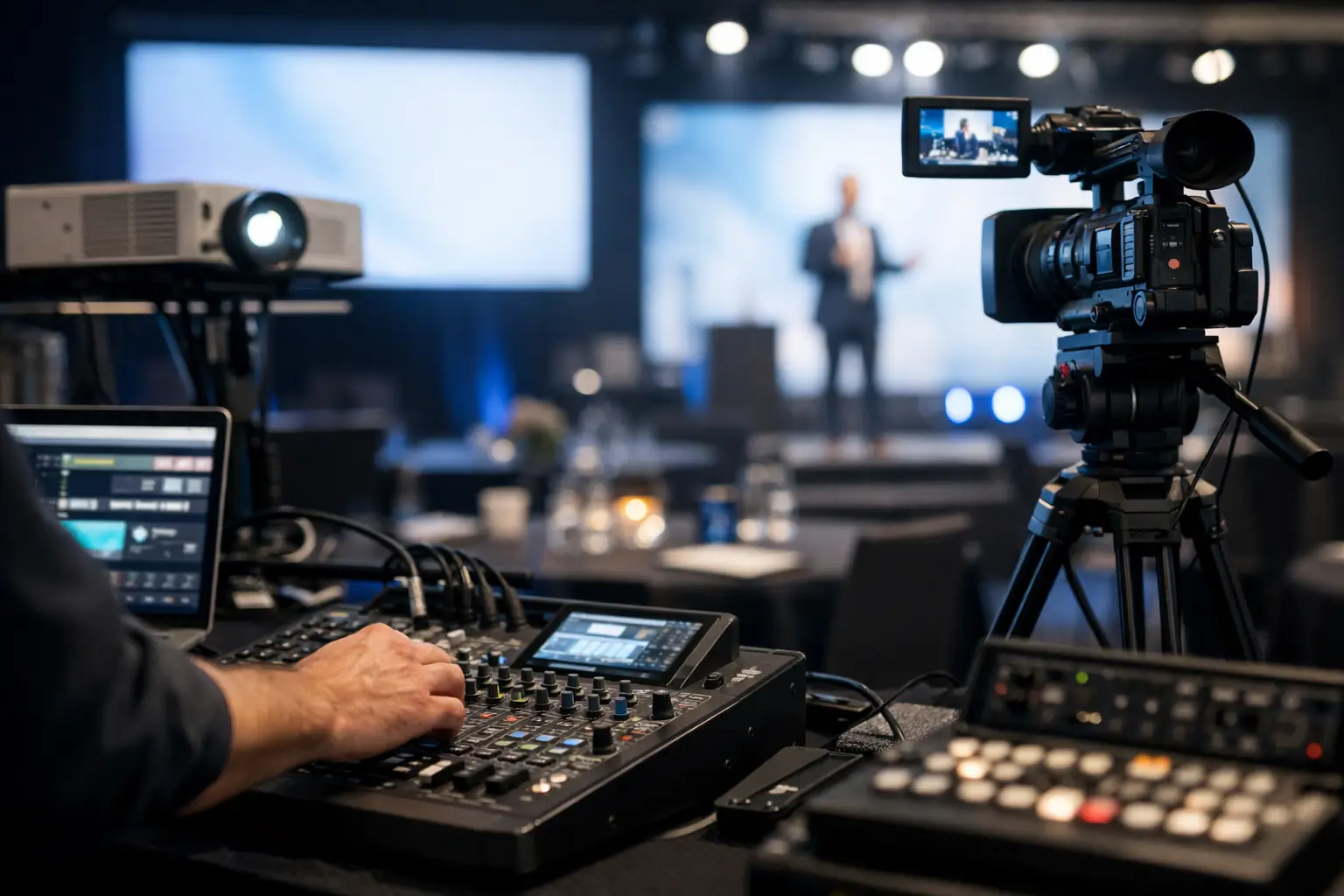
A corporate event can have a strong agenda, a well-chosen venue and an impressive guest list, then still fall flat because the room cannot hear the speaker or see the content on screen. AV hire for corporate events is not simply a matter of putting a projector and a few speakers in a room. It is the production behind clear communication, confident presenters and a polished experience for every guest.
Whether you are planning a company conference, awards evening, product launch, training day or staff celebration, the right technical setup should make the event feel effortless. The audience should hear every word, see every detail and remain focused on the message rather than the mechanics.
Start with the outcome, not the equipment
The best AV specification starts with what the event needs to achieve. A board presentation for 30 people has very different requirements from a 300-person awards dinner with walk-on music, video stings and live announcements. Asking for "a PA and a screen" may be a useful starting point, but it does not reveal the room layout, content format, speaker count or level of production support required.
Consider the guest journey from arrival to close. Will guests enter to branded visuals and background music? Is there a keynote speaker, panel discussion or video presentation? Will awards winners need a microphone at the lectern, and will music or lighting need to cue each moment? These details determine whether a compact sound system is sufficient or whether the event needs a managed production package.
A good supplier will ask practical questions before recommending equipment. Venue dimensions, ceiling height, daylight levels, audience numbers, seating style and the location of power all affect the result. This consultation avoids the two common problems of corporate AV: equipment that is too limited for the room, or a complicated system that brings no meaningful benefit.
Sound that supports the message
Speech intelligibility is usually the first priority. Guests should not have to lean forward to hear a presenter, and presenters should not need to raise their voice over air conditioning, table conversation or noise from an adjoining bar. Quality loudspeakers, correctly positioned and properly tuned for the room, are far more valuable than simply adding volume.
The microphone choice matters just as much. A handheld wireless microphone works well for audience questions, awards announcements and presenters who prefer to move freely. A lapel or headset microphone can be the better choice for a keynote speaker who needs both hands available or wants to move around the stage. For a panel, each person needs a reliable microphone, not one unit passed along a table while valuable discussion is lost.
Professional wireless systems also need planning. Radio frequencies must be coordinated, particularly in busy venues or when several wireless microphones are in use. This is one reason corporate AV should be managed by people who understand the full system, rather than treated as a box of equipment collected on the day.
The room changes the sound
A sound system that performs brilliantly in a hotel suite may need a different approach in a warehouse, school hall or exhibition space. Hard surfaces can make speech echo, low ceilings can create unwanted reflections and an unusually shaped room may require speakers in more than one position. The aim is consistent coverage across the audience, not a loud front row and a quiet back row.
Premium systems from recognised production brands, such as KV2 Audio and Allen & Heath, give an experienced technician the control and clarity needed for professional events. However, the brand badge alone is not the answer. Correct design, setup and operation are what turn quality equipment into a quality experience.
Make visual content visible from every seat
Screens and projection are often chosen too late, after the venue and seating plan have already been fixed. Yet visual content has a direct effect on audience engagement. A screen that is too small, too dim or blocked by guests' heads can make even the strongest presentation difficult to follow.
For daytime conferences and rooms with substantial natural light, a bright display or LED screen may be more suitable than projection. In a darker function room, a professional projector and correctly sized screen can create an excellent result. It depends on the ambient light, screen position, budget and the style of content being shown.
Presentation content also deserves a technical check before guests arrive. Small text, low-resolution images and unfamiliar fonts can look acceptable on a laptop but fail on a large display. Videos should be tested with sound, slide transitions checked and every presenter shown how to advance their content. A backup laptop and appropriate adaptors offer sensible protection against the last-minute surprises that are common at live events.
Lighting creates a professional room
Corporate lighting is not always about making the room dramatic. Often, it is about making the space look intentional. Uplighting can carry brand colours around a plain venue, stage lighting can ensure speakers are visible in photographs and carefully controlled lighting can shift the atmosphere from a daytime conference to an evening awards dinner.
There is a balance to strike. Lighting should support a brand, not overpower it. A formal investor event may need clean, restrained stage lighting, while a product launch or staff celebration may suit more movement, colour and energy. The same principle applies to special effects: they can create a memorable reveal or awards moment when they are relevant, safe and properly timed, but they should never distract from the event's purpose.
Lighting control is particularly valuable when an event has several transitions. Walk-on music, a video reveal, an award announcement and a change in stage colour can be programmed and called as one coordinated sequence. That level of preparation helps the evening feel composed rather than improvised.
Why on-site technical support matters
Dry hire can be a sensible option for a straightforward meeting where an experienced in-house team is confident operating the equipment. It can also be cost-effective when the specification is simple and the venue already has suitable infrastructure.
For most business-critical events, on-site support offers considerably more peace of mind. A technician can manage setup, test every signal path, support presenters, adjust levels during the event and deal with an unexpected issue before it affects the audience. If a laptop update changes an output setting, a wireless microphone battery runs low or a presenter arrives with a different connection, someone is already there to resolve it.
This support is especially valuable for events with multiple speakers, live video, panel sessions, remote contributors, awards production or a tight running order. The organiser can concentrate on guests, content and stakeholders rather than standing beside the mixing desk with a spare HDMI cable.
Build reliability into the plan
Corporate clients rightly expect professional standards. Equipment should be maintained, insured and PAT tested, with suitable public-liability cover held by the supplier. These are not minor administrative details. They provide reassurance to venues, event managers and procurement teams that the production is being delivered responsibly.
Reliability also means allowing enough time. A complex setup should not be delivered minutes before doors open. Access times, loading arrangements, cable routes, rigging permissions and venue restrictions should be confirmed in advance. Where possible, soundchecks and presentation tests should happen before the room fills.
It is also worth planning for contingencies. A duplicate presentation file, spare microphone, backup playback device and alternative cable route may never be needed, but they can protect an event when something changes at short notice. Professional production is often judged by the problems guests never see.
Choosing AV hire for corporate events
When comparing suppliers, look beyond a headline price or a list of equipment. Ask who will design the system, who will install it, whether a technician will remain on site and how issues will be handled if the schedule changes. The answers reveal whether you are hiring equipment or appointing a production partner.
The Grind Events Hire provides corporate AV support with professional sound, lighting, microphones, projection and hands-on technical management for events across North Lincolnshire and beyond. With more than 15 years of operational experience, the focus is on dependable equipment, clear planning and a presentation that reflects well on your organisation.
The right AV setup should leave guests talking about the ideas, the people and the occasion - not the screen they could not see or the speaker they could not hear. Plan early, share the running order and choose support that gives your team confidence from the first soundcheck to the final applause.