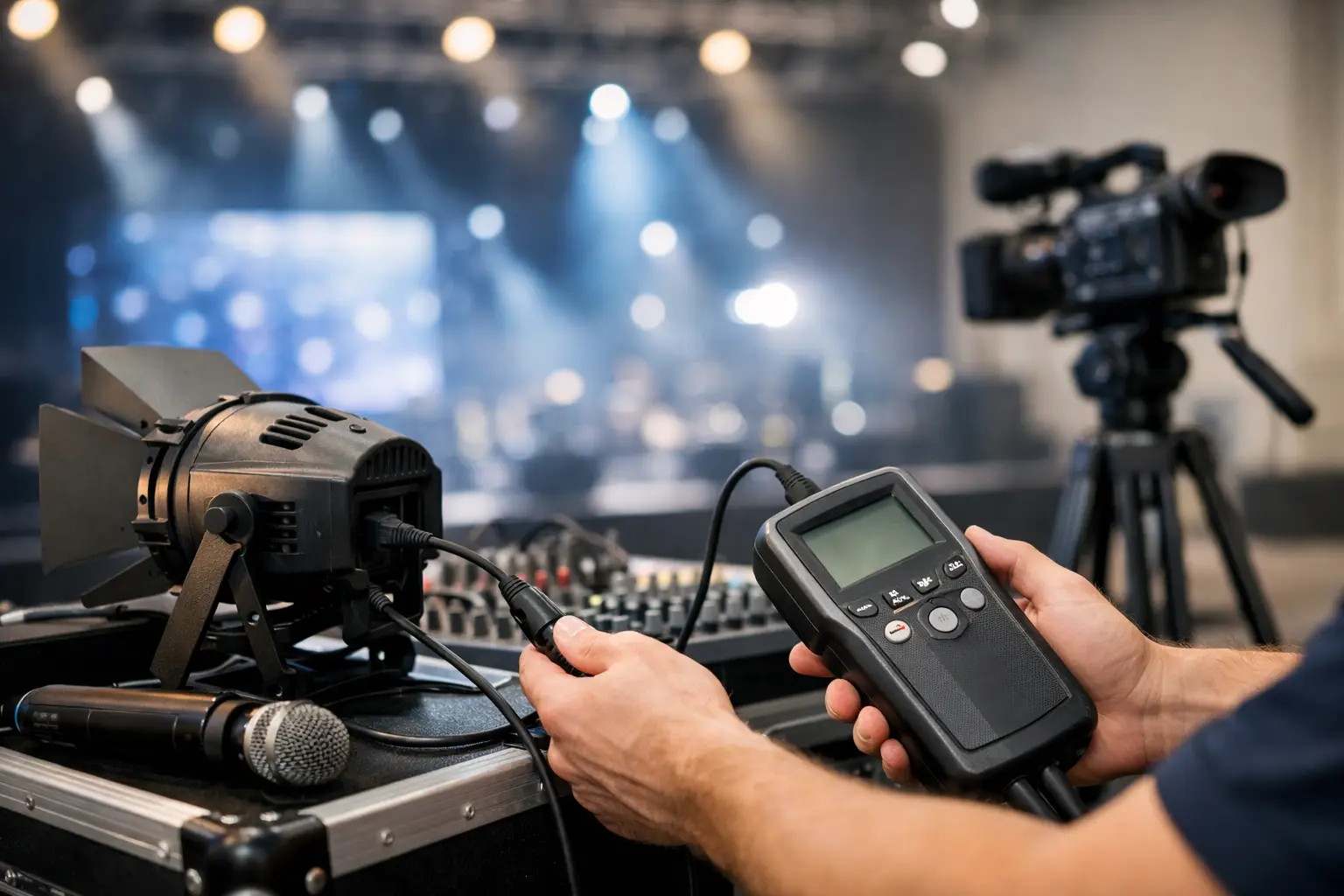
A sound system that cuts out during speeches, a damaged power lead behind a stage or a lighting fixture with an unseen fault can quickly turn a well-planned event into a difficult one. AV PAT testing is one of the practical checks that helps prevent those problems before guests arrive. For event organisers, venues and production teams, it is not merely paperwork - it is evidence that electrical equipment has been inspected, tested and maintained with care.
At The Grind Events Hire, the standard is simple: professional quality, every event. That means premium sound, lighting and AV equipment must look the part, perform properly and be supplied in a condition that supports a safe, dependable event.
What AV PAT testing actually covers
PAT stands for Portable Appliance Testing. In an AV setting, it applies to portable electrical equipment and its leads, plugs and connectors. This can include PA systems, amplifiers, powered speakers, mixing desks, DJ equipment, projection equipment, lighting fixtures, haze machines, chargers, extension leads and distribution equipment.
A competent inspection generally combines two elements. First comes a visual check, which can identify obvious damage such as a cracked plug, exposed wiring, loose connectors, overheating marks or a cable that has been crushed in transit. The tester then carries out appropriate electrical tests, depending on the class and type of appliance, to assess whether it is safe to remain in use.
The result is usually recorded and the item is labelled to show its test status. For a client or venue, that label is useful at a glance. The record behind it matters just as much, particularly where several items are being installed across a function room, school hall, outdoor site or corporate venue.
PAT testing is not a legal shortcut
There is a common misconception that every portable appliance must be PAT tested annually by law. The legal duty is broader and more practical than that. Those responsible for electrical equipment must ensure it is maintained in a safe condition. PAT testing is a recognised way to help demonstrate that duty has been taken seriously, alongside routine visual inspections, sensible maintenance and proper records.
How often equipment should be tested depends on risk. A projector permanently installed in a low-traffic meeting room has a different risk profile from a black extension lead repeatedly loaded into a flight case, uncoiled across a busy dancefloor and used at different venues each weekend. Equipment that travels, is handled by multiple people or operates in demanding environments should be checked more closely.
This is why a blanket testing interval is not always the best approach. A professional supplier should assess equipment use, condition, environment and previous findings rather than treating a sticker date as the only measure of safety.
Why event AV needs particular attention
Event production equipment works hard. It is transported, built, packed down and moved again. Cables are routed around furniture, stands are adjusted, power is distributed across a room and equipment may operate for many hours at a time. Even high-quality products from trusted names such as KV2 Audio, Allen & Heath, Sennheiser, Pioneer DJ and Avolites need disciplined handling and maintenance.
The points of failure are often straightforward. A mains lead can be trapped under a case lid. A plug can be damaged when a cable is pulled rather than disconnected correctly. A connector can become loose after repeated use. A lighting fixture might pass an electrical test but still need attention because its mounting point, safety bond or casing has been damaged.
That last point is worth stressing. PAT testing is one part of an overall safety process, not a substitute for competent event production. Safe AV provision also depends on correct load management, suitable cabling, stable speaker and lighting positions, cable protection, ventilation, secure rigging where applicable and a technician who can spot issues before they affect the event.
What organisers and venues should ask for
You do not need to become an electrical expert to appoint an AV supplier responsibly. A short, sensible conversation before booking can establish whether the supplier works to the standards your event requires.
Ask whether equipment is routinely inspected and PAT tested, whether current records can be provided if your venue requests them, and whether the supplier carries appropriate public-liability insurance. If your event involves multiple rooms, a stage, outdoor power or a busy public area, ask who is responsible for the final installation and cable management.
For schools, charities, corporate teams and venue operators, this information may form part of internal risk assessment or supplier approval. For a wedding or private party, it provides a different but equally valuable benefit: peace of mind. The organiser can focus on guests, timings and the occasion itself rather than wondering whether the sound system will work safely when it matters.
Be cautious about comparing suppliers on price alone. Dry hire may suit an experienced client with a straightforward setup, but the apparent saving can disappear if equipment arrives without the necessary support, suitable power leads or clear compliance information. Managed production costs more in some cases because it includes expertise, preparation, delivery, setup and accountability. The right choice depends on the scale of the event and the confidence of the team on site.
The difference between a label and a maintenance culture
A pass label is reassuring, but it should never be the only sign that equipment is professionally managed. Good AV maintenance starts long before test day. It includes keeping cases clean and dry, coiling cables correctly, replacing worn items promptly, checking connectors after every job and keeping equipment protected during transport.
It also means taking a failed item out of service immediately. A faulty lead should not be set aside for a future job or used because there is no spare available. In a well-run inventory, replacement stock and planned maintenance protect both safety and service continuity.
For event clients, this approach is visible in the small details. Equipment arrives clean and presentable. Cables are tidy and appropriately routed. Speakers are positioned for coverage rather than simply volume. Technicians can answer practical questions without making the setup feel complicated. These are signs of a supplier that treats reliability as part of the service, rather than an afterthought.
Records matter when plans change
Events do not always run to the original plan. A corporate presentation may need an additional screen. A school production may add radio microphones in the final rehearsal. Rain may require an outdoor activation to move indoors. When equipment changes at short notice, accurate records help the production team retain control of what is being deployed and whether it is suitable for use.
Clear asset identification and test records are especially useful for larger installations. They support fault finding, replacement decisions and insurance requirements, while giving venues confidence that temporary equipment entering their building has been properly maintained. They also reduce avoidable delays at load-in, when a venue manager asks for proof of testing or wants to confirm the electrical setup.
A safer event starts before setup day
AV PAT testing is most effective when it forms part of a wider professional process: equipment selected for the job, checked before dispatch, installed competently and supported by people who understand both the technology and the event around it.
For organisers, the practical message is straightforward. Choose an AV partner that can explain its standards clearly, provide the documentation your venue needs and take responsibility for the details that guests should never have to notice. When the lights come up, the microphones are clear and the room sounds right, that preparation has done exactly what it should.