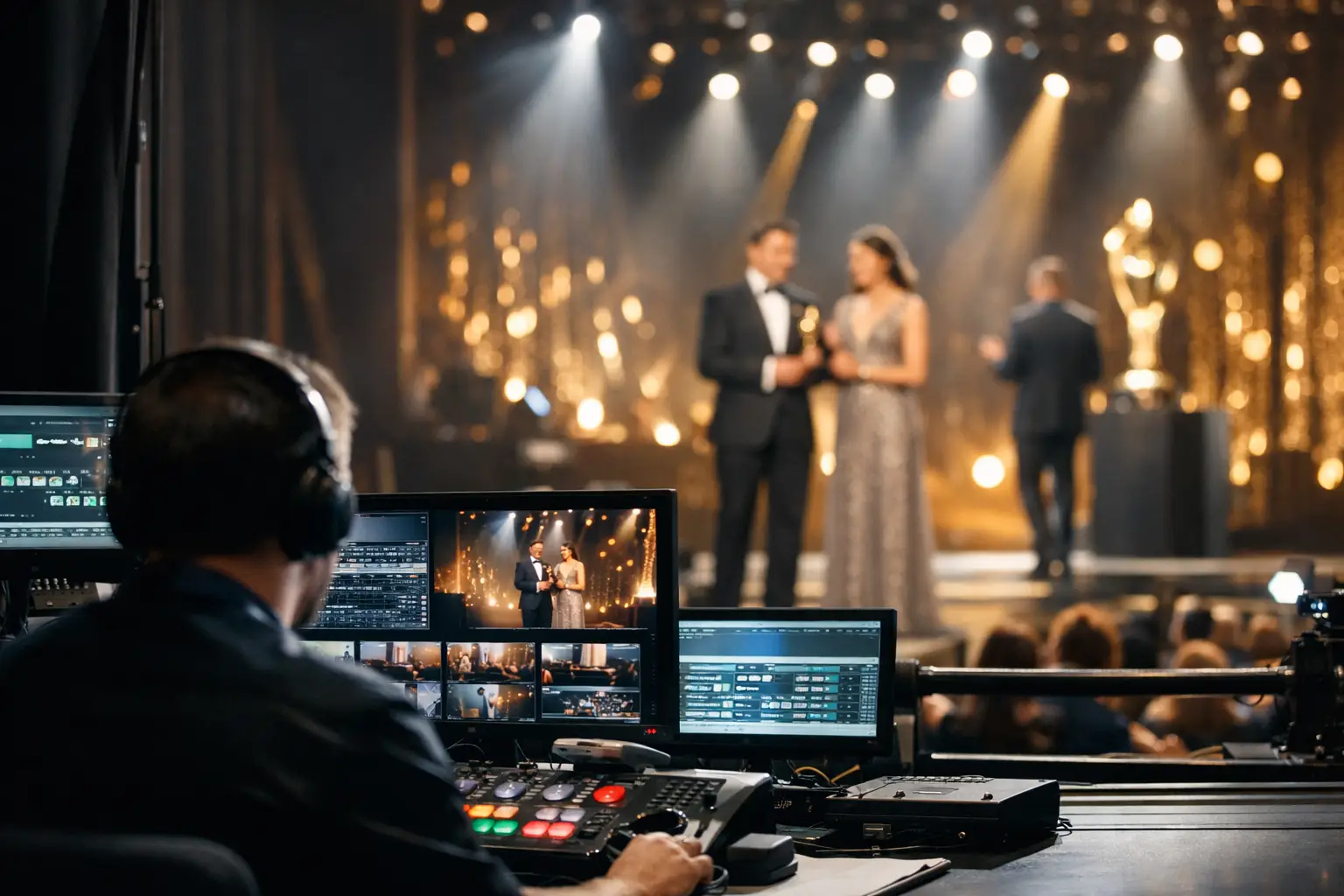
An awards evening can change tone in a second. A walk-on track starts late, a winner cannot hear their name, or a presentation stalls while somebody searches for the right slide. Good award ceremony production prevents those moments before guests enter the room, so the focus remains exactly where it belongs: on recognising people, teams and achievements.
Whether you are organising a company awards night, school presentation evening, charity gala or sports club celebration, the production should make the occasion feel considered and credible. That does not always mean the biggest screen or the most lighting fixtures. It means choosing the right technical approach for the venue, audience, running order and atmosphere you want to create.
What professional award ceremony production should deliver
A successful ceremony has two jobs. It needs to look impressive in the room, while allowing presenters, winners and organisers to work confidently under pressure. Clear speech is non-negotiable. Guests at the back of the room must hear every nomination and acceptance speech without straining, and presenters need microphones that are easy to use and dependable throughout the evening.
Visuals matter just as much. Award category slides, sponsor recognition, nominee photographs and winner announcements need to be sharp, correctly formatted and shown at the right moment. In a bright function suite, a projector that looked adequate on paper may not have enough output to cut through ambient light. In a larger venue, one screen may leave half the room with a poor view. The best answer depends on the space, sightlines and content, not simply a standard package.
Lighting gives the ceremony its sense of occasion. A controlled stage wash lets guests see presenters clearly, while intelligent lighting, uplighting and carefully timed effects can build anticipation before major awards. The aim is polish rather than distraction. If lighting is too busy during speeches, it competes with the person being recognised. If it is too flat, the photographs and stage presence can suffer.
Behind all of this is a production team with a detailed cue plan. Music, walk-ons, videos, slides, microphones and lighting changes should be called and operated as one coordinated show. That is the difference between equipment being present and a ceremony being professionally produced.
Start with the room, not the equipment list
Every venue creates different technical challenges. A hotel ballroom may have low ceilings, daylight from one side and limited access for loading. A school hall may need equipment installed around existing stage facilities. A sports venue or marquee can require more extensive power planning, cable management and weather-conscious preparation.
A proper site assessment considers the stage position, guest seating, ceiling height, available power, loading route and fire exits. It also considers how guests will move through the venue. A large speaker placed in the wrong location can block a table plan; loose cables across an entrance are an obvious safety risk. Professional cable routing, secure fixing and sensible equipment placement protect the look of the event as well as its safe operation.
For awards nights with a meal, timing matters too. Tables are often positioned close together, staff are moving around the room and guests may be talking right up to the first announcement. The sound system must provide clear, even coverage without becoming harsh for the people nearest the speakers. Premium loudspeakers and correct system tuning make a noticeable difference here. More volume is rarely the solution to a noisy room. Better coverage and a confident presenter usually are.
Build a running order that leaves room for reality
The running order is the backbone of an awards ceremony. It should cover doors opening, background music, the host introduction, each award category, entertainment breaks, dinner service where relevant, sponsor mentions and the closing moment. But it also needs breathing room.
Winners may take longer reaching the stage than expected. A senior guest may add an unscripted thank-you. A category sponsor may need a prompt before their presentation. Trying to programme every minute to the second can make organisers anxious and presenters rushed. Build short recovery windows into the schedule, particularly around headline awards and live performances.
Each cue should have a clear trigger. For example, a walk-on track may start when the host says, “And the winner is”, rather than when an operator guesses the right moment. Slides should follow a consistent sequence, with a holding graphic before the winner reveal. If a video is included, check its final file format, audio level and duration well before event day. Playing it from a laptop for the first time in front of 300 guests is not a production plan.
A rehearsal is valuable even when time is limited. At minimum, test every microphone, presentation file, video, music cue and clicker. Ask the host to stand where they will present from. Check whether they can see the confidence monitor or main screen without turning away from the audience. These details make speaking feel natural rather than awkward.
The microphone choice shapes the room
For most ceremonies, a handheld wireless microphone is the most flexible option. It can be passed from host to sponsor to winner, and it gives the operator a reliable level of control. A lectern microphone can look formal and works well for prepared speeches, but it demands that presenters stand in the right place and speak towards it.
Headset and lapel microphones can be excellent for a host who needs both hands free, particularly if they are moving around the stage. They are not automatically the best choice, though. Clothing noise, poor positioning and inexperienced fitting can reduce clarity. The right option comes down to the format, number of presenters and how scripted the event will be.
Always plan for the human side of microphones. Tell winners where to stand, who will hand them the mic and when they should speak. A simple stage manager prompt can avoid the familiar pause where a delighted winner reaches the stage and has no idea where to go next.
Make screens and content work together
Awards content should be designed for the furthest guest, not for somebody viewing it on a laptop. Use large type, high-contrast graphics and short lines of text. Sponsor logos, nominee names and category titles must remain readable from across the room. If your brand uses a particular colour palette, test it on the actual display or projection surface. Dark graphics can disappear in a brightly lit venue.
It is also worth agreeing what appears before and after a winner is announced. Some organisers prefer to show all nominees, then reveal the winner on a dedicated slide. Others use a video sting or live camera feed. Both can work well, but they need a clear operator workflow. Last-minute changes to spelling, logos or award order should be controlled through one designated contact, otherwise multiple versions can quickly cause confusion.
Where budgets allow, confidence monitors are a strong investment. These smaller displays face the stage, helping presenters see notes, category titles or nomination details without looking over their shoulder. They are particularly useful in rooms where the main screen is high, wide or positioned behind the stage.
Plan for guests, photography and the finish
The production should support the experience beyond the stage. Arrival music, branded visuals and tasteful room lighting set expectations before the first award begins. During the ceremony, a well-lit presentation area helps photographers capture winners clearly. A dark stage may look dramatic, but it can leave photographs unusable unless the lighting has been designed with cameras in mind.
At the end of the formal section, many events move into entertainment, networking or a DJ set. Planning that transition early avoids an unnecessary reset while guests wait. The same sound system may be suitable for speeches and music, but the lighting, room layout and audio settings will need to change. A production partner can schedule this handover so the event builds rather than loses momentum.
For organisers in Scunthorpe, North Lincolnshire and further afield, The Grind Events Hire can provide the sound, lighting, screens, microphones and hands-on technical management needed to present an awards night with confidence. Professionally maintained equipment, PAT-tested systems and experienced operators mean the technical details are handled with the care a formal occasion deserves.
The most memorable awards ceremonies feel effortless to the audience. That feeling is created through preparation: a room assessed properly, content checked in advance, cues rehearsed, and a technical team ready for the moments nobody can predict. Give the people being celebrated a stage that does them justice.