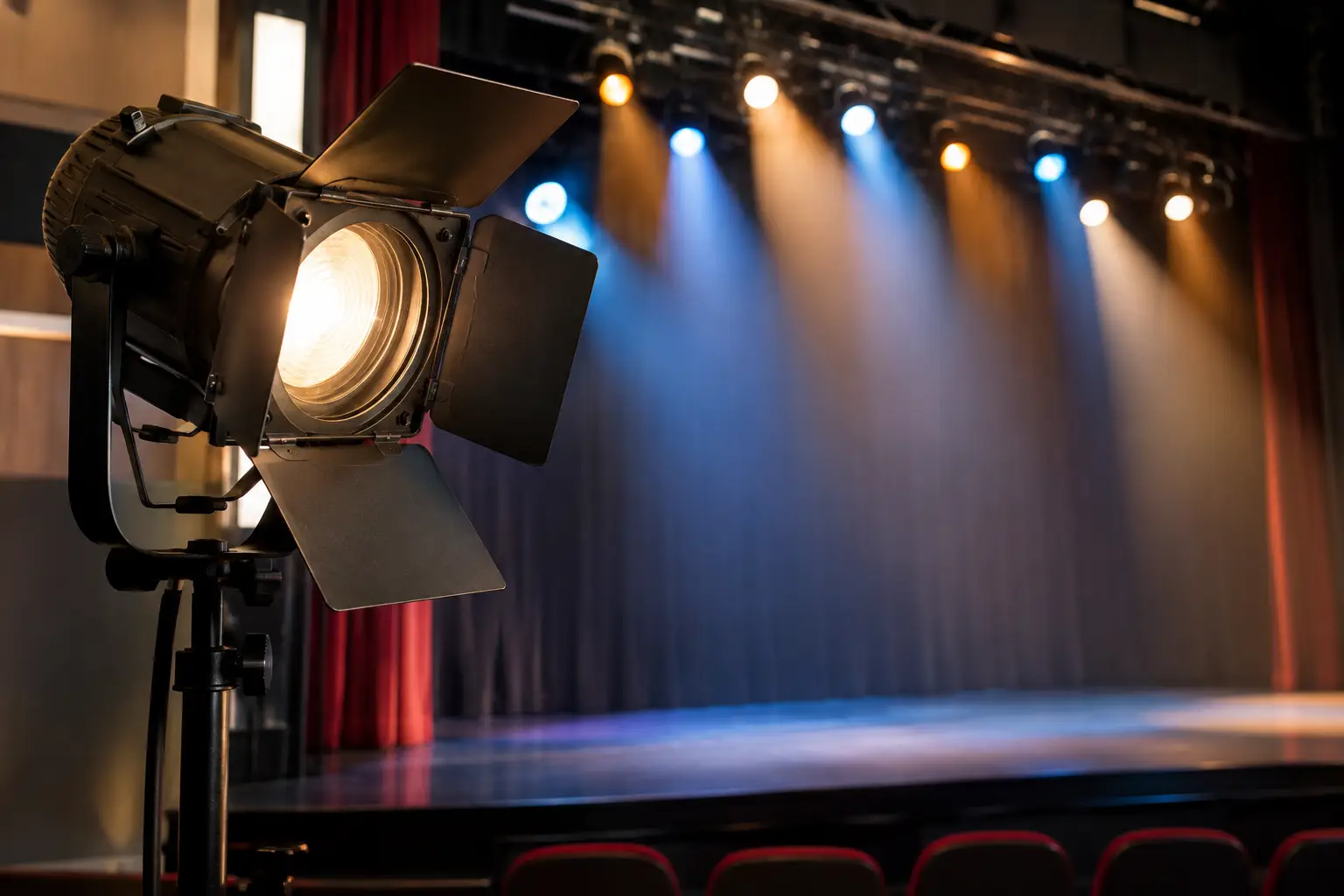
A school hall can look entirely different once the lighting is right. A carefully focused special, a warm wash across the stage and a properly lit backdrop make performers easier to watch and give parents confidence that the production has been treated as a real occasion. The best school production lighting is not necessarily the biggest rig or the most effects-led one. It is the system that serves the show, suits the space and can be operated safely and reliably by the people available.
For most schools, the right approach is a considered production package rather than a collection of bright fixtures. Lighting needs to support performers, scenery, music and movement while fitting within practical limits on budget, power, rigging and rehearsal time.
Start with the performance, not the fixture list
A school musical, a Year 6 leavers' show and an awards evening have very different requirements. The musical may need scene changes, colour transitions and focused acting areas. A concert benefits from energetic backlight and movement that responds to the music. An awards event needs flattering front light, clear visibility at the lectern and a polished stage picture for photographs.
Before choosing equipment, establish the stage dimensions, ceiling height, available rigging points, power supply and whether the room will be blacked out. A drama studio with controllable daylight gives lighting far more impact than a sports hall with bright windows and safety lighting. That does not mean the latter cannot look excellent, but it changes the fixture choice and expectations.
It also pays to decide who will operate the system. A trained technician can run a programmed lighting desk with precise cues throughout the performance. If staff or pupils will be taking the controls, a simpler desk layout and clearly labelled cue stack will usually produce a calmer, more consistent result.
The best school production lighting has four jobs
Good production lighting is built in layers. Each layer has a purpose, and omitting one can make even expensive equipment feel ineffective.
1. Front light makes faces visible
This is the foundation. Performers need even, flattering illumination from the front so the audience can see facial expressions, costumes and action. White front light is often more useful than saturated colour because it preserves natural skin tones and works for photography and video.
Profile fixtures are particularly valuable here. Their shutters allow light to be shaped around the acting area, rather than spilling onto the tabs, floor or audience. In smaller halls, LED profiles can be a practical option because they run cooler and consume less power than older tungsten units.
2. Colour creates place and mood
A controlled colour wash helps establish the world of the scene. Warm amber can suggest a classroom, home or sunset; deep blue can support night-time, winter or a more dramatic moment. The key word is controlled. If every fixture is a different colour at full brightness, performers can disappear and the stage can look untidy.
LED wash fixtures make colour changes straightforward and reduce the need for gel changes between shows. However, quality matters. Cheaper LED fittings can produce uneven skin tones or visible colour shadows. A professionally specified rig uses fixtures with an output and colour mix appropriate for the stage, not just the lowest purchase price.
3. Backlight adds shape and depth
Backlight comes from behind or above the performers and separates them from the backdrop. It gives a stage picture dimension, particularly when costumes or scenery are dark. This is often the difference between a flat-looking school performance and one that feels more theatrical.
Par-style fixtures, LED battens and carefully positioned moving heads can all provide backlight. For a drama-led production, static colour backlight may be all that is required. For a contemporary dance piece or concert, moving fixtures can add pace and impact when used with restraint.
4. Effects support key moments
Haze, gobos, moving beams, strobes and practical effects can be memorable, but they should enhance a moment rather than distract from it. A moving beam effect may lift an opening number; a breakup gobo can turn a plain backcloth into a woodland scene; gentle haze makes beams visible in a concert setting.
There are important caveats. Haze should be discussed with the venue, site manager and anyone responsible for fire systems. Strobes require a clear risk assessment and audience consideration. Effects also need rehearsal time, because an effect triggered at the wrong moment is more conspicuous than no effect at all.
Choosing fixtures for a school hall
There is no single shopping list for every school, but a balanced temporary rig will commonly include front profiles, LED wash fixtures, backlight and a suitable lighting control system. Depending on the event, it may also include moving heads, LED battens, haze and illuminated scenic elements.
The right quantities depend on the width and depth of the acting area. A small 6-metre stage may need two or four front-light positions; a broad school-hall performance area may need more zones to avoid dark patches. It is better to have properly positioned fixtures covering the stage evenly than a large number of lights all aimed at the centre.
Moving heads are often requested first because they look impressive. They can be an excellent addition for concerts, dance showcases and finale moments, but they should not replace the basics. If the audience cannot see the lead performer clearly, additional movement and beams will not solve the problem.
Control is where the show becomes repeatable
Lighting fixtures only fulfil their potential when the control system is planned properly. A professional desk allows cues to be programmed in advance, so each scene can move from one look to the next consistently. Fade times can be set to suit the music or dialogue, and operators are not left trying to recreate colours and brightness levels by eye every night.
For school productions, a cue list should be straightforward enough for the operator to follow under pressure. That means sensible cue names, a rehearsal with the stage manager and a backup plan if a cue is missed. Complex programming has value where the show needs it, but reliability is more valuable than technical showmanship.
Avolites control is widely trusted in live production because it offers the flexibility needed for theatrical cues, music-led looks and more advanced fixture control. The most suitable desk is still the one that matches the rig and the operator's confidence, not simply the most advanced option available.
Safety, power and sightlines cannot be an afterthought
School production lighting involves working at height, electrical distribution and equipment above performers. These are not areas for guesswork. Fixtures should be secured with appropriate safety bonds, stands should be stable and protected from public access, and cable runs should be managed to reduce trip hazards.
Equipment should be PAT-tested and supplied with the relevant documentation. A competent provider will also consider loading, power distribution, emergency access, fire exits and the location of smoke detection. If lighting is being flown or suspended, the venue's structure and approved rigging arrangements need to be understood before the day of the event.
Sightlines deserve equal attention. A light stand placed in the wrong location can block parents' view, while an overly low fixture may shine directly into the audience. A site visit or detailed discussion with plans and photographs helps avoid these issues before installation begins.
Allow time for focus and rehearsal
The most common reason a lighting system underperforms is not the equipment. It is lack of time. Fixtures need to be rigged, focused and programmed before the cast arrives for a full technical rehearsal. The lighting team then needs to see the actual blocking, entrances, costume colours and set positions.
A red costume can disappear against a red wash. A performer who takes one step forward may leave the front-light area. A projected backdrop may need lower stage brightness than expected. These are normal discoveries in rehearsal, and they are why a production schedule should include time to adjust rather than simply switch the lights on at doors-open.
For schools in North Lincolnshire, The Grind Events Hire can provide a managed approach that brings lighting, sound, projection and technical support into one coordinated production plan. That reduces the risk of separate suppliers working to different assumptions and gives staff one experienced point of contact.
Spend budget where the audience will notice
When budgets are tight, prioritise clear front light, even colour coverage and competent operation. Those three things improve almost every school production. Add backlight next, then reserve moving fixtures and special effects for shows where they genuinely support the creative brief.
The best result is not a stage filled with equipment. It is a room where every pupil can be seen, every important moment has the right atmosphere and the technical side feels calm from the first cue to the final bow. Plan early, rehearse properly and choose support that lets teachers focus on the performance rather than the plug sockets.