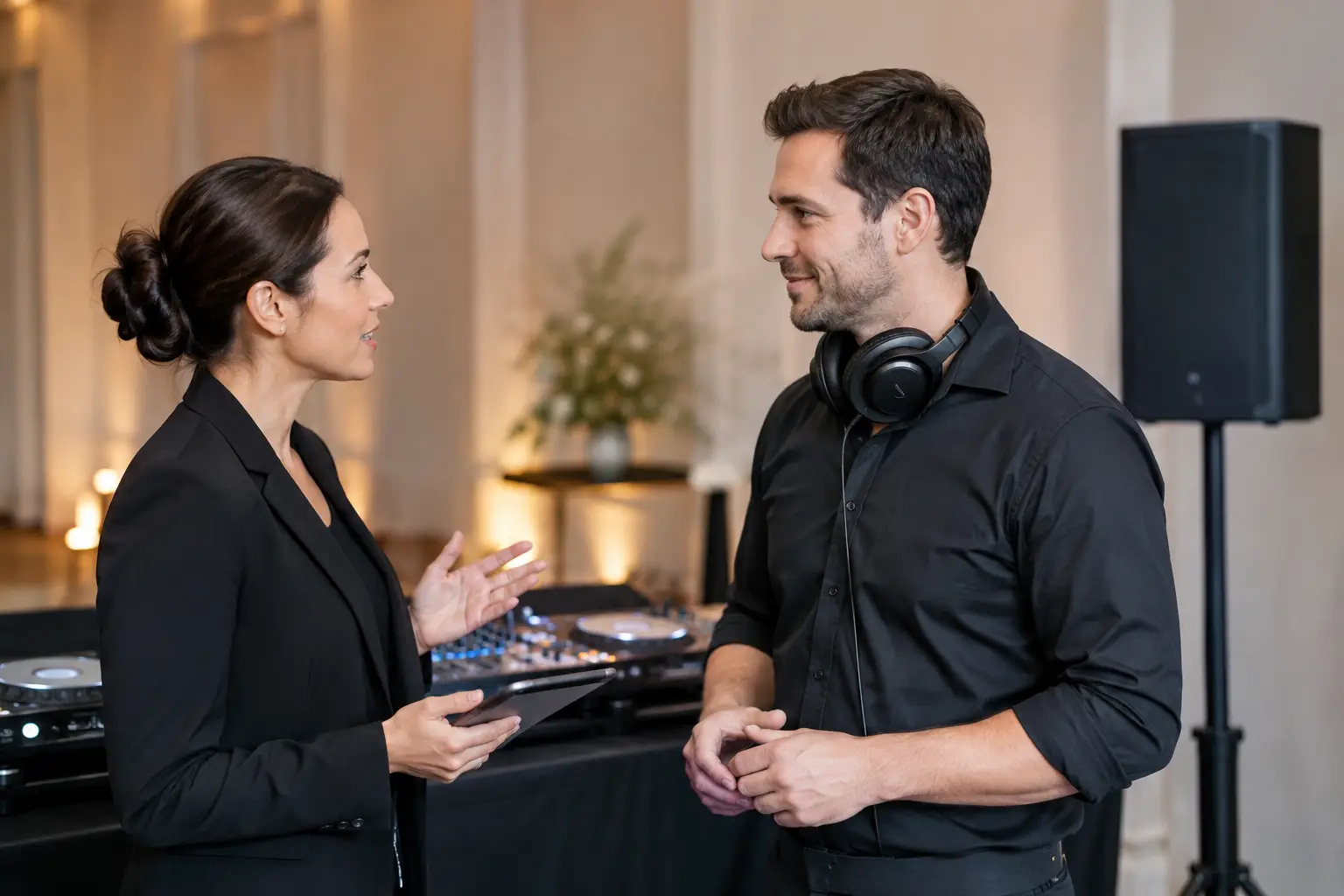
A full dancefloor rarely happens by accident. It is usually the result of good music, a confident DJ and a clear plan agreed before guests arrive. Briefing a professional event DJ gives them the information to read the room, protect the running order and deliver the standard of presentation your occasion deserves.
The brief does not need to be complicated or written in technical language. It does need to be honest, specific and shared early enough for the right equipment, music preparation and crew arrangements to be put in place. Whether you are planning a wedding in North Lincolnshire, a corporate awards evening or a milestone birthday, the better the DJ understands the event, the less you will need to worry about on the night.
Briefing a Professional Event DJ Starts With the Event
Begin with the purpose of the occasion. A wedding reception has a different energy from a charity fundraiser, school leavers' event or formal company dinner. Tell your DJ what success looks like from your perspective: perhaps it is a packed dancefloor from 9pm, an elegant atmosphere through dinner, clean microphone sound for speeches, or a programme that stays precisely on time.
Share the basic facts first: the date, venue, guest numbers, access time, event start and finish times, and the age range of the audience. These details influence far more than a playlist. They help determine the appropriate sound system, lighting design, set-up schedule and whether additional crew or equipment is needed.
Guest numbers are particularly useful when they are realistic. A DJ performing for 60 people in a private function room needs a different approach to a 300-person event in a hotel ballroom. Room shape, ceiling height, hard surfaces and outdoor areas can all affect sound coverage. A professional will use this information to make sure the music feels present and enjoyable without becoming harsh or overwhelming.
If your event has several phases, explain them. For example, guests may arrive for drinks, move into a dining space, watch presentations, then return to a transformed room for evening entertainment. This may call for background music, wireless microphones, projection, uplighting and a separate DJ performance area. It is much easier to build a coherent production plan than to add essential elements at the last minute.
Give the DJ a Clear Picture of Your Guests
A good DJ will never treat your guests as a generic crowd. Give them a sense of who will be in the room and how you expect the atmosphere to develop. A mixed-age family celebration may need familiar singalongs, Motown, 80s floor-fillers and current party music, while a brand launch might require stylish arrival music and a more carefully branded visual presentation.
Be candid about the people who matter most. If the hosts love house music but grandparents will be there until 10pm, say so. If a birthday guest has spent years following Northern Soul, or a couple wants a particular era to feature after the first dance, that context is valuable. It allows the DJ to build the night around meaningful moments rather than relying on guesswork.
A playlist can help, but it should be a guide rather than a restriction. Ten to 20 must-play tracks are usually more useful than a list of 150 songs in a fixed order. The DJ needs enough room to respond to the dancefloor in real time. A track that looks perfect on paper may not work after a slow dinner service, while an unexpected classic can bring three generations together within seconds.
It is equally useful to provide a short do-not-play list. Keep this focused on genuine dislikes, inappropriate lyrics, difficult associations or genres that simply do not suit the event. Avoiding five unsuitable tracks is straightforward. Asking a DJ to avoid every song from an entire decade can make it unnecessarily difficult to keep a varied crowd dancing.
Confirm the Moments That Cannot Be Missed
Most events have a handful of moments where timing matters more than musical taste. Identify them clearly and provide the exact version of any important track where possible. A first dance, cake cutting, awards walk-on, charity appeal, surprise entrance or final song should never be left open to interpretation.
For weddings, confirm the first dance track, whether it should be faded or played in full, and whether you want guests invited onto the floor at a particular point. For corporate events, provide the running order, names and pronunciation of speakers, award winners and sponsors. For birthdays and private parties, flag any surprises, presentations or special guest arrivals.
It helps to nominate one trusted person as the point of contact during the event. This might be a wedding coordinator, venue manager, best person, colleague or family member. They can approve a change to the schedule, locate a missing speaker or advise when dinner is running late without pulling the organiser away from their guests.
Share the schedule, then allow for reality
A detailed timeline is useful, but events often run late. A professional DJ will adapt, provided they know what can move and what cannot. Tell them whether the venue has a strict finish time, whether there are noise restrictions, and whether speeches or food service may overrun.
The essential timings to clarify are:
- guest arrival and set-up access;
- speeches, performances and formal announcements;
- the time evening guests arrive;
- the preferred start of dancing; and
- the venue's required finish, pack-down and collection times.
This information protects the guest experience. It also prevents a common frustration: a DJ ready to start the party while guests are still eating, speakers are still waiting for a microphone or venue staff need access to the room.
Discuss Sound, Lighting and Venue Logistics Early
The best DJ set is only as reliable as the production around it. Ask the venue what is provided and what is permitted, but do not assume that an in-house speaker or small Bluetooth system is suitable for a professional event. Sound systems need to be correctly specified for the room, safely installed and tested before guests arrive.
Let your DJ know about parking, loading routes, stairs, lifts, restricted access, room-change times and any limitations on smoke effects, confetti, haze or lighting. A venue may require equipment to be brought in through a particular entrance or set up before a room is dressed. These practical details affect crew planning and should be agreed well in advance.
For events with speeches or presentations, explain what needs to be heard and seen. One handheld microphone may be enough for a small birthday speech, but a panel discussion, awards presentation or school production could require multiple wireless microphones, lectern mics, playback audio and projection. Professional equipment from trusted manufacturers is valuable, but correct planning and operation are what make it dependable in the room.
Lighting deserves the same thought. Warm uplighting can make a plain function room feel considered and welcoming, while a more dynamic lighting rig can build energy later in the evening. The right choice depends on the audience, venue and event style. A formal awards dinner may need a polished stage look and clear sightlines, whereas a party can support more movement and colour once the dancefloor opens.
Be Clear About Standards, Safety and Presentation
Price matters, but the cheapest option can become expensive when it creates stress, poor sound or a last-minute technical problem. Ask what equipment will be supplied, how it will be presented, whether it is PAT tested and whether the supplier holds appropriate public-liability insurance. For venues, schools, charities and corporate organisers, these are practical requirements rather than optional extras.
Also discuss the DJ's appearance. Smart casual may suit a relaxed party, while black tie, formal dress or discreet corporate attire may be needed for a wedding or awards evening. If there is a branded backdrop, stage plan or sponsor visibility requirement, share it before the event so the set-up complements the wider production.
At The Grind Events Hire, event DJ work is planned as part of the whole guest experience, not treated as a playlist and a pair of speakers. That approach means considering premium sound, lighting, microphones, access, timings and the people in the room together.
The Best Brief Leaves Room for Experience
A strong brief gives your DJ direction without trying to script every transition. You know your guests, priorities and non-negotiable moments. Your DJ knows how to manage energy, change direction when a room responds unexpectedly and use professional sound and lighting to keep the event feeling polished.
Send the key information in good time, check it together before the day and keep one reliable contact available on site. Then give yourself permission to enjoy the occasion. When the music begins, the planning should be doing its job quietly in the background.