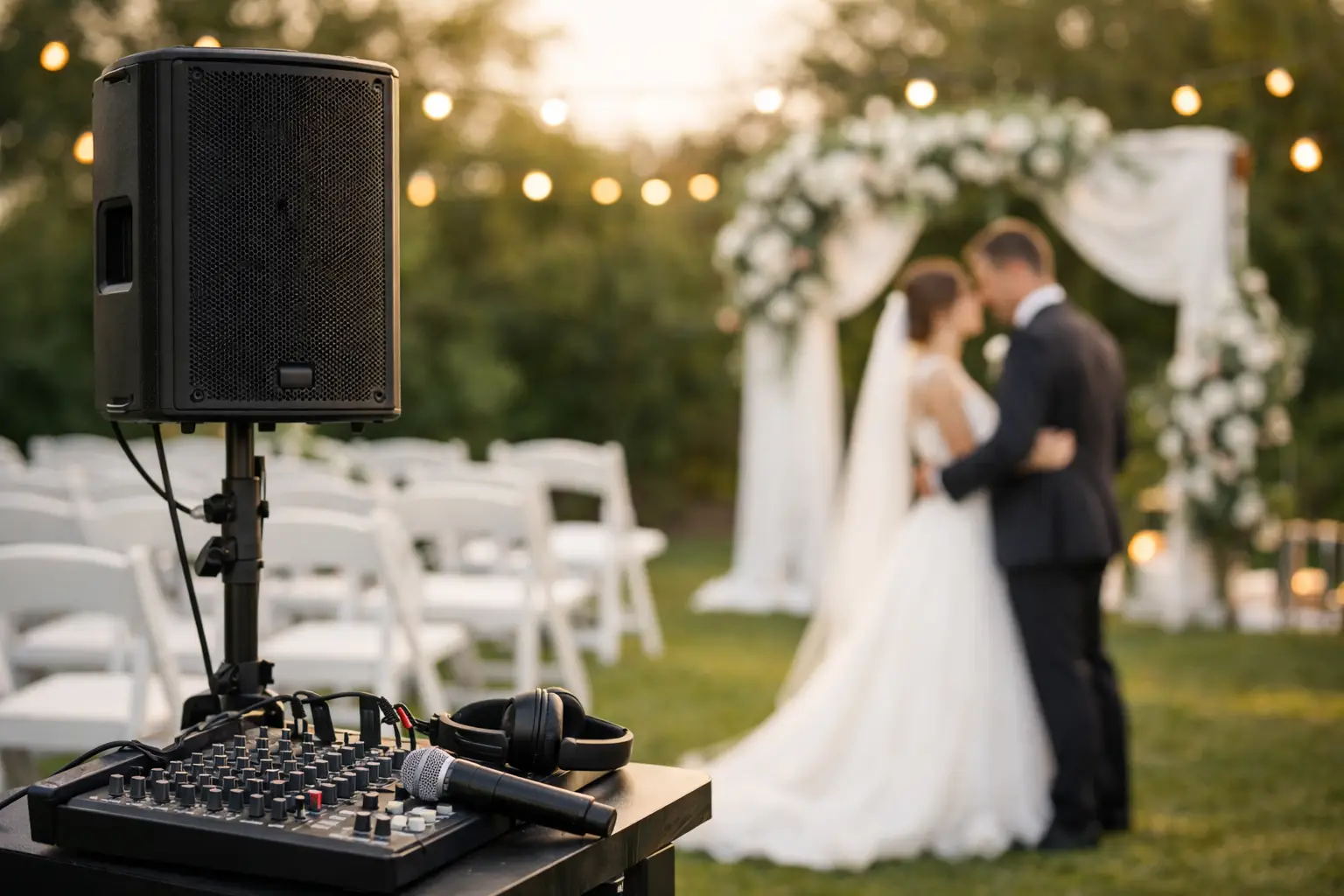
A wedding can look spectacular and still fall flat if guests cannot hear the vows, the speeches are interrupted by feedback, or the evening music lacks the energy the room deserves. The right wedding audio solution is not simply a pair of speakers for the dancefloor. It is a considered sound plan for every point where people need to hear, feel or take part in your day.
For couples planning a celebration in Scunthorpe, North Lincolnshire or further afield, the best approach is to think about sound early. Your venue, guest numbers, room layout, ceremony style and entertainment choices all influence what is required. A professional setup should feel effortless to guests, while the technical work behind it is carefully planned, tested and managed.
What a wedding audio solution should cover
Most weddings have at least three distinct audio moments: the ceremony, the wedding breakfast and speeches, and the evening reception. Treating them as separate requirements helps avoid the common mistake of hiring one small PA system and expecting it to cover everything.
At the ceremony, clarity matters more than volume. Guests should be able to hear the registrar, celebrant and couple without the sound feeling amplified or artificial. This can mean discreet loudspeakers, a properly positioned microphone for a reader or celebrant, and careful control of music cues for the entrance, signing of the register and exit.
During the wedding breakfast, background music needs to fill the room gently without making conversation difficult. Speeches then require a more focused setup. A quality wireless microphone gives speakers freedom to stand naturally, move away from their chair and be heard by guests at the back. For larger rooms, additional loudspeakers may be needed so that nobody is listening to a delayed, distant voice.
The evening reception has different demands again. A DJ performance, live singer or band needs a system with enough headroom to sound full and controlled. The aim is not simply to make it loud. Good sound has warmth, definition and even coverage across the dancefloor, without overwhelming guests who are catching up at the bar or seated nearby.
Start with the venue, not the equipment list
A historic barn, hotel suite, marquee and village hall can all host brilliant weddings, but each presents its own acoustic challenges. High ceilings, hard walls and glass surfaces can make speech sound bounce around the room. A marquee may need a system that compensates for open sides, changing weather and a larger footprint. Some venues have built-in equipment, but its condition, coverage and connection options should be checked rather than assumed.
Ask where the ceremony will take place, where guests will be seated for speeches and whether the evening room is separate. If the event moves between areas, the audio plan may need more than one system or a fast, well-timed changeover. This is particularly relevant when a musician performs during the ceremony, a playlist is used during the meal and a DJ takes over after the first dance.
Venue sound limiters deserve early attention too. These devices monitor volume and can cut the power if a preset level is exceeded. They are manageable with the right system, speaker placement and sound control, but they affect what can be achieved. A professional supplier will discuss the limiter with the venue and plan around it, rather than discovering it during a packed dancefloor.
Clear speech is the part guests remember
People may forgive a slightly late canapé. They are less forgiving when they miss the father of the bride's speech or cannot hear a heartfelt reading. Speech audio is often the most underestimated element of a wedding, especially when a guest list includes older relatives or when the room is long, busy or acoustically lively.
Wireless handheld microphones are a dependable choice for most speeches. They are easy to pass between speakers and provide clear, direct sound when used correctly. Lapel or headset microphones can work well for a celebrant or presenter who needs both hands free, although they require more careful fitting and sound checks. For a live musician, the right microphone or direct connection depends on the instrument, performance style and venue.
The equipment matters, but placement and operation matter just as much. A microphone should be tested at the position where the speaker will stand, not only at a technician's desk. Loudspeakers must be directed away from microphones to reduce feedback. Music levels should be set so they support the atmosphere before a speech, then reduced cleanly when it is time for someone to speak.
This is why a managed solution has an advantage over collecting a dry-hire speaker and hoping for the best. A technician or experienced DJ can handle levels, cues, unexpected changes and the person who holds the microphone at waist height despite being asked not to.
Choose professional equipment for consistency
Not every event needs a concert-scale system, but weddings benefit from equipment designed for professional use. Recognised manufacturers such as KV2 Audio, Allen & Heath and Sennheiser are valued because they deliver reliable, controlled performance when correctly specified and operated.
A premium PA system is not only about impressive volume. It offers cleaner vocal reproduction, better coverage, lower distortion and more useful control when the room becomes busy. The result is that speeches can remain intelligible and music can have impact without the harshness that makes guests step outside for relief.
Reliability should be part of the decision as well. Professionally maintained equipment, PAT testing, appropriate insurance and spare cables or microphones are not glamorous details, but they protect the experience you have spent months planning. A wedding timetable does not leave much room for troubleshooting a faulty connector five minutes before the ceremony.
Consider who is responsible on the day
There is a meaningful difference between equipment hire and supported production. Dry hire can be a sensible option for a small gathering where someone confident is available to set up, connect devices and manage playback. It can also suit couples using a familiar venue with a straightforward layout.
For a full wedding day, however, responsibility can quickly become complicated. Who sets up the ceremony music? Who moves equipment between rooms? Who checks that the best man's phone is connected before his presentation? Who reacts if a microphone battery fails or a venue requests a level change?
A managed wedding audio solution puts those details with an experienced production team. The Grind Events Hire can coordinate sound, microphones, DJ entertainment, lighting and visual elements as one plan, rather than leaving different suppliers to work around one another. That reduces handovers and gives you one clear point of contact for the technical side of the day.
Plan music around moments, not just playlists
Your ceremony and reception soundtrack should be built around timing as well as song choice. The processional needs a clean start at the right cue. Signing music may need to run for longer or shorter than expected. The first dance should begin when photography, catering and guests are ready, not simply when a playlist reaches track 42.
Share key music choices in advance, including any edited versions, unusual requests and must-not-play tracks. If a friend is performing, provide their technical requirements early. A vocalist may need a microphone and monitor speaker, while an acoustic guitarist may need a DI box, stand and a separate channel on the mixer. These are small details until they are missed.
It is also wise to have backup playback available. Streaming services depend on signal and devices can run out of battery, receive calls or fail to connect through an unfamiliar adapter. Professional systems should have tested playback options ready, particularly for entrance music, ceremony tracks and the first dance.
Avoid over-specifying and under-specifying
More equipment is not automatically better. A compact, well-positioned sound system can be ideal for an intimate ceremony, while an oversized rig may dominate the room visually and sonically. Equally, a small domestic speaker is rarely sufficient for 120 guests in a marquee with live speeches and a DJ.
The right specification depends on guest count, layout, entertainment, venue restrictions and how formal each part of the day will be. Give your supplier an honest picture of the event, including room dimensions where possible, the running order and any surprise performances. A good recommendation should explain what is included and why, rather than presenting a generic package with no regard for your venue.
Build confidence before guests arrive
The best sound systems are often the ones guests barely notice. They simply hear every word, recognise every song and stay on the dancefloor because the music feels right. That outcome comes from early planning, suitable equipment, safe installation and someone experienced enough to stay calm when plans change.
When your wedding audio is treated as part of the production rather than an afterthought, you give every important moment the clarity and atmosphere it deserves.