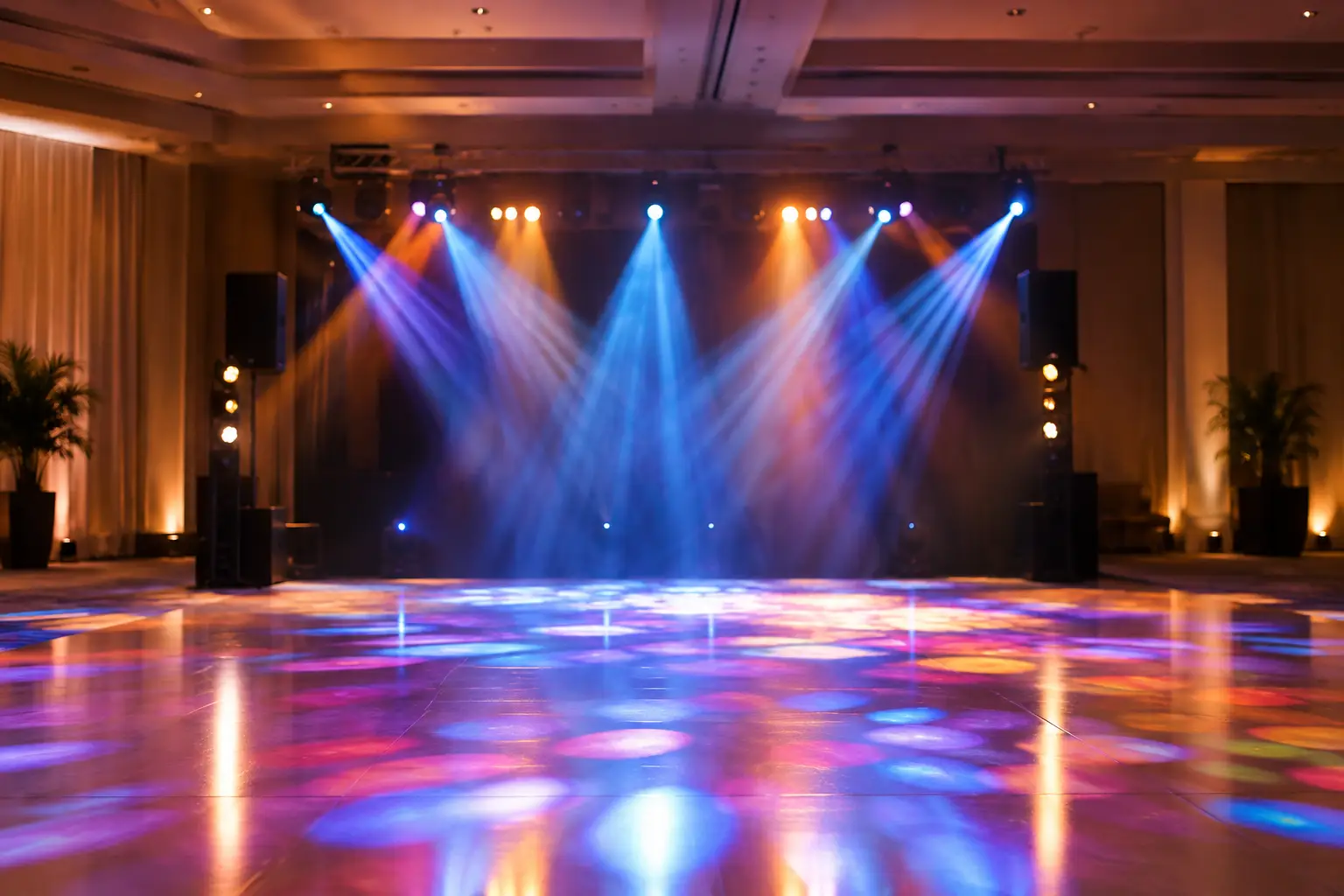
A busy dance floor is rarely created by music alone. The right lighting gives guests permission to relax, makes the room feel more polished and turns the key moments of an evening into photographs people actually want to keep. This dance floor lighting guide explains how to choose lighting that suits your venue, your guests and the atmosphere you want to create - without overpowering the event.
For a wedding, that may mean a warm, elegant look during the first dance before building energy later on. For a corporate celebration, it may mean keeping brand colours present without making the room feel like a trade stand. The best answer is not always the biggest rig. It is the one planned around the space and the occasion.
Start with the room, not the lighting effect
Before choosing moving heads, uplighters or a dance floor wash, look at what the venue already gives you. Ceiling height, wall colour, windows, existing chandeliers, stage position and the size of the usable dance floor all affect what will work.
A low-ceilinged function suite can feel impressive with carefully positioned uplighting and compact fixtures, while large effects mounted too low can be distracting or uncomfortable for guests. In a tall marquee or barn, the challenge is often the opposite: light can disappear into the space unless it has enough output and is placed with purpose.
It is also worth identifying where guests will naturally stand. The dance floor, DJ or stage area, bar, entrance and top table all have different jobs. A room lit evenly from corner to corner may be bright, but it will not necessarily feel inviting. Good event lighting creates focus. It draws attention to the places where the celebration is happening while keeping walkways, steps and service areas safe.
Ask for a venue visit when the room is unfamiliar
Photographs are useful, but they rarely show ceiling beams, power locations, reflective surfaces or how much ambient light remains after dark. A venue visit lets a production team assess sightlines and rigging options, then specify equipment that will look intentional rather than simply fill a corner.
This matters particularly in venues with early access restrictions or tight changeover times. A well-planned setup is quieter, safer and considerably less stressful on the day.
Choose the atmosphere before the fixtures
Most clients do not need to begin with technical product names. Start with a feeling: refined and romantic, modern and minimal, colourful and high-energy, or theatrical and immersive. That choice should guide the lighting design.
For weddings and formal dinners, warm white and amber tones tend to flatter skin tones, table styling and photography. Uplighting around the perimeter can add depth to plain walls, pillars or drapes, while a soft wash on the dance floor keeps faces visible during the first dance. Later, the colour palette can become more dynamic as the party begins.
For birthdays, anniversaries and festive parties, intelligent moving lights can bring motion and energy without needing to flood the entire room with light. The key is moderation. A few well-programmed beams and colour changes feel premium; constant fast movement can quickly make the room feel chaotic.
Corporate events often need a more controlled approach. Brand colours can be incorporated through uplighting, stage washes or custom programming, but the lighting should still support presentations, conversation and photography. If speakers are on stage, their faces need clean front light. A dramatic backdrop is of little use if the audience cannot see the person delivering the message.
The core lighting options and what they do
A professional lighting package often combines several types of fixture rather than relying on one effect. Each serves a different purpose.
Uplighting
Uplighters sit around the room and throw colour upwards onto walls, columns, drapes or architectural features. They are one of the most effective ways to transform a plain venue because they add shape and warmth without taking up guest space. Wireless battery uplighters can be especially useful where cable routes would be impractical or intrusive.
Uplighting is not only decorative. It can make a large room feel more intimate, distinguish the dining space from the dance area and tie your colour scheme together. For a polished result, use a restrained palette rather than every available colour.
Dance floor wash lighting
A wash is a broad, even light across the dance floor. It is often overlooked because it is less dramatic than a moving beam, yet it is fundamental for a welcoming dance space. It helps guests see each other, supports photography and makes the floor feel like the natural centre of the room.
For first dances, a clean warm white or a gentle colour wash is usually more flattering than a harsh spotlight. If you want a spotlight effect, it should be positioned and softened carefully so it enhances the couple rather than creating hard shadows.
Moving heads and intelligent effects
Moving heads can project beams, patterns and colour across a room, adding movement that responds to the music. They are ideal for larger dance floors, evening receptions and events where a more energetic club-inspired finish is wanted.
Their value comes from programming, placement and control. The right fixtures, operated properly, can shift from subtle table lighting to a high-impact party look in seconds. Positioned badly, they can shine directly into guests' eyes or create distracting patterns during speeches. Professional control systems, including Avolites-based programming where appropriate, make those transitions deliberate rather than random.
Gobo projection and monograms
A gobo is a projected pattern, name, logo or motif. It can be used on a dance floor, wall or backdrop to personalise a wedding or reinforce a corporate identity. This is most effective when the projection surface is clear and the surrounding light is balanced. A bright patterned carpet or a heavily lit wall will reduce its impact.
Plan lighting around the event timeline
The lighting that works during a wedding breakfast is not the lighting that works at 10.30pm. Good design changes with the event, usually in stages that feel natural to guests.
During arrival drinks and dining, keep the room warm enough for people to talk, eat and take photographs comfortably. For speeches, reduce distracting movement and ensure speakers are clearly lit. The first dance can be given its own look, perhaps with a gentle wash, a personalised gobo or carefully controlled moving effects. Once the party begins, the pace, colour and movement can build around the music.
This is why a lighting operator or an experienced DJ with integrated production knowledge can be more valuable than a standalone effects package. Someone needs to make decisions in the moment: when to brighten the floor, when to hold a quieter look, and when to create the lift that brings people up from their tables.
Do not compromise safety for visual impact
Professional event lighting should look effortless because the safety work has been handled properly behind the scenes. Fixtures need secure mounting, cables need sensible routing and power distribution must be suitable for the equipment and venue.
Avoid running loose cables across guest routes, blocking fire exits with equipment or placing hot fixtures where children can touch them. Outdoor events require further consideration, including weather protection, secure positioning and appropriate power arrangements. Fog and haze can make beams look exceptional, but should only be used after checking venue policy, fire detection arrangements and guest requirements.
For organisers, this is where working with an insured supplier using PAT-tested equipment provides genuine peace of mind. The Grind Events Hire plans lighting as part of the wider production, considering sound, staging, access and timings rather than treating it as an afterthought.
Match the package to guest numbers and budget
A small dance floor in a village hall does not need the same specification as a 300-person awards evening. More equipment is not automatically better. A compact, well-designed system can look far more premium than an oversized rig squeezed into a limited space.
If the budget is focused, prioritise the elements guests will notice most: a flattering dance floor wash, room uplighting and a controlled party effect. For larger events, add moving heads, truss or stands, stage lighting and programmed looks that change through the evening. Where video, projection or branded content is involved, lighting must be planned alongside the screen position so it does not wash out the image.
It also pays to be honest about the event's priorities. A sophisticated dinner with light background entertainment needs a different approach from a party designed to keep the floor full until close. Clear expectations allow the technical plan to work harder for the budget available.
Give your photographer and guests the right conditions
Lighting should make people look good, not merely make the room look busy. Deep blue and red can create atmosphere, but too much of either can be difficult for photographers and can make skin tones look unnatural. A mix of warm ambient light and controlled colour gives photographers more to work with while preserving the mood.
Talk to your photographer or videographer about important moments in advance. They may prefer a little more front light for speeches, the cake cut or the first dance. That does not mean sacrificing atmosphere. It means building a look that works in person and on camera.
The most memorable lighting feels part of the occasion, not separate from it. When the room becomes warmer for dinner, more focused for speeches and more energetic as the music builds, guests do not think about the equipment. They simply feel that the event is being looked after.