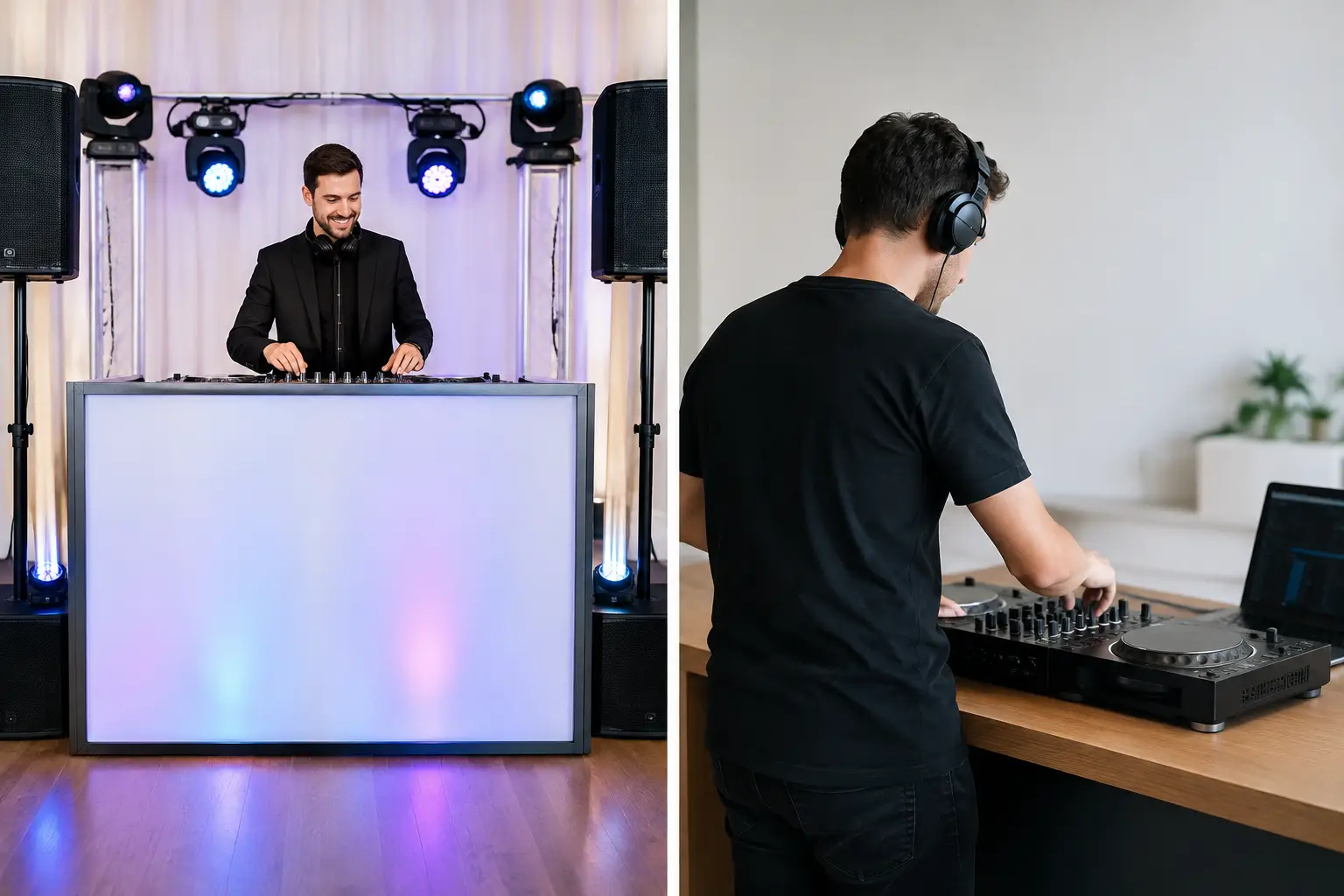
A packed dancefloor does not happen simply because there are speakers in the room. The difference between DJ packages versus dry hire is the difference between booking someone to take responsibility for the entertainment and hiring the tools to run it yourself. Both can be excellent choices, but they suit very different events, venues and levels of experience.
For a wedding, awards evening or milestone celebration, that distinction matters. Sound quality, music flow, lighting, timings and technical cover all affect how confident your guests feel in the room. Choosing the right option starts with being honest about what you need a supplier to manage.
DJ packages versus dry hire: the real difference
A DJ package is a managed entertainment service. You are booking a professional DJ alongside a system designed for the event: sound equipment, DJ decks or controller, suitable lighting, set-up and pack-down, and the experience to keep the occasion moving. Depending on the brief, it may also include microphones for speeches, background music, uplighting, special effects or coordinated production across more than one space.
Dry hire is equipment rental without an operator. You hire the PA system, lighting, microphones, projector or DJ equipment, then collect it or arrange delivery and take responsibility for using it. The supplier should provide properly maintained, tested equipment and clear guidance, but the operation is in your hands.
Neither approach is automatically better. A dry-hire system can be the sensible, cost-effective answer for an experienced organiser with a trusted DJ, technician or venue team. A DJ package is often the stronger choice when the event needs one accountable professional to handle music, technical decisions and the inevitable small changes on the night.
What a professional DJ package gives you
The most obvious benefit is a skilled DJ reading the room. A carefully chosen playlist is useful, but it is not the same as responding to a quiet dancefloor, a change in age range, an unexpectedly enthusiastic singalong or a request that does not fit the moment. A professional DJ controls the pace of the evening, blends music appropriately and understands when to build energy or give guests a breather.
There is also practical responsibility. At a wedding, the DJ may work around speeches running late, coordinate the first dance, ensure the right microphone is live and change the lighting mood as the room moves from dinner to party. At a corporate function, they can follow a schedule, support walk-on music and present a smart, unobtrusive setup that suits the brand and venue.
The equipment element should not be treated as an afterthought. Professional systems from recognised manufacturers such as KV2 Audio, Allen & Heath, Sennheiser, Pioneer DJ and Avolites are selected for clarity, reliability and control. The right system is matched to the guest count, room dimensions, ceiling height, venue restrictions and desired atmosphere. A compact setup for a private party needs different coverage from a school awards evening or a large celebration in a marquee.
A properly specified DJ package also reduces the number of separate suppliers you need to brief. Instead of sourcing a DJ, speakers, lighting and microphones independently, you have one production partner working from one plan. That can be particularly valuable where venue access is limited, the timetable is tight or the event has no dedicated technical team.
When a DJ package is usually the right call
A managed DJ service tends to offer the best value when the entertainment is central to the event. Weddings, 18th and 21st birthdays, anniversary parties, Christmas events and charity balls all benefit from someone taking ownership of the room rather than simply supplying equipment.
It is also the safer option for first-time organisers. You do not need to understand speaker placement, gain levels, radio microphone frequencies or lighting control. You can focus on your guests while a professional manages the technical details behind the scenes.
When dry hire makes more sense
Dry hire comes into its own when you already have the people and knowledge to use the equipment well. Perhaps your venue has an in-house technician, your company has an experienced presenter, or you have booked a DJ who needs a quality PA and lighting system. In those cases, hiring professional equipment can raise the standard of the event without paying for duplicated labour.
It can also be a strong fit for straightforward requirements. A small PA and wireless microphone for a presentation, a projector and screen for a meeting, or a speaker system for a community event may not require an on-site engineer from start to finish. The key is being realistic about who will set it up, operate it and deal with any issue.
Dry hire does not mean accepting basic kit. The quality of the equipment still shapes the experience. Clear speech coverage matters at a fundraiser. Reliable microphones matter at a school production. A DJ system that sounds clean at the required volume matters at a party. Equipment should be professionally maintained, electrically tested and supplied with the right cables, stands and accessories rather than left to chance.
The responsibilities that come with dry hire
The lower headline cost of dry hire can be attractive, but it is only a saving if the organiser has a clear operational plan. Someone needs to collect or receive the equipment, position it safely, connect it correctly, test it before guests arrive and return it in good condition. They also need to know what to do if a laptop output is different from expected, a microphone battery fails or a speaker needs repositioning.
Venue rules are another consideration. Some venues limit sound levels, require cables to be covered, restrict where lighting can be rigged or insist on documentation before equipment is used. An experienced supplier can advise on these requirements, but a dry-hire customer remains responsible for following them on site.
For a simple meeting, those tasks may be entirely manageable. For a busy wedding morning or a branded event with a fixed running order, they can become another pressure point. The question is not whether you can do it yourself. It is whether you want to be the person troubleshooting audio while guests are waiting.
Compare the full cost, not just the hire price
DJ packages and dry hire should be compared on outcomes, not only the first figure on a quotation. A DJ package includes expertise, preparation, delivery, setup, operation, pack-down and entertainment management. Dry hire is generally leaner because you are providing part of that work yourself.
Ask what is included before comparing options. Does the price cover delivery? Is setup included or collection only? Are microphones, stands, cables and power distribution part of the hire? Is there support if the venue layout changes? Does the provider carry appropriate public-liability insurance and supply PAT-tested equipment?
For larger or public-facing events, those questions are not paperwork for paperwork's sake. They protect the organiser, venue and guests. A supplier with established processes can also spot issues early, such as insufficient power, poor sightlines for a projector or a stage that needs more than a pair of speakers to cover the room evenly.
Start with the event, not the equipment
The best choice becomes clearer when you consider the event from your guests' perspective. If music and atmosphere are the main attraction, a DJ package gives you professional control and a more polished finish. If the requirement is purely technical and you have capable people available to operate the kit, dry hire can be efficient and flexible.
Think about the room as well. A compact function suite, village hall, hotel ballroom and outdoor marquee each present different acoustic and practical challenges. Guest numbers are only one part of the brief. You should also consider whether guests will be seated during speeches, how far the dancefloor is from the DJ position, where power is available and whether the event needs sound in multiple areas.
It helps to prepare a short brief before requesting a quote: the date, venue, guest numbers, timings, type of event and what you want guests to hear or see. Mention any speeches, performers, presentations, surprise moments or venue restrictions. This gives a professional supplier the information needed to recommend a proportionate solution rather than simply offering the largest system available.
Choose the level of support that lets you enjoy the event
For clients across Scunthorpe and North Lincolnshire, The Grind Events Hire can provide either route with the same focus on professional standards: premium equipment, considered planning and dependable service. A managed package brings the DJ and production expertise together; dry hire gives capable teams access to quality event technology with the right advice behind it.
The most successful events are not defined by how much equipment is in the room. They are defined by how confidently everything works when it matters. Choose dry hire when you have the expertise and time to take control, and choose a DJ package when you want the music, production and guest experience placed in experienced hands.