A wedding speech with no sound, a silent corporate presentation or a DJ set that stops midway through the evening can change the atmosphere of an event in seconds. So, do events need backup audio? For many events, yes - but the right level of backup depends on the occasion, audience size, venue and how costly a technical interruption would be.
Backup audio is not about filling a room with duplicate equipment for the sake of it. It is a planned approach to protecting the moments that cannot simply be repeated. A best man cannot recreate the surprise of a speech once the room has lost the thread. A charity auction cannot afford guests missing bids. A conference host should not be left waiting while a technician searches for the source of a fault.
Do Events Need Backup Audio for Every Booking?
Not every small gathering requires a fully duplicated sound system. For a relaxed house party with a modest speaker and no formal programme, a proportionate setup may be perfectly sensible. The risk is lower, the audience is smaller, and there is often flexibility if plans change.
The calculation changes when audio is central to the event. Weddings, awards evenings, school productions, corporate conferences, charity fundraisers, live performances and branded activations all rely on clear, consistent sound. In these settings, one failed microphone, faulty cable or lost music source can affect the experience of every guest.
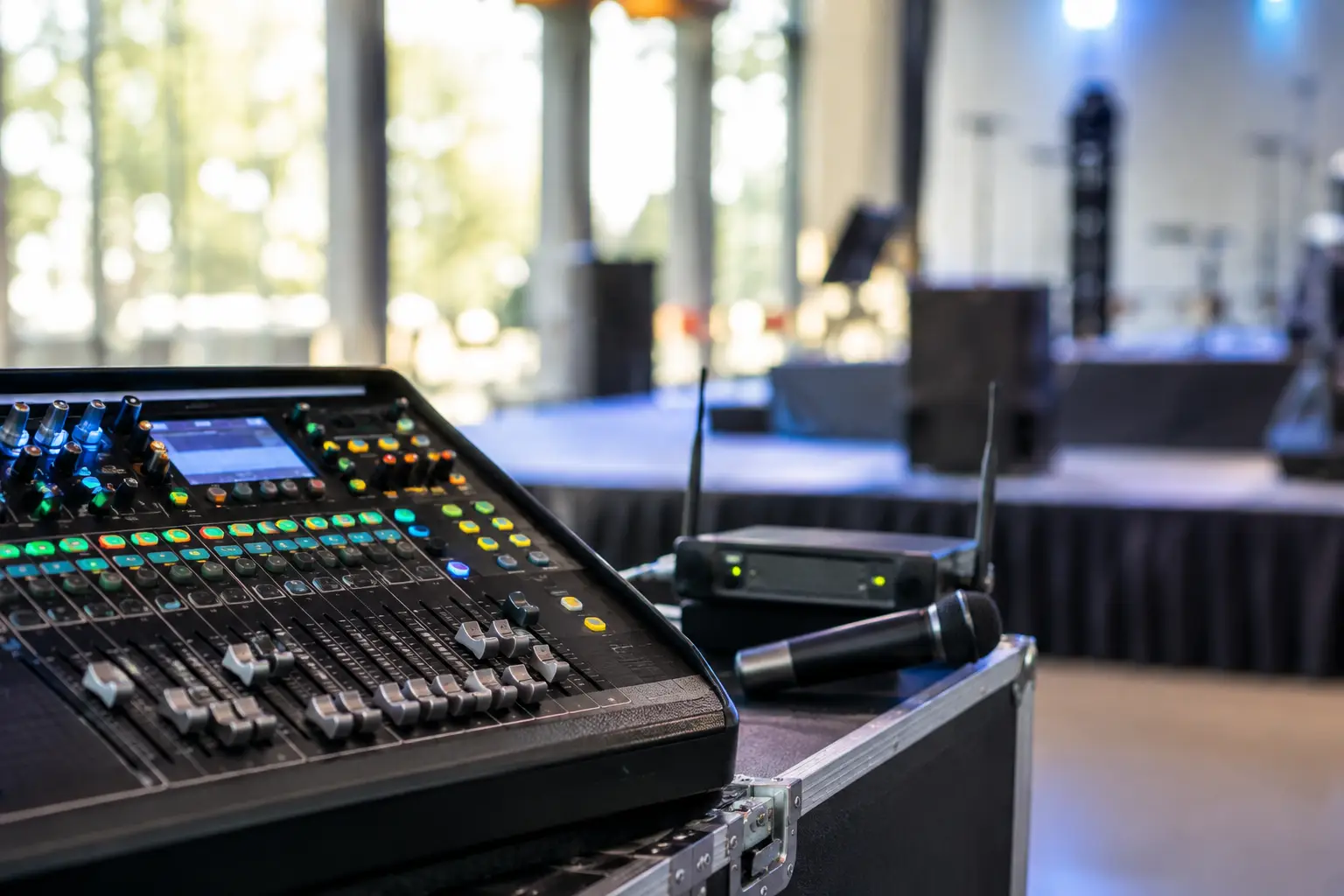
The question is not simply whether a speaker might fail. Professional event planning considers the full signal path: microphones, receivers, mixing desk, playback device, cables, power, loudspeakers and the person operating the system. Any one of these components can cause an interruption if it has not been prepared and supported correctly.
For important events, backup audio is part of professional standards. It protects the schedule, reduces pressure on organisers and gives presenters, performers and guests confidence that the technical side is being properly managed.
The Moments Where Audio Failure Has the Greatest Impact
A useful way to decide on redundancy is to identify the non-negotiable moments. At a wedding, this may include the ceremony readings, vows, speeches and evening entertainment. For a corporate event, it is usually keynote presentations, panel discussions, video playback and awards announcements. A school production needs dependable sound throughout, particularly when performers use radio microphones or backing tracks.
These moments often have no second take. Even if the issue is resolved quickly, the loss of momentum can be uncomfortable for the people on stage and frustrating for the audience. Clear sound also has an accessibility role. Guests at the back of the room, older attendees and those with hearing difficulties are far more likely to remain engaged when speech is properly reinforced.
Outdoor events deserve additional attention. Wind, weather, uneven power provision and greater distances between equipment can introduce extra variables. A battery-powered backup loudspeaker, spare radio microphone and protected playback source can be the difference between a short adjustment and a programme that stalls.
What Professional Audio Redundancy Looks Like
Backup does not always mean a second version of every item. The most effective plans are built around likely failure points and the consequences of losing them.
For speech-led events, a spare wired microphone is one of the simplest and most valuable safeguards. Unlike a radio microphone, it does not depend on batteries or wireless frequency coordination. If a handheld wireless mic develops a problem, a quality wired alternative can be live within moments.
For DJ and music playback, a second playback route is equally sensible. This could be a prepared music device connected to an alternative input, allowing music to continue while the primary source is checked. Professional DJs also plan for spare leads, power supplies and adapters, as these small components are frequent sources of avoidable problems.
Larger productions may require greater resilience. This can include duplicate radio microphone channels, spare receivers, reserve loudspeakers, alternate mixer inputs, a backup presentation laptop and separate power routes where the venue infrastructure allows. The level of cover should be agreed during planning, rather than improvised on the day.
A capable technician matters as much as the spare equipment. A backup system is only useful if it can be brought into service quickly and without creating more disruption. Proper labelling, tidy cable management, tested connections and a clear operating plan all contribute to a calm response.
The Difference Between Spare Equipment and a Backup Plan
Having an extra microphone in a case is helpful. Having a tested contingency plan is better.
A proper backup plan starts before equipment arrives at the venue. It considers the running order, room layout, number of speakers, content formats, venue power and who is responsible for cueing each element. It also includes a soundcheck that tests the actual microphones, playback devices and presentation outputs intended for use.
This preparation exposes issues while there is time to solve them. A presenter may have a laptop without the expected connection. A lectern may be positioned too far from the planned cable route. A wireless microphone may need a different frequency because of nearby equipment. These are routine production details, but they need experienced attention.
On site, the team should know what happens if an issue occurs. Can the host switch to a wired mic? Is background music available from a separate device? Can a presenter continue from an alternate input? The aim is not to make the audience aware of the contingency. It is to keep the event moving naturally.
Where Organisers Should Not Cut Corners
There are occasions when reducing redundancy is a false economy. If guests have travelled, tickets have been sold, senior leaders are presenting or the event is being filmed, audio reliability should be treated as a priority rather than an optional extra.
Be particularly cautious when using several wireless microphones. Radio systems need correct frequency planning, fresh or fully charged batteries, secure antenna positioning and monitoring during use. Recognised professional systems from manufacturers such as Sennheiser are designed for demanding event work, but even quality equipment benefits from sensible contingency provision.
Power also deserves attention. Extension leads should be suitable for the load, protected from foot traffic and properly distributed. Equipment should be professionally maintained, electrically tested and installed safely. A premium PA system cannot perform as intended if it is fed through unsuitable power or connected with worn cables.
For venues with complex acoustics, the answer may be a more carefully designed system rather than simply more volume. Excessive volume can make speech less intelligible, particularly in hard, reflective rooms. The right loudspeaker placement, tuned system and capable engineer are often more valuable than adding equipment without a plan.
Choosing the Right Level of Cover
A straightforward private party might only need a reliable primary system, spare cables and an alternate music source. A wedding with ceremony audio and speeches benefits from backup microphones and a prepared playback route. A conference or awards evening may justify duplicate presentation playback, spare radio mics, additional loudspeaker coverage and an on-site technician throughout.
The budget should reflect the importance of the programme. That does not mean every event needs a concert-scale production package. It means the equipment and support should match the consequences of failure. A short technical interruption at an informal gathering may be manageable. The same interruption during a company director's keynote can undermine months of event planning.
When discussing requirements with an AV supplier, explain the event schedule rather than simply asking for “a speaker and a microphone”. Mention the number of presenters, expected guest count, venue access, video content, outdoor elements and any moments that must not be missed. This gives the production team the information needed to recommend appropriate safeguards.
The Grind Events Hire approaches audio planning as part of the wider guest experience, combining professionally maintained equipment with hands-on technical support for events where reliability matters. That means looking beyond a hire list to consider how the system will be used, operated and protected on the day.
A Practical Pre-Event Audio Check
Before finalising an event sound plan, make sure these areas have been addressed:
- Every critical speech, performance and playback moment has been identified in the running order.
- Microphones, music sources and presentation devices have been tested with the actual connections required.
- A spare microphone, essential leads, batteries and a secondary playback option are available where appropriate.
- The venue's power, room layout and access arrangements have been assessed before installation.
- Someone experienced is assigned to operate the system or provide prompt technical support during key moments.
The best backup audio plan rarely becomes the centre of attention. Guests remember the speech that made them laugh, the award announcement, the first dance and the presentation that landed perfectly. Giving those moments dependable sound lets everyone focus on what they came together to celebrate.