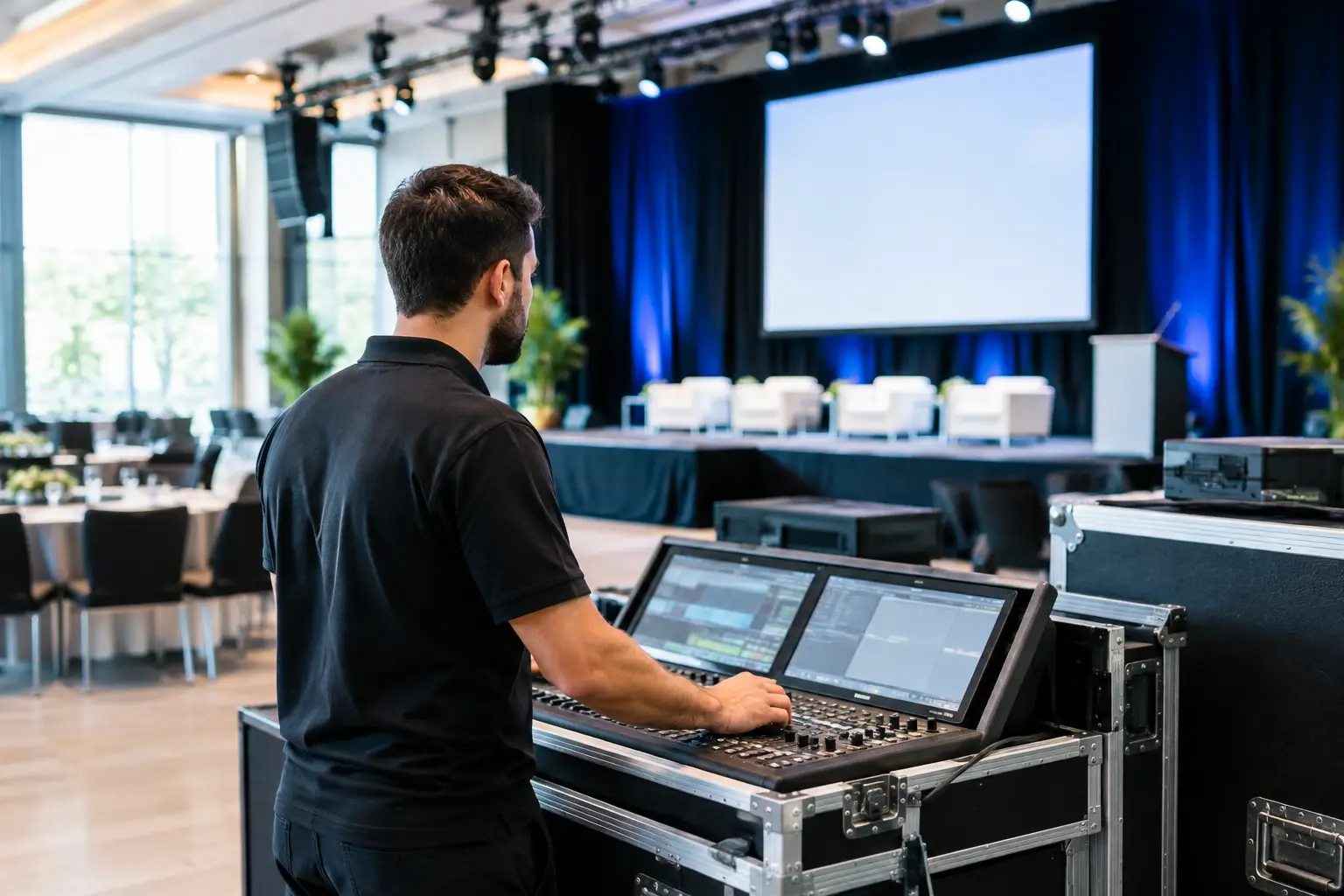
A projector screen falls during a busy awards evening. A guest knocks a drink over a control position. A supplier’s lighting stand is damaged while being moved between rooms. These are the practical situations behind the question: do venues need AV insurance? In most cases, a venue does not need a separate policy solely because AV equipment is on site. However, it does need the right insurance arrangements, clear contractual responsibilities and professional suppliers if it is to protect the building, its team and the event itself.
For venues hosting weddings, conferences, school productions, charity events and private celebrations, AV is no longer an optional extra. Sound systems, wireless microphones, lighting, projection and DJ equipment are often central to the guest experience. That makes it worth understanding where cover begins, where it ends and what evidence to ask for before equipment arrives.
Do venues need AV insurance?
The short answer is: it depends on what the venue owns, hires and agrees to be responsible for.
A venue that owns its installed sound system, screens, stage lighting or control equipment should make sure these assets are declared under its business insurance. Standard commercial policies may cover contents and equipment, but limits, exclusions and cover away from the premises vary. Permanent AV can be expensive to replace, and specialist equipment may need to be specified rather than assumed to sit within a general contents figure.
When a professional AV supplier brings equipment into the venue, that supplier would normally insure its own kit. Their cover should include the value of the equipment against loss, theft and accidental damage, subject to the policy terms. The supplier should also hold public liability insurance to respond if their work or equipment causes injury or property damage.
That does not remove every responsibility from the venue. A venue’s own public liability and property insurance still matter. If a damaged floor, an unsafe access route, inadequate power provision or a member of venue staff contributes to an incident, the venue may have its own exposure. Insurance is one part of the answer; safe working arrangements are the other.
The difference between public liability and equipment cover
These two types of protection are regularly confused, especially when an event includes hired production equipment.
Public liability insurance addresses claims for injury or damage to third-party property. For example, if an incorrectly secured cable creates a trip hazard or a lighting fixture damages a ceiling, the responsible party’s public liability policy may be relevant. Venues commonly ask contractors and suppliers to provide a current certificate before working on site.
Equipment insurance, sometimes called hired-in plant or all-risks cover, protects the physical AV equipment itself. It may respond if a loudspeaker, mixer, projector or lighting unit is stolen or accidentally damaged. The key question is who has accepted responsibility for the equipment at the time of loss.
A supplier may insure their equipment, but their hire terms can still make the hirer liable for damage caused by neglect, unauthorised use, theft from an unsecured area or misuse by third parties. If a venue hires equipment directly, it should read those terms carefully and check whether its own policy covers hired-in AV at the required replacement value.
For a private client bringing in a DJ or production company, the venue should not automatically take responsibility for that supplier’s equipment. Equally, a supplier should not assume the venue’s policy will replace a damaged item. The contract should be clear before load-in begins.
What venues should request from AV suppliers
Professional suppliers expect sensible due diligence. It protects everyone and helps prevent last-minute disputes when an organiser, venue and production team are each assuming somebody else has checked the details.
For larger events, or where a venue has a formal approved-supplier process, request the supplier’s current public liability insurance certificate. Many venues set a minimum indemnity limit, particularly for corporate events, public-facing functions and busy licensed premises. The Grind Events Hire carries £10 million public-liability cover, which reflects the level of reassurance many professional event environments require.
You should also ask whether electrical equipment is PAT tested and maintained, especially where the supplier is providing mains-powered sound, lighting, effects or projection. PAT testing is not a substitute for competent inspection or safe installation, but it is a useful record within a wider electrical safety process.
For more involved productions, it is reasonable to request a risk assessment and method statement. This is particularly relevant where there will be flown equipment, high-level lighting, haze effects, outdoor operation, temporary staging, large power demands or a complex load-in. A good supplier will discuss cable routes, emergency exits, vehicle access, set-up times, fire safety requirements and who has authority to make decisions on site.
When the venue may need additional cover
There are a few situations where relying on ordinary business insurance without a review can leave a gap.
If the venue hires a substantial amount of equipment in its own name, it may need hired-in equipment cover. This is common for venues staging seasonal events, installing temporary production for a run of performances or supplementing in-house facilities with additional sound, lighting or LED screens. Check the maximum value per item and in total, as professional production equipment can exceed expected limits quickly.
If the venue stores third-party equipment overnight, responsibility should be agreed in writing. A locked function room may not meet the insurer’s definition of secure storage, particularly if keys are widely available or the building is unattended. The same applies to equipment left in a loading bay, marquee or vehicle.
Venues that own permanent technical infrastructure should consider business interruption too. A water leak, fire or electrical fault affecting a fixed PA system, projector or lighting control can stop a room being sold as intended. Replacing the equipment is one cost; lost bookings and reputational impact can be another.
Outdoor events require added care. Rain, wind, unstable ground and public access change both the risk profile and the insurance conversation. Weatherproof equipment, suitable distribution, properly rated structures and a realistic contingency plan matter far more than simply having a policy document on file.
Insurance is not a substitute for production standards
The strongest protection is a well-run event. Insurance helps when something goes wrong, but it cannot restore a disrupted wedding ceremony, a failed keynote presentation or the confidence of a client whose event has been affected by preventable technical issues.
Professional AV planning starts with the room. Can the equipment be loaded in safely? Is there sufficient power on separate circuits? Where will speakers sit without blocking exits or sightlines? Are microphones required for speeches, panel discussions or performers? Is there enough time for sound checks before guests arrive?
These details also reduce liability. Cables should be managed and protected, equipment should be positioned securely, and only competent people should operate technical systems. A premium supplier will not simply drop off boxes. They will assess the space, specify equipment that suits the audience size and programme, and remain accountable for the system’s performance where a managed service has been agreed.
There is a trade-off. A dry-hire arrangement can be cost-effective for an experienced team with clear responsibility for set-up and operation. For a venue or organiser without technical staff, managed production usually offers better control. It places installation, testing, operation and pack-down with people who understand the equipment and the event environment.
Questions to settle before event day
Before confirming an AV supplier, a venue should be able to answer a few practical questions. Who owns the equipment? Who is operating it? Who is liable if it is damaged? What public liability cover does the supplier hold? Is the equipment maintained and electrically checked? What happens if the system fails, the schedule changes or access is delayed?
It is also worth confirming whether the supplier needs anything from the venue: a dedicated power supply, a parking space for load-in, early access, secure storage, lift access or a member of staff to open restricted areas. Small operational details can become expensive problems if they are left until guests are arriving.
For clients, the message is reassuring rather than alarming. A professional venue and AV provider should already be used to these conversations. Asking for certificates, clarifying responsibilities and planning the technical work properly are signs that the event is being taken seriously.
The best time to discuss insurance is before the booking is confirmed, when responsibilities can be agreed calmly and the production can be designed around the venue rather than squeezed into it. That preparation gives every event a safer foundation - and lets guests remember the occasion, not the technical problems behind it.