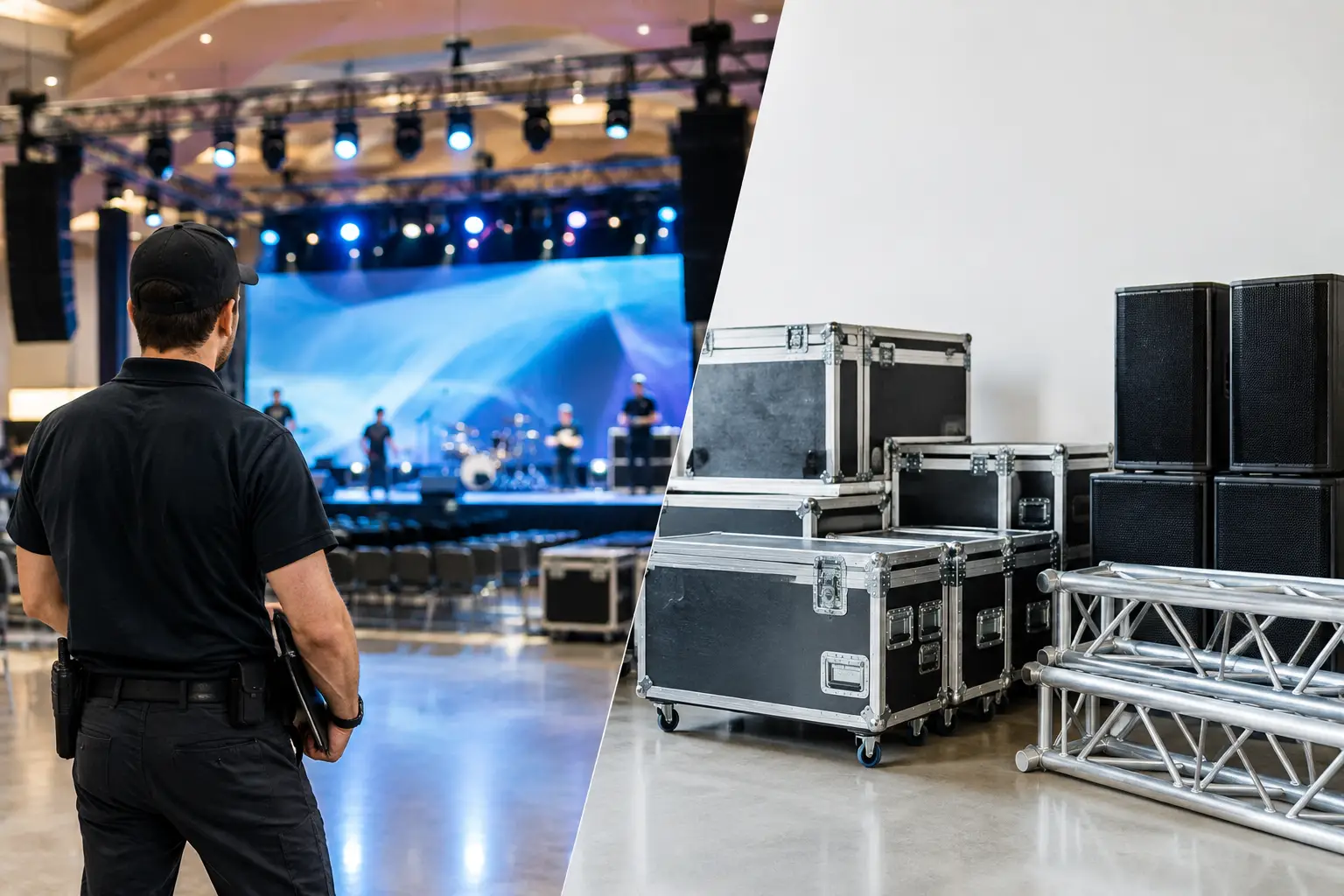
A projector that will not talk to a laptop, a microphone that feeds back during speeches, or a dancefloor left in darkness can change the feel of an event in seconds. The choice between event production versus dry hire determines not only what equipment arrives, but who takes responsibility for making it work when timing matters.
For some organisers, dry hire is a sensible, cost-effective route. For others, it creates a long list of technical jobs that nobody has the time, confidence or experience to manage. The right choice depends on the event, the venue, the people available on the day and how much certainty you need.
What dry hire actually includes
Dry hire means hiring equipment without an operator or production team to run it. You choose the required items, collect them or arrange delivery, then set up, operate and return the equipment yourself. This could be a pair of speakers for a house party, wireless microphones for a meeting, uplighting for a wedding venue or a projector and screen for a presentation.
It is not automatically a lesser option. When the event is straightforward and the person collecting the equipment understands the basics, dry hire can offer excellent value. A venue technician, an experienced DJ, a school drama department or a capable in-house events team may only need access to professional equipment for a defined period.
The important distinction is responsibility. With dry hire, the customer normally takes charge of positioning speakers, routing audio, connecting playback devices, setting levels, operating lighting and resolving problems. The hire company should provide properly maintained, PAT-tested equipment and clear handover information, but it is not present to mix speeches, adjust a lighting scene or respond when a cable is damaged halfway through the evening.
When dry hire is the sensible choice
Dry hire usually works well for contained requirements. Perhaps you need a quality PA for a small presentation, additional lighting for a party where a DJ is already booked, or microphones that will be operated by a technically confident venue team. It can also suit rehearsals, small-scale installations and events where the schedule is flexible enough to allow time for testing.
It is best approached with a realistic view of the task. A sound system is more than speakers in a room. The room layout, audience size, source equipment, power availability and volume expectations all affect the result. The same applies to projection, stage lighting and special effects. Professional equipment gives you a strong starting point, but it still needs suitable setup and operation.
Event production versus dry hire: the practical difference
Event production is a managed technical service. Rather than simply supplying the kit, the production provider helps shape the technical plan, supplies the appropriate equipment, delivers it, installs it, tests it and supports or operates it as required.
For a wedding, that might mean discreet ceremony microphones, background music, a polished evening DJ setup, intelligent lighting and someone on hand to keep every transition on track. For a conference or awards evening, it could include stage sound, presentation playback, projection, confidence monitors, radio microphones, lighting, cueing and a technician who understands the running order.
The difference becomes clear when there is a change. A speaker runs late, a laptop has the wrong connection, the room is larger than expected, a band needs an extra input, or a venue asks for lower sound levels. With full production, those issues are handled by people whose job is to protect the guest experience. With dry hire, the organiser or their nominated operator must make the decision and find the solution.
That support begins before the doors open. A professional production partner will ask about the venue, guest numbers, room dimensions, access times, power, schedule and the purpose of the event. These questions are not unnecessary complexity. They prevent underpowered sound, unsuitable screens, rushed installation and equipment that looks out of place in an otherwise carefully planned room.
Production is not just for large corporate events
It is easy to associate event production with festivals, conferences and major brand launches. In reality, a managed approach can be just as valuable for a wedding, milestone birthday, charity dinner or school production.
A wedding organiser may not need a large crew or a theatrical lighting rig, but they may value a team that arrives smartly, places equipment sensitively and makes sure heartfelt speeches can be heard. A school performance may need reliable headset microphones, playback, stage lighting and technicians who can work around safeguarding, rehearsals and tight access windows. A charity fundraiser may need a system that gives an auctioneer authority in the room without overwhelming dinner conversation.
The scale changes. The need for dependable planning does not.
The cost question: hire price versus event risk
Dry hire will often have the lower initial price because it excludes labour, planning time, transport logistics, installation and operation. If you have the skills and the time, that saving can be worthwhile.
However, the cheapest quote is not always the lowest-cost decision. Consider the cost of collecting and returning equipment, arranging extra hands for setup, allowing time to test it, dealing with faults and accepting the risk that a key moment may not land as intended. If a corporate presentation fails, a wedding speech cannot be heard or a school show loses its sound, the impact is rarely measured only in pounds.
Full production costs more because it includes accountable expertise. You are paying for specification, preparation, professional deployment and a trained response if something unexpected happens. Equipment from recognised brands such as KV2 Audio, Allen & Heath, Sennheiser, Pioneer DJ and Avolites is only part of that value. The person who knows how to configure and operate it is equally important.
There is also a middle ground. A hybrid package may include delivery, setup and collection, with the client operating simple controls once everything is tested. This can be a good fit for a meeting room presentation, a private party with a confident host or a venue that needs professional sound installed but no technician throughout the event. It should be agreed clearly in advance so everyone understands who is responsible after handover.
How to choose the right level of support
Start with the moments your event cannot afford to get wrong. For a party, that may be music and lighting after dinner. For a wedding, it is often the ceremony and speeches. For a business event, it could be the keynote presentation, panel discussion or awards announcements. If those moments rely on multiple microphones, playback sources, lighting changes or video content, managed production is generally the safer choice.
Next, look honestly at the venue and the team. Does the venue have a suitable technical infrastructure? Is there a named person who can operate the equipment? Will they be free when guests arrive, speakers need support or the schedule changes? A friend who is comfortable with a Bluetooth speaker may be helpful, but that is not the same as someone managing radio frequencies, audio gain structure or presentation switching in a busy room.
Finally, consider the standard you want guests to notice. Good production is often invisible. Guests simply hear every word, see the important content, enjoy the atmosphere and remember an event that felt properly put together. That outcome comes from preparation as much as equipment.
Questions worth asking before you book
Ask whether the quoted equipment is appropriate for your guest numbers and venue, not merely available on the date. Establish who delivers, installs, tests, operates and removes it. Confirm whether a technician will remain on site, what happens if equipment develops a fault, and whether the supplier carries appropriate insurance and maintains electrical safety standards.
If your event has presentations or performers, ask about connections and rehearsal time. If it has microphones, ask how many people need to speak at once and whether roaming, lectern or headset options are best. If lighting is included, discuss whether you need practical room illumination, decorative colour, stage coverage or programmed effects. Clear answers at this stage make for a calmer event day.
For clients across North Lincolnshire and further afield, The Grind Events Hire can provide either professionally prepared equipment hire or a complete managed production service, depending on what the occasion demands. With more than 15 years of operational experience and £10 million public-liability cover, the focus is on reliable technology, considered planning and practical support.
The best choice is the one that leaves you free to do your own job. If you have the capability to run the system confidently, dry hire can be an efficient solution. If your priority is welcoming guests, hosting the room or delivering a programme without technical distractions, put experienced people behind the equipment and let the event speak for itself.