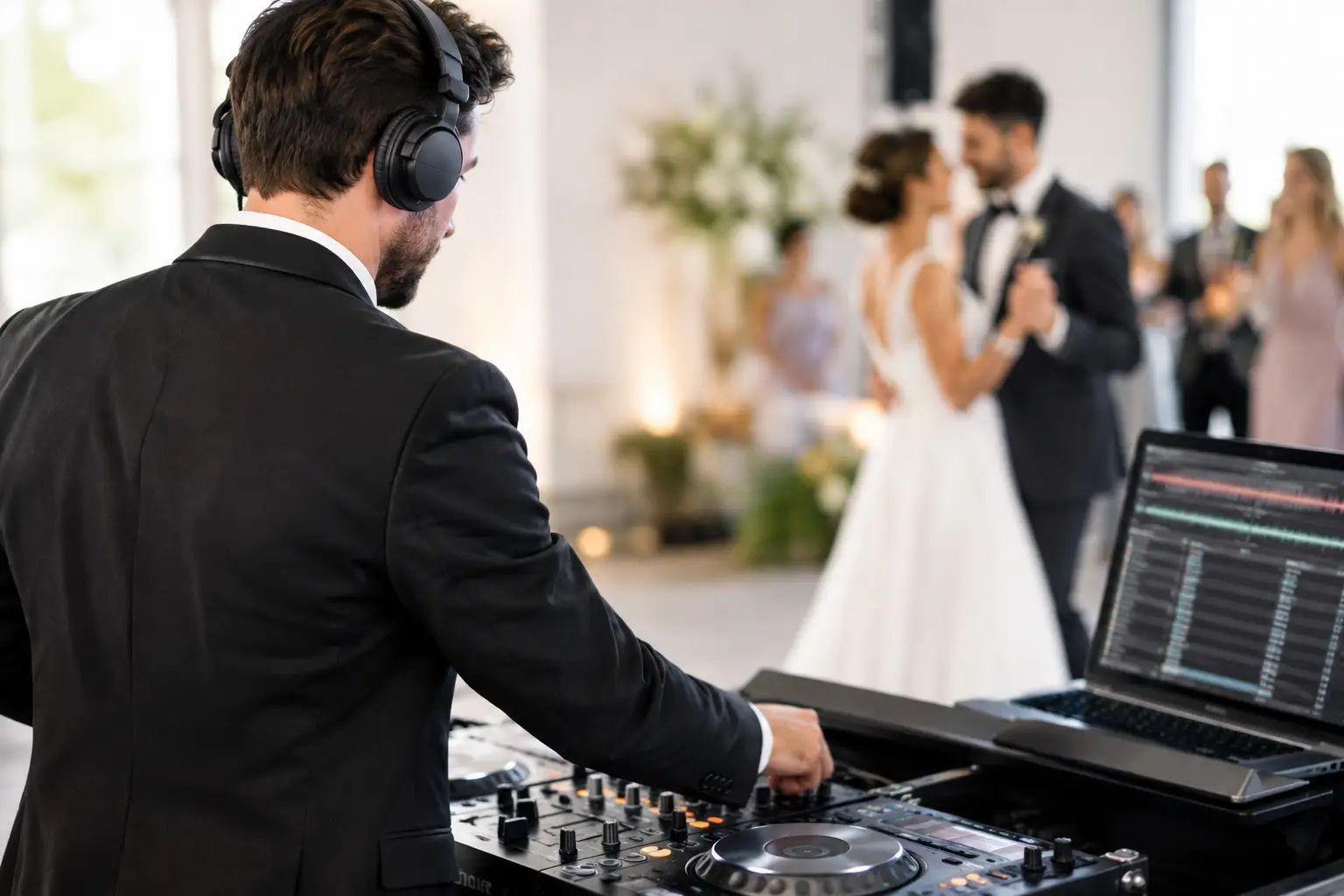
The first dance is over, the photographs are underway and the evening room begins to fill. This is the point where a wedding DJ stops being simply the person with the music and becomes the person setting the pace for the rest of the celebration. Get it right, and every generation finds a reason to stay on the dance floor. Get it wrong, and even a beautiful venue can feel flat.
Choosing a DJ is therefore about far more than comparing playlists or finding the lowest quote. You are trusting someone with a key part of your guests’ experience, your venue’s schedule and the atmosphere you have spent months planning. The right choice brings confidence, personality and professional production standards together.
What a Professional Wedding DJ Really Does
A capable wedding DJ reads the room while respecting the brief. They know that a packed dance floor is not built by playing a pre-set list from start to finish. It comes from understanding when to build energy, when to give guests a breather and when to play the song that brings a particular group straight to the floor.
That starts well before the wedding day. A proper planning conversation should cover your first dance, any family dances, music you would love to hear and tracks you would rather avoid. It should also establish the timings for speeches, cake cutting, room turnarounds and the evening reception. A DJ who understands the running order can work alongside the venue, photographer and coordinator rather than competing with them.
There is a balance to strike. Couples should absolutely have input over the soundtrack, particularly for milestone moments and favourite artists. Yet a long, fixed playlist can leave no space for the DJ to respond to the people actually in the room. A better approach is to give clear direction on styles, eras and non-negotiable songs, then choose a professional you trust to shape the night around your guests.
Choosing a Wedding DJ for Sound, Lighting and Service
Start with experience, not just a social feed
Smart photos and short video clips can show that a DJ has a polished setup, but they do not tell you how they handle a delayed wedding breakfast, an unexpected request or a room with difficult acoustics. Ask about their experience with weddings specifically, not only parties or nightclub work. Wedding timings are fluid, and the supplier needs to remain calm, presentable and adaptable when plans change.
It is also sensible to ask who will be attending. Some businesses use several DJs, which is not automatically a concern, but you should know who is responsible for your event and how the handover of your requirements will be managed. Consistent communication matters just as much as musical knowledge.
Listen for quality, not just volume
Music should feel full, clear and enjoyable at the edge of the dance floor as well as in the centre of it. Cheap or poorly maintained sound systems can become harsh when pushed, making conversation difficult and reducing the impact of the music. Quality loudspeakers, correctly matched amplification and an experienced operator make a noticeable difference.
The size and shape of your venue matter here. A country barn, hotel suite, marquee and village hall all behave differently acoustically. A professional will ask useful questions about guest numbers, ceiling height, power access, sound limiters and where the performance area is located. Those details are not overcomplication. They are how the setup is specified to suit the room rather than guessed on arrival.
If speeches are part of the requirement, discuss microphones separately. A single handheld microphone may be sufficient for a small, relaxed reception, while a larger wedding party or formal room may benefit from additional wireless microphones and a dedicated sound system. Clear speech reinforcement is one of the details guests remember when it is missing.
Treat lighting as part of the atmosphere
Lighting is often the difference between a functional evening setup and a room that feels ready for a celebration. Warm uplighting can complement the venue and your colour scheme, while discreet dance-floor effects add movement once the evening begins. The best designs enhance the room without turning a wedding breakfast into a nightclub before the first dance.
Ask to see real examples of lighting used in venues similar to yours. Consider whether you would like a clean, elegant look with minimal fixtures visible, or a more energetic party atmosphere later in the evening. Neither is inherently better. It depends on the venue, your styling and the kind of celebration you want.
Check the professional essentials
A wedding supplier should be easy to work with from the first enquiry. That means clear quotations, confirmed timings, realistic setup requirements and prompt answers to practical questions. It also means the operational details are in place: public-liability insurance, PAT-tested equipment and suitable backup plans.
Backup is particularly worth discussing. Technology is dependable when it is maintained and prepared properly, but no professional should rely on a single point of failure. Spare cables, replacement playback equipment, alternative microphones and contingency music should be standard thinking. You may never see these provisions on the night, which is exactly the point.
Questions Worth Asking Before You Book
The strongest questions reveal how a DJ works, rather than forcing them to recite a sales pitch. Ask how they plan the music with couples, whether they can accommodate requests on the night and how they manage songs you do not want played. Find out their expected arrival and setup time, whether they have worked at your venue, and what happens if the schedule runs late.
You should also ask what is included in the quoted price. One package may include professional sound, an elegant booth, lighting, travel and planning support, while another may cover only a basic performance. Neither quote can be compared fairly until you understand the equipment, service and time behind it.
For venues with strict sound limits, ask how the DJ handles them. A sound limiter does not prevent a great party, but it does require awareness and careful system control. The right provider will be honest about what is achievable and will work within the venue’s rules rather than risk cutting the music unexpectedly.
Build a Music Brief That Still Feels Personal
Your music brief does not need to be a spreadsheet containing every song you have ever enjoyed. It needs to give your DJ a clear picture of the atmosphere you want. Mention the artists and genres that matter to you, the eras your friends and family respond to, and any cultural or family traditions that should be included.
A short do-not-play list is useful too, especially if there are songs connected to difficult memories or styles you simply dislike. Keep it focused. Banning broad genres can sometimes remove the DJ’s ability to bridge generations, whereas saying you prefer soul, indie, disco and current chart music gives them practical direction.
Think beyond the final hour as well. Arrival music, background sound during dining, the introduction to the first dance and music for any planned surprises all deserve consideration. These moments do not have to be complicated, but they should feel intentional. A well-timed entrance track or a song that means something to your family can make the occasion feel distinctly yours.
Why Presentation and Coordination Matter
Your DJ will be visible in the room for much of the day or evening. Their setup, manner and communication form part of the overall impression your guests receive. Tidy cabling, appropriate lighting levels and a polished performance area are not minor details in a carefully styled venue.
Coordination is equally valuable. The evening may involve a band, venue team, photographer, videographer or master of ceremonies. A production-minded DJ can communicate with each of them, manage transitions and keep technical disruption to a minimum. If you need more than music, a provider with wider AV capability can also support microphones, projection, additional lighting or special effects through one accountable team.
This is where an experienced local production partner can remove pressure rather than add another supplier to manage. The Grind Events Hire, for example, combines professional DJ entertainment with premium sound, lighting and technical support, allowing wedding plans to be tailored around the venue and the occasion.
The best wedding DJ will not impose their taste on your reception or disappear behind a generic playlist. They will arrive prepared, sound excellent, look the part and make sensible decisions as the room changes. Give them a clear sense of what matters to you, confirm the practical details early, and you can spend the evening where you belong: celebrating with the people you invited.