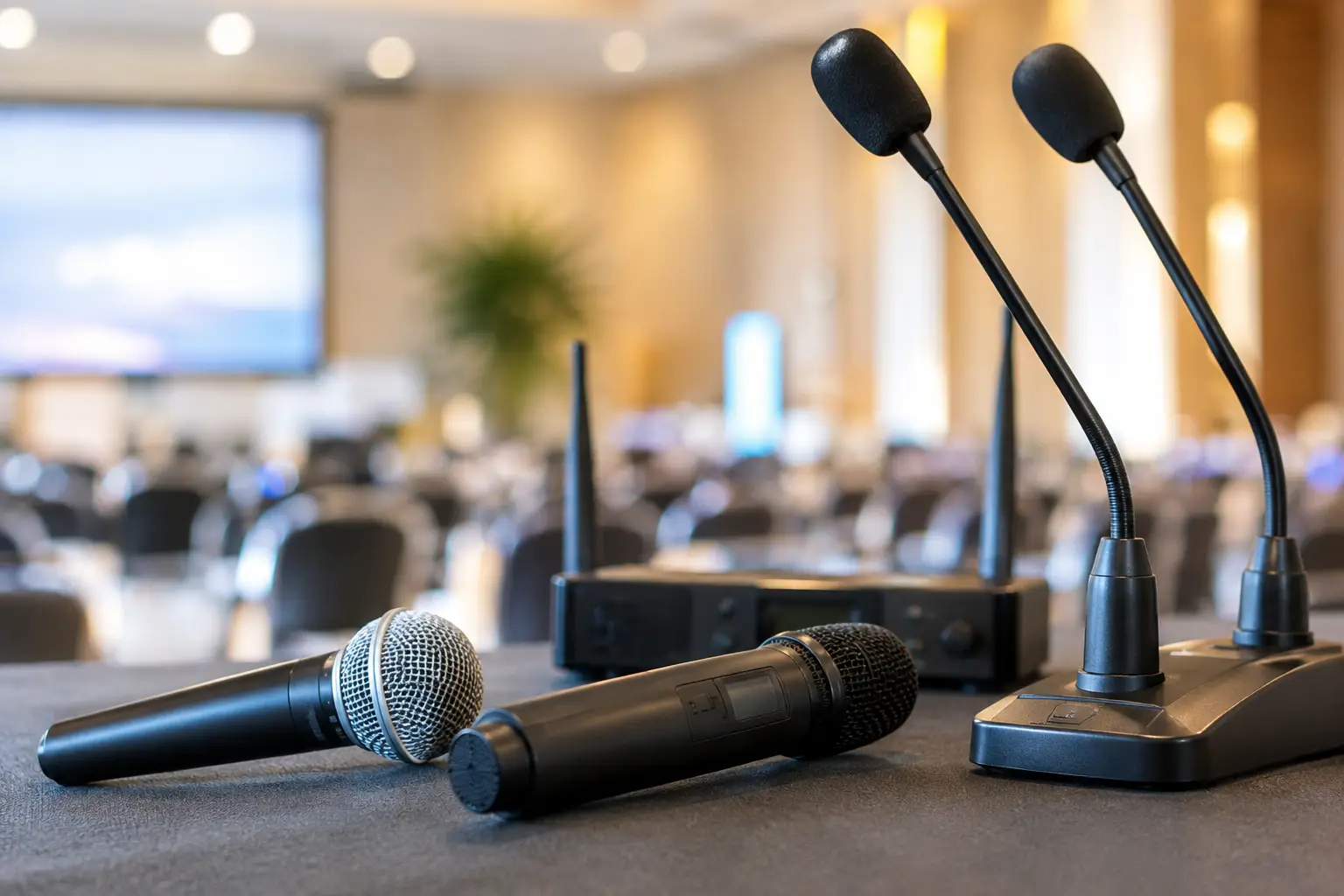
A microphone can be the difference between a wedding speech that brings the room together and one that is lost beneath clattering cutlery. The same applies to a company presentation, school production or charity auction. Knowing how to choose event microphones starts with the people speaking, performing or presenting - then considers the room, the audience and the sound system supporting them.
The right choice is not always the most expensive microphone or the one with the longest feature list. It is the option that gives every contributor confidence, keeps the programme moving and delivers clear sound to every guest without distractions, feedback or unnecessary technical fuss.
Start with the purpose of each microphone
Before selecting equipment, write down exactly who needs a microphone and when. A single lectern speech has very different requirements from a panel discussion, a roaming presenter or a live singer. One event may need several microphone types working together.
For formal speeches, an elegant wireless handheld microphone is often the most reliable option. It is easy to pass between speakers, gives the presenter a clear indication of where to speak and works well for wedding toasts, awards and audience questions. A wired handheld can be equally effective where the microphone will remain in one position and cable routing can be managed safely.
A lapel microphone, also known as a lavalier, is useful when a presenter needs both hands free. It suits demonstrations, training sessions and conference speakers who need to move naturally. However, it needs careful placement and setup. Clothing movement, jewellery and poor positioning can create unwanted noise, while the speaker must be comfortable wearing it.
Headset microphones are often the stronger hands-free choice for energetic presenters, fitness instructors, performers and anyone moving around a stage. Because the capsule stays close to the mouth, the engineer can achieve more level before feedback than with a lapel mic. They are practical rather than discreet, so consider whether the visual style fits the event.
For panels, conferences and seated discussions, gooseneck lectern microphones or tabletop microphones can look polished and keep hands free. They work best when every panellist has a dedicated microphone. Asking two or three people to share one tabletop mic usually leads to uneven levels and missed comments.
How to choose event microphones for the room
The venue is as influential as the microphone itself. A small private dining room with 40 guests has different acoustic challenges from a high-ceilinged barn, school hall or corporate venue with 300 delegates. Hard surfaces such as glass, tile and bare walls reflect sound, which can make speech less defined. Large rooms need appropriate loudspeaker coverage as well as suitable microphones.
Think about where the audience will be seated and where speakers will stand. If the event includes speeches from the top table, a handheld microphone may be passed along the line. If speakers will approach from different points in the room, wireless coverage and a clear handover plan become more important.
Distance matters. The closer a speaker can work to the microphone, the clearer and more controlled their voice will sound. That is why a handheld microphone needs to be held close to the mouth, not at chest height. It is also why a headset can outperform a lapel microphone in a lively room. Good microphone technique is not about making guests feel like performers; it is about making sure everyone hears the moment first time.
Choose wired or wireless based on risk, not fashion
Wireless microphones offer freedom of movement and a tidier visual finish. They are ideal for presenters walking the room, wedding speeches where cables would spoil the setting, or audience participation. Professional wireless systems from recognised manufacturers such as Sennheiser are designed to provide dependable audio when correctly coordinated and maintained.
That said, wired microphones remain a sensible choice for static positions. They do not require battery monitoring, radio-frequency coordination or receiver placement. For a lectern, DJ booth, fixed stage position or acoustic performer, a wired microphone can provide excellent sound and dependable operation at a lower cost.
Wireless should be selected where it adds a genuine event benefit, not simply because it feels more premium. A carefully planned production may use both: wired microphones for fixed performers and lecterns, with wireless handhelds or headsets for hosts and roaming speakers.
Match the microphone to the voice and performance
Speech and music should not be treated as the same job. A clear spoken-word microphone prioritises intelligibility, helping guests understand every word. A vocalist may need a microphone that handles a wider dynamic range, higher sound levels and the tonal character of their voice.
For singers, the rest of the stage matters too. A vocalist standing close to loud monitors, a drum kit or amplified instruments needs a microphone and monitoring plan that helps control spill and feedback. For a solo acoustic performer in a quiet setting, the priority may be natural tone rather than maximum rejection of background sound.
If several people will use the same microphone, choose one that is forgiving. Wedding guests and award winners will not necessarily have microphone technique, and that is perfectly normal. A professional engineer can set sensible gain levels, compression and equalisation to support a range of voices, but the microphone still needs to suit real-world use.
Plan for the number of channels and the programme
Count simultaneous microphones, not just the total number required across the day. A host, three panellists and a roaming question microphone could need five active channels at once. A school production might require multiple headset microphones for performers, plus handhelds for announcements and additional inputs for music playback.
More wireless channels introduce more planning. Each system needs a clear, compatible frequency, fresh or fully charged batteries, correctly labelled transmitters and a receiver setup that can be monitored throughout the event. In busy venues and town-centre locations, the radio environment may already be crowded. Professional frequency coordination is not a luxury when several wireless systems are in use; it is part of protecting the running order.
It is also worth considering handovers. Who will give the best man the microphone? Where will the host place it after speaking? Will audience members be invited to ask questions? Small practical decisions prevent awkward pauses and reduce the chance of a microphone being dropped, switched off or taken out of range.
Do not overlook stands, batteries and sound control
A microphone package is more than the microphone. The right stand can make a lectern look smart, position a vocal microphone safely and keep a performance area uncluttered. Windshields can reduce breath noise and protect capsules, while discreet clips and cable management help maintain a polished finish.
For wireless systems, battery management is essential. Every transmitter should begin with fresh, tested batteries or fully charged professional packs, with spares ready for longer programmes. A presenter should not be worrying about a battery indicator halfway through a keynote or first dance speech.
Feedback is another common concern. That high-pitched whistle is usually caused by a microphone picking up sound from a loudspeaker and repeatedly re-amplifying it. Correct loudspeaker placement, sensible volume, suitable microphone choice and an experienced sound engineer all play a part in preventing it. Turning everything down is not the only answer - the aim is clear, comfortable sound with enough headroom for the room.
Ask what level of support the event needs
For a straightforward small gathering, a single handheld microphone and compact PA may be all that is required. For a wedding breakfast, conference, fundraiser or live performance, having a technician set up, test and manage the system offers valuable reassurance. They can soundcheck contributors, respond to changes in the schedule and make adjustments without placing that responsibility on the organiser or venue team.
When comparing suppliers, ask whether equipment is professionally maintained, PAT tested and supplied with appropriate stands, batteries and backup options. For corporate, school and public events, also check insurance cover and whether the supplier can provide practical advice before the day. The Grind Events Hire approaches microphone hire as part of the wider sound experience, using professional production equipment and hands-on support where the event demands it.
A short soundcheck is one of the best investments in an event schedule. Let key speakers say a few words at realistic volume, check that performers are comfortable and confirm where microphones will be placed between uses. When guests hear every welcome, toast, thank-you and announcement clearly, the technology fades into the background - exactly where it belongs.