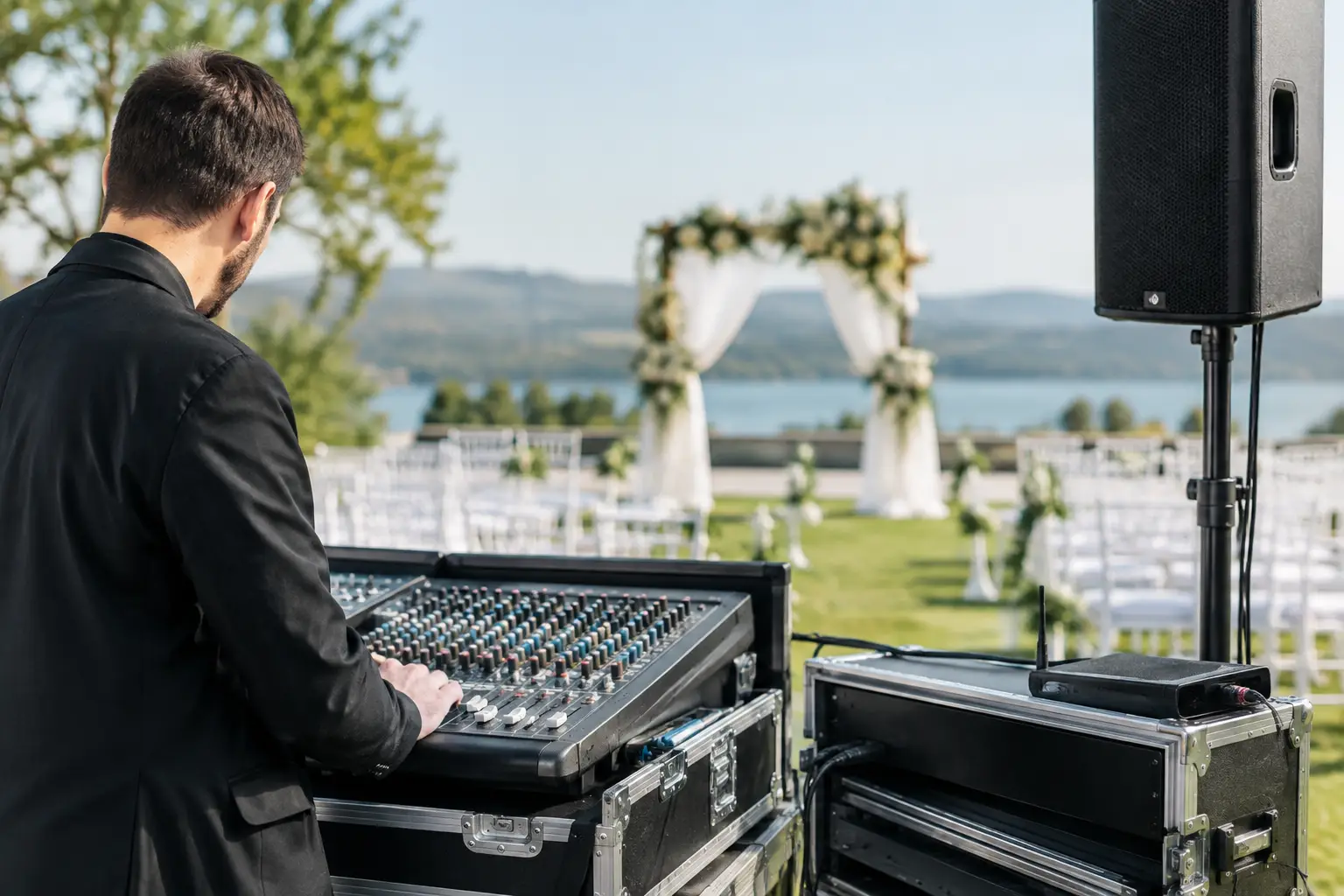
A wedding can look immaculate and still feel disjointed if guests cannot hear the vows, the best man’s punchline disappears into clattering plates, or the evening music lacks the energy to fill the dancefloor. Knowing how to plan wedding sound means treating audio as part of the guest experience from the ceremony through to the final song, rather than an item to arrange a few days before.
The right approach is not always the biggest system. It is the system, microphones and technical support that suit your venue, guest numbers and schedule. A small barn wedding, a country-house ceremony and a marquee reception all present very different acoustic challenges.
Start With the Moments Guests Need to Hear
Think through your wedding as a sequence of sound moments. The ceremony usually comes first: music for guest arrival, entrance music, readings, vows and the signing of the register. If your ceremony is outdoors, in a large room or attended by more than a close handful of guests, discreet microphones and compact speakers can make a substantial difference.
There is a balance to strike. Nobody wants a ceremony to sound like a conference, but guests should not have to strain to follow the words that matter most. A properly set, carefully positioned system should provide clear, natural speech without drawing attention to itself.
The wedding breakfast brings a different challenge. Background music needs enough presence to create atmosphere, but not so much that guests must raise their voices across the table. Speeches need clear vocal reinforcement, particularly in barns, marquees, high-ceilinged rooms and spaces with hard surfaces. These venues can create echo, while rooms filled with guests, linen and table settings absorb sound in unexpected ways.
Then comes the evening reception. Here, the priority shifts from speech clarity to musical impact. A professional DJ or sound system should deliver a full, warm sound across the floor without making conversations impossible at the bar or overwhelming guests sitting nearby.
How to Plan Wedding Sound Around Your Venue
Your venue is the starting point for every sensible sound plan. Ask early whether it has an in-house PA system, whether you are required to use approved suppliers, and where power is available. An installed speaker system may be suitable for a simple speech, but it may not be designed for ceremony music, live performers or a busy evening party.
Also ask about sound limits. Many venues use a limiter that reduces or cuts power when music reaches a set volume. This does not necessarily prevent a great party, but it changes how the system needs to be specified and managed. A production partner should know how to achieve energy and clarity within the venue’s limits, rather than simply turning everything up and hoping for the best.
Outdoor ceremonies need additional planning. Wind, traffic, aircraft, rain cover and long distances between the celebrant and guests can all affect intelligibility. Battery-powered equipment can be useful where mains power is unavailable, although battery capacity, weather protection and backup arrangements must be considered. For anything more than a very small gathering, do not rely on a portable Bluetooth speaker.
Marquees deserve particular attention. They can sound surprisingly lively when empty and noticeably dull once full of people. Their temporary power supplies and cable routes also need professional consideration. Equipment should be correctly distributed, safely cabled and protected from drinks, weather and foot traffic.
Arrange a Site Visit Where It Adds Value
A site visit is especially worthwhile for unusual layouts, outdoor ceremonies, large guest lists or venues with known sound restrictions. It allows the technical team to identify speaker positions, power access, cable runs and potential feedback issues before the wedding day.
For a more straightforward hotel or function-suite wedding, detailed plans, photographs and a conversation with the venue may be enough. The point is not to make the process complicated. It is to remove avoidable surprises.
Choose Equipment for Clarity, Not Just Volume
Quality wedding sound is about coverage and control. Speakers should be positioned so guests hear a balanced level throughout the room, not just those nearest the dancefloor. One oversized speaker in a corner often produces the opposite result: excessive volume nearby and weak sound everywhere else.
For ceremonies and speeches, a compact professional PA with properly matched microphones is usually the right foundation. Wireless handheld microphones work well for speeches because they can be passed between speakers. A discreet lapel or headset microphone may suit a celebrant, particularly outdoors, but only if it is fitted and tested correctly.
Music playback should be treated separately from speech microphones. A DJ, musician or venue coordinator may need to connect a phone, laptop or instrument, and the system should have the correct professional connections available. Avoid relying on a single consumer adaptor or a guest’s playlist connection at the last minute.
For the evening, speaker choice depends on the room, guest count and entertainment. Premium systems from recognised production brands deliver more detail and headroom than basic party equipment, meaning they can sound confident at sensible levels rather than harsh when pushed. If you are booking a live band, confirm whether they bring their own PA and whether it is suitable for the room and any venue limits.
Build Sound Into the Wedding Timeline
A good technical plan gives enough time for setup, soundchecks and a calm handover between each part of the day. It is common for a ceremony system, background music setup and evening DJ position to be in different locations. If that is your plan, decide whether equipment can be moved discreetly during photographs or whether separate systems are more appropriate.
Share a running order with your supplier. Include ceremony start time, key music cues, readings, speech order, first dance timing and venue finish time. Name one person who can approve changes on the day, such as your coordinator, best person or a trusted member of the wedding party. This prevents last-minute requests from becoming conflicting instructions.
It is also worth planning the small transitions. What plays while guests move from the ceremony to drinks? Will there be walk-in music for speeches? Does the cake cut happen before or after the first dance? These moments are where a well-managed soundtrack makes the day feel considered rather than stop-start.
Do Not Overlook Power, Safety and Backups
Wedding audio has to work reliably for one opportunity only. That is why professionally maintained equipment, tested cables and backup options matter. A spare microphone, replacement batteries, a secondary playback device and a contingency for a failed cable are not glamorous details, but they protect important moments.
Ask your supplier about PAT testing, public-liability insurance and cable management. Cables crossing public areas should be routed safely, covered where necessary and kept out of sight where possible. In a marquee or outdoor setting, the supplier should also understand generator capacity, distribution and weather-safe working.
A capable technician will monitor levels during speeches, respond quickly if a microphone is held too far away, and manage music around the room’s changing energy. Dry hire can be suitable if you have experienced people on site, but a wedding is rarely the best time to ask a family member to troubleshoot feedback while everyone is waiting for the father of the bride.
Match the Supplier to the Level of Support You Need
When comparing wedding sound options, look beyond the headline price and speaker wattage. Ask what is included: delivery, setup, collection, soundcheck, microphones, music playback connections, on-site support and backup equipment. Confirm who will communicate with the venue and whether the supplier has experience of similar spaces.
A simple package may be exactly right for an intimate reception with a DJ in a venue that already understands events. A ceremony in a field followed by speeches in a marquee and a band in the evening requires more coordination. It depends on your plans, but the supplier should be able to explain the reasoning behind the recommended setup in plain English.
At The Grind Events Hire, the focus is on professionally specified sound and hands-on event support, so couples can concentrate on their guests rather than technical details. That confidence comes from preparation, reliable equipment and a team that knows where problems are most likely to arise.
Give Your Sound Team the Details Early
The most useful information to provide is your venue layout, guest numbers, timings, entertainment choices, music requirements and any venue restrictions. Mention readings, video content, surprise performances and cultural elements too. A single additional microphone or playback connection can be the difference between a smooth moment and an awkward pause.
The best wedding sound is rarely noticed as equipment. Guests simply hear every word, feel the music properly and stay present in the moment. Give it the same early attention you give your food, photography and flowers, and it will quietly support the atmosphere you have worked so hard to create.