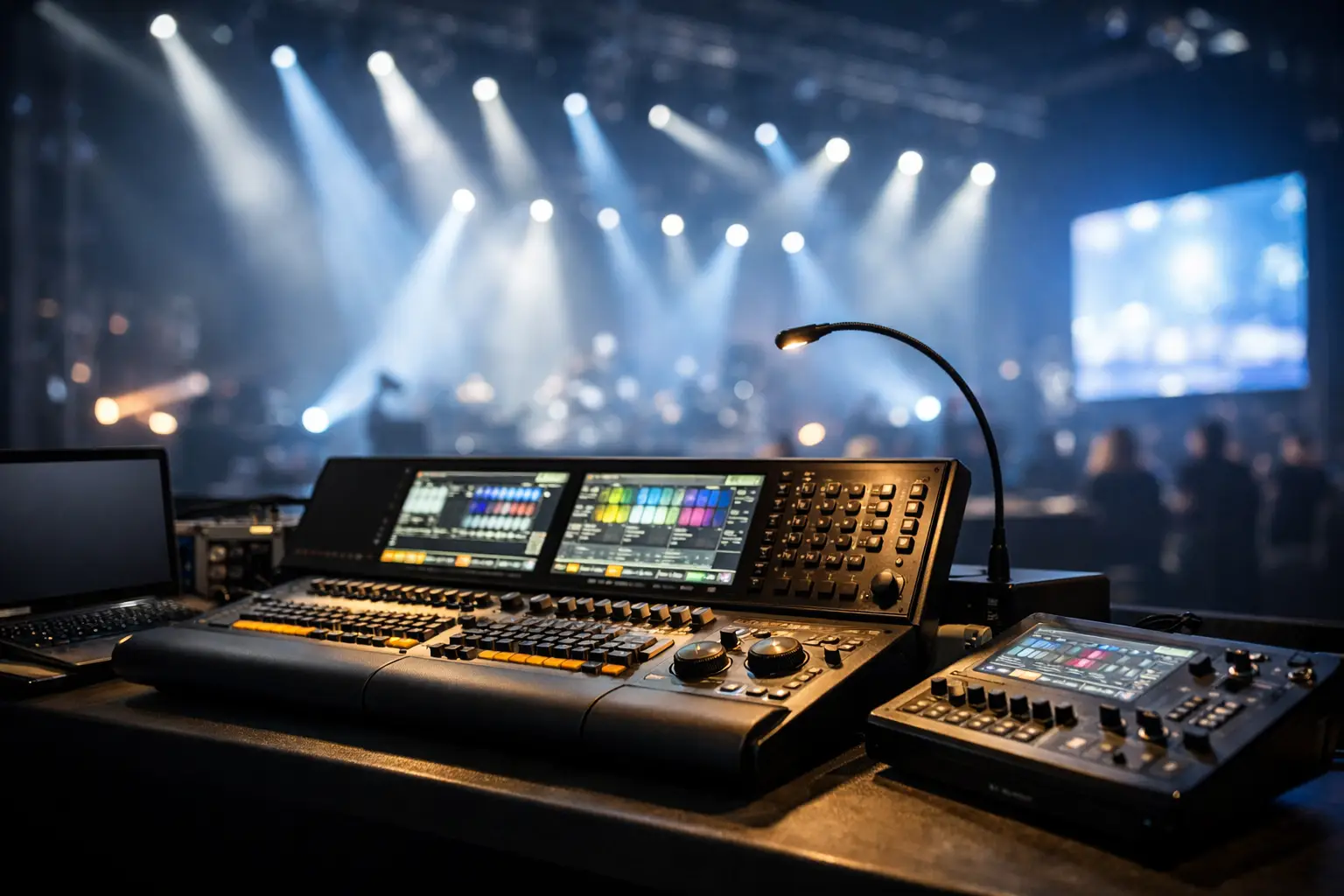
A room can have excellent lighting fixtures and still look flat, distracting or unfinished if they are not controlled properly. Lighting control hire gives an event a central point of command: the place where colour, movement, intensity and timing are shaped into an experience your guests actually notice.
For a wedding, that might mean a warm, elegant look during dinner before a confident transition into the evening party. For a school production, it means reliable scene changes that support the performers rather than pulling attention away from them. At a corporate launch, it means brand colours appear precisely when they should, with no last-minute scrambling around a wall of light fittings.
The difference is not simply having more lights. It is having the right control system, correctly specified and operated by people who understand the event in front of them.
What lighting control hire actually provides
A lighting controller, often called a lighting desk or console, communicates with compatible fixtures using a control protocol such as DMX. Rather than adjusting every uplighter, moving head or LED fixture individually, an operator can programme groups, create scenes and trigger changes from one professional interface.
This makes a complex setup manageable. A single cue can bring house lights down, put a speaker in clear white light, introduce a branded colour wash and prepare moving lights for an awards sting. When the event moves on, the next cue follows without anyone needing to walk around the room changing settings by hand.
The controller itself is only one part of the system. A properly planned hire may also include DMX distribution, wireless control where appropriate, addressing and patching, programming time, flight cases and a trained technician. For larger installations, it can include networking equipment and backup options too.
That is why lighting control should be considered alongside the full rig, not as a last-minute add-on. The control system needs to suit the fixtures, the venue layout, the show schedule and the level of support required.
When a lighting control desk is worth hiring
Not every event requires a programmed console. A small private gathering with a handful of static uplighters may be well served by simple local control or a preset look. Adding a large desk and operator in that situation can be unnecessary expense.
The value rises quickly once lighting needs to change during the event. If you are using moving heads, multiple fixture types, stage lighting, intelligent effects, a performance schedule or branded looks, central control becomes the sensible choice. It gives you consistency, speed and a far more polished result.
It is particularly useful for weddings with formal entrances and entertainment, awards evenings, fashion shows, conferences, theatre and school productions, live music, charity events and busy venue takeovers. In each case, the audience may not know the technical detail, but they will notice whether the room feels considered.
There is also a practical reason to choose professional control. A lighting look that is comfortable for guests during a meal is usually very different from the level, colour and movement needed for dancing. Switching between those moments properly protects the atmosphere you have worked hard to create.
Choosing the right level of control
The best lighting control hire package starts with a clear conversation about what needs to happen, not a shopping list of individual fixtures. Ask what moments matter most: arrivals, speeches, a reveal, a first dance, performances, presentations or the final party set.
For many parties and wedding receptions, a compact professional controller with carefully prepared scenes is ideal. It can deliver a clean room wash, dancefloor effects and smooth changes between the two, without introducing unnecessary complexity. An experienced operator can keep the lighting responsive to the music while maintaining a smart, balanced look for photographs.
For productions with a running order, a more capable desk and pre-programmed cue stack may be required. This allows the operator to follow rehearsed lighting states in sequence, adjust timing live and respond if the schedule changes. Theatre, school showcases and corporate presentations benefit from this approach because precision matters more than spectacle alone.
Larger events may need an advanced console such as an Avolites system, supported by professional moving lights, LED battens, washes and stage fixtures. These desks are designed for fast programming and live playback, making them a strong fit where the lighting design is a visible part of the production.
The right choice depends on the scale of the rig, but also on the consequences of getting it wrong. A missed cue at a birthday party is frustrating. A missed cue during an award winner walk-on, keynote reveal or school performance can disrupt the whole room.
Control is about more than flashing effects
One of the most common mistakes in event lighting is treating movement and colour as the entire design. Used well, they add energy. Used constantly, they can become tiring, interfere with photographs and make a premium event feel cluttered.
Professional control gives the operator restraint as well as options. During speeches, lighting can be steady, flattering and focused. For a panel discussion, presenters can be clearly visible without blasting the audience with bright fixtures. During a DJ set, controlled movement, rhythm and colour can lift the dancefloor at the right points.
Colour temperature matters too. Warm white can make a dining room feel welcoming, while crisp white is often better for a stage or exhibition area. Saturated colours are powerful for a party or brand moment, but they can distort skin tones and compete with table styling if used without care. A good lighting plan recognises that one look rarely suits every part of an event.
Why operator support often makes the difference
Dry hire can be the right route for experienced production teams who have their own technician and understand the equipment they are collecting. They may only need a specific desk, additional DMX control or replacement equipment for an existing system.
For most private organisers, however, a supplied and operated package provides much better value. A technician can arrive with the correct cabling, position fixtures thoughtfully, programme the essential looks, test the system and remain available to run changes during the event. That removes a substantial technical burden from the organiser, venue team or wedding party.
An operator is also there for the details that cannot be fully predicted. Timings overrun. A speaker changes position. A performer needs more light. A venue asks for a slight adjustment to protect sightlines or reduce spill. These are normal event realities, and they are far easier to manage when someone competent is already at the controls.
The Grind Events Hire approaches lighting as part of the wider production rather than an isolated hire item. When sound, microphones, projection, DJ performance and lighting are planned together, timings and sightlines can be considered from the outset. The result is less equipment competing for space and more confidence that each element supports the event.
Questions to settle before booking
Before confirming a package, establish the venue access times, ceiling height, available power, room dimensions and whether any rigging points are available. A site visit is valuable for larger or unfamiliar spaces, particularly where stage lighting, truss or multiple event areas are involved.
Share a realistic running order as early as possible. It does not need to be minute-perfect, but it should identify major moments and who is responsible for calling them. If there are performances, provide music tracks, staging plans and rehearsal times. If there is a corporate presentation, confirm where presenters will stand and whether projection or LED screens will affect the lighting design.
Safety and presentation should sit alongside creative ambition. Professional equipment should be maintained, PAT-tested where applicable and installed with tidy cable management. Public-liability cover, suitable insurance documentation and technicians who respect venue procedures are especially relevant for schools, public venues, corporate sites and high-footfall events.
It is also worth discussing contingency. A well-prepared supplier does not assume every event will run exactly as planned. Spare cables, sensible power distribution, secure fixture placement and a technician who can diagnose a fault calmly are all part of protecting the guest experience.
Build the atmosphere, then control it properly
Lighting is often remembered as a feeling rather than a piece of equipment. Guests remember the anticipation before an entrance, the warmth of a room full of people celebrating, the impact of a stage reveal and the energy when the dancefloor fills.
Those moments depend on choices made well before the doors open. Specify lighting control hire around your event’s key moments, venue and level of production support, then let the system do what it is meant to do: make every transition look intentional while you focus on your guests.