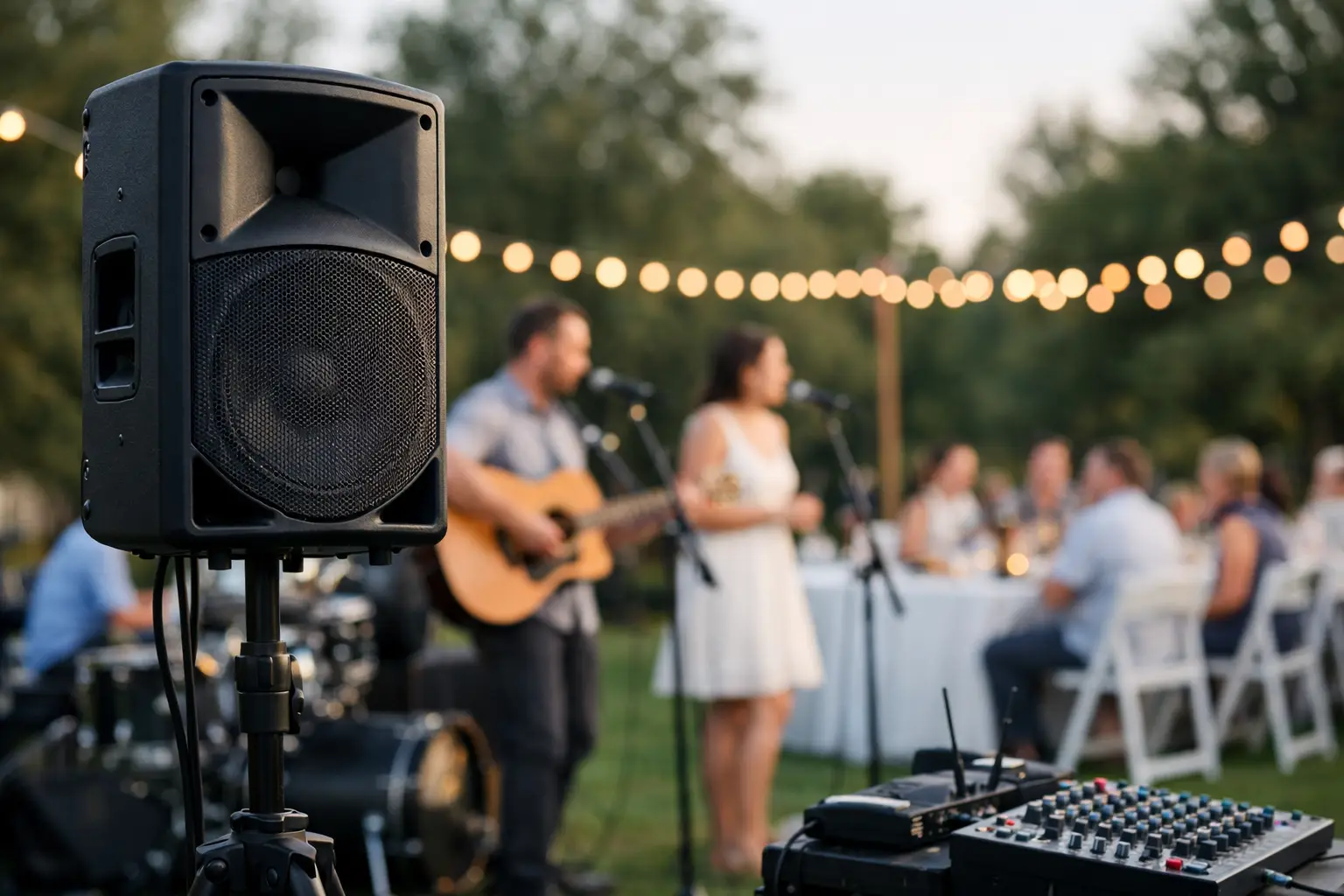
A garden celebration can look immaculate, yet still fall flat if guests cannot hear the ceremony, the speeches or the music. An outdoor sound system has to work harder than equipment used inside a function room: it must cover an open space evenly, overcome wind and background noise, and remain safe around changing weather, cables and power.
For a wedding, private party, fundraiser or corporate event, the right approach is not simply hiring the biggest speaker available. It is designing sound around the space, the guest numbers and the moments that matter most.
What makes outdoor sound more demanding?
Indoors, walls and ceilings help contain sound. Outside, audio disperses quickly. A speaker that feels powerful when tested in a living room may struggle to provide clear coverage across a lawn, courtyard, marquee frontage or sports ground.
Wind can carry high frequencies away from part of the audience, while traffic, generators, chatter and neighbouring activity create competing noise. The result is often familiar: people near the speakers find the volume excessive, while those at the back hear only a distant wash of music. Turning one pair of speakers up is rarely the answer. It usually makes the nearest tables uncomfortable without improving clarity elsewhere.
A professional solution uses sensible speaker positioning and, where required, additional coverage speakers rather than relying on sheer volume. This gives guests a more consistent experience and keeps sound focused on the event area.
Start with the moments your guests need to hear
Before selecting equipment, consider the running order. The technical requirements for a relaxed afternoon garden party are different from those of an outdoor wedding ceremony followed by evening entertainment.
Speech is usually the first priority. Registrars, celebrants, presenters and family members need reliable microphones, clear amplification and a system that allows natural voices to be understood without sounding harsh. Wireless microphones are valuable for movement, but they require proper frequency planning, battery management and a technician who can respond if the environment changes.
Music needs its own consideration. Background music during drinks is about warmth and even coverage, not nightclub levels. A DJ set or live act needs more headroom, controlled low end and equipment capable of delivering impact without distorting. If the event moves from day to evening, the system should be planned for both moods rather than compromised for one.
For corporate launches, awards presentations and charity events, playback, walk-on music, video audio and handheld microphones should be treated as one coordinated production. A delayed video soundtrack or an inaudible question from the floor can undermine an otherwise polished event.
Matching the outdoor sound system to the site
Site information is as useful as a guest count. A 100-person reception on a sheltered lawn may need a very different setup from a 100-person event in a long courtyard, an open field or a multi-zone venue.
Shape, distance and audience layout
A wide audience needs broad, controlled coverage. A long audience area may benefit from speakers positioned further down the space, set and timed correctly so that sound arrives naturally. This is particularly useful for ceremonies where guests are seated well away from the front.
Speaker placement should protect sightlines, avoid blocking photographs and keep equipment away from busy walkways. It also needs to account for where people will gather later. Guests tend to migrate towards bars, food stations and sheltered areas, so a system designed only for the original seating plan can become ineffective as the event develops.
Surface and shelter
Grass, paving, decking and gravel all affect practical setup. Stands must be stable, cables need suitable protection, and equipment should not create a trip hazard. Marquees, gazebos and covered terraces can make sound feel more contained, but they also introduce reflections that need careful level setting.
Weather protection matters, but it is not a reason to place audio equipment where it cannot perform. Professional outdoor sound hire involves a realistic wet-weather contingency. That may include covered operating positions, protected power distribution and an agreed plan to pause, relocate or adapt should conditions become unsafe.
Power is part of the production
Sound systems are only as dependable as their power supply. Domestic outdoor sockets can be suitable for modest requirements, but they should be assessed carefully, particularly where catering, lighting, heaters or entertainment are also drawing power.
For larger events, dedicated distribution or a correctly specified generator may be needed. Generator placement is important too: put it too close and its own noise competes with speeches; put it too far away without planning and cable runs become less practical. A technical supplier should calculate the requirement rather than make assumptions on arrival.
Why professional equipment and setup matter
Premium loudspeakers are not just about being louder. Systems from recognised production manufacturers are engineered for clarity, controlled dispersion and reliable performance at appropriate levels. That means speech can remain intelligible and music can retain detail, even when the event has ambient noise to contend with.
The same applies to microphones and mixing. A quality wireless handheld microphone can make a nervous speaker easier to understand. A discreet lapel or headset microphone may suit a celebrant or presenter, although these need careful fitting and sound checks. Wind protection, gain control and feedback management are small details that make a sizeable difference.
For an event with a DJ, band or multiple contributors, a professional mixer allows each source to be balanced properly. Music should not overwhelm announcements, and microphone levels should not leap unexpectedly when someone starts speaking. This is the difference between supplying boxes of equipment and delivering a managed guest experience.
At The Grind Events Hire, professionally maintained equipment, including KV2 Audio, Allen & Heath and Sennheiser technology, is selected and deployed around the demands of the event rather than a one-size-fits-all package.
Keep the sound enjoyable for guests and neighbours
Outdoor events sit closer to neighbours, public spaces and venue boundaries. Good sound is not measured by volume alone. It is measured by whether the intended audience can hear clearly and whether the event remains considerate of its surroundings.
Directional speaker placement, sensible subwoofer levels and correct system tuning can help contain sound within the party area. Bass travels further than many organisers expect, especially late in the evening, so a powerful low-end setup is not always appropriate. Venues may also have curfews or specific noise conditions, which should be understood before entertainment is confirmed.
A sound check should happen with the real event layout in place wherever possible. Empty spaces behave differently once filled with guests, but checking speech from several audience positions will expose obvious coverage gaps. It is also worth agreeing who has authority to request volume changes on the day, avoiding mixed instructions from well-meaning guests.
Questions to settle before booking
The best outdoor audio plans begin with a clear brief. Share the date, location, expected attendance, timings, running order and whether the event is fully outdoors or partly under cover. Mention live music, DJs, speeches, video playback, remote presenters and any venue restrictions from the outset.
You should also ask what is included beyond the speakers. Delivery, setup, collection, microphones, technician support, cable protection, power requirements, weather planning, PAT testing and public-liability insurance all affect the quality and safety of the finished production. Dry hire can be suitable for experienced teams with a straightforward brief, but managed production is often the better choice when the event has no room for technical distractions.
For weddings and milestone parties, consider whether someone should remain available through the key formalities. For corporate and charity events, an on-site operator is particularly valuable when there are presentations, changing schedules or multiple speakers. The right level of support depends on complexity, but it should be decided deliberately rather than assumed.
Build confidence into the plan
Outdoor events have a certain energy precisely because they are less controlled than a ballroom. Guests notice the setting, the atmosphere and the occasion, not the technical work happening behind the scenes. That only works when the technical foundations have been thought through.
Give the sound system enough planning time, provide an accurate site brief and choose a team that treats clear audio, safe installation and contingency planning as essential. Then, when the vows begin, the first speech lands or the dancefloor fills after sunset, every guest can simply be part of the moment.