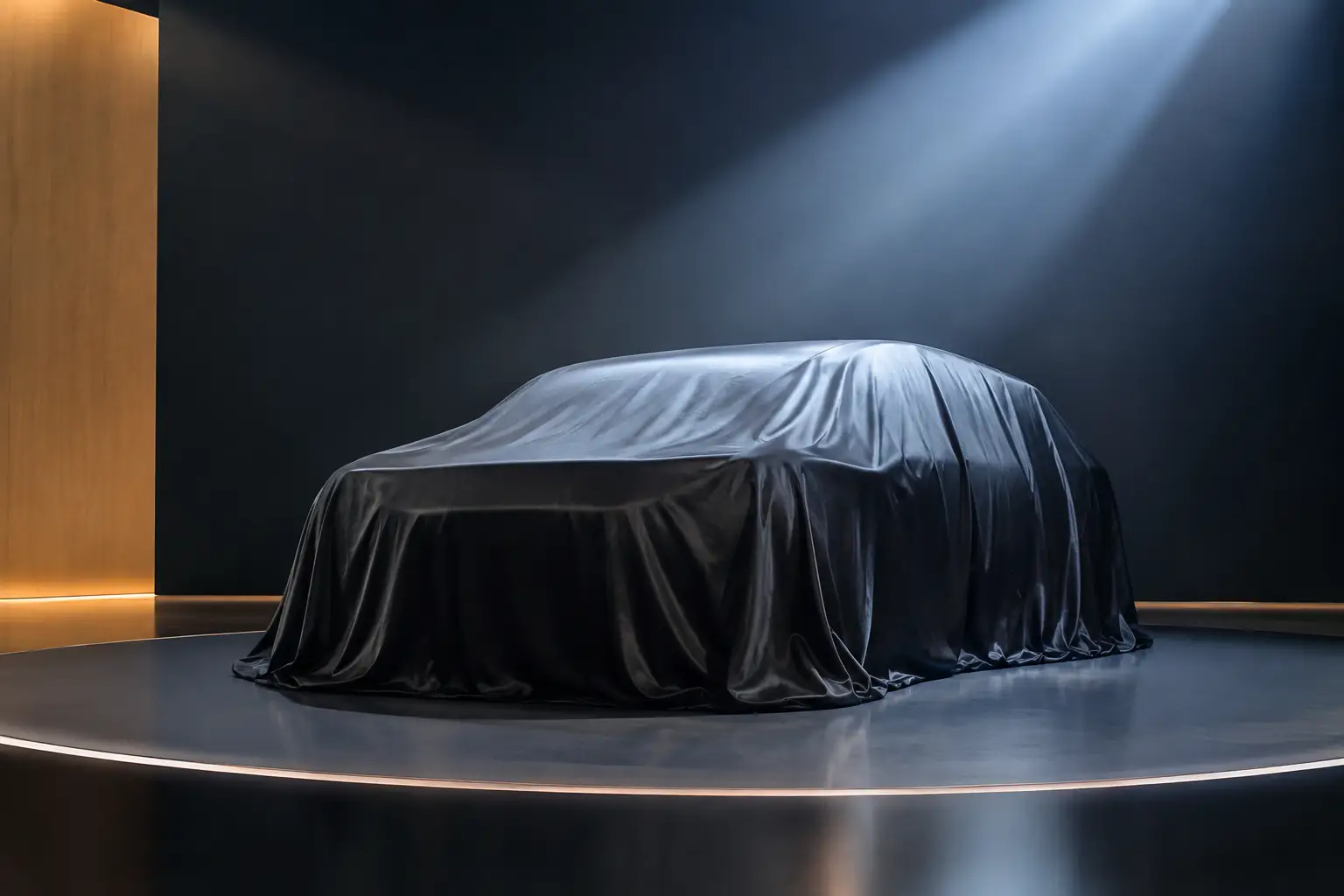
A new product deserves more than a branded slide and a microphone. The right product reveal projection turns the first moment of visibility into a deliberate piece of theatre - drawing attention to the stage, building expectation and giving guests a clear reason to look up, pause and react.
For a vehicle launch, a new menu range, a property development, a rebrand or a headline product announcement, projection can create a far stronger reveal than simply removing a cover. It can control what the audience sees, when they see it and how the room feels in the seconds before the reveal. The difference lies in treating it as part of the event production, rather than an item added to the equipment list at the last minute.
What makes a product reveal projection effective?
A successful reveal has one job: make the product the focal point. That sounds obvious, but it is easily lost when content is too busy, the screen is too small, lighting spills across the projection surface or a presenter has to explain what guests should be looking at.
Projection works particularly well because it can begin before the product is visible. A simple sequence of light, motion, detail shots, silhouettes or a countdown can establish anticipation without giving everything away. At the chosen moment, the content changes, the lighting shifts and the product appears. The audience experiences a single, coordinated reveal rather than several competing actions on stage.
The best approach depends on the product itself. A compact consumer item may benefit from large-scale close-up visuals behind a physical display. A car, machinery or oversized installation may call for projection mapping, scenic projection or a backdrop that frames the product without obstructing it. For some launches, a large LED display is the stronger option. For others, projection offers a softer, more cinematic look and can cover unusually shaped scenic surfaces effectively.
Start with the audience sightlines
Before choosing projector brightness or screen size, consider where every guest will stand or sit. A reveal can look exceptional from the centre of the room but fail for guests at the sides if the product is hidden by staging, presenters or display furniture.
The product needs a clear physical position, with enough space around it to read as important. The projection surface should support that position, not compete with it. In many corporate and branded events, this means placing a wide screen or projected backdrop behind the product and keeping the visual content restrained until the reveal moment.
Room layout matters just as much. Ceiling height, pillar positions, windows, ambient lighting and guest capacity all affect the technical plan. A bright, glass-fronted venue in daytime needs a different solution from a blacked-out function suite or theatre. It is possible to project in challenging conditions, but expectations need to match the environment. If daylight cannot be controlled, higher-output projection, additional masking or an LED alternative may be required.
Screen, surface and scale
A proper projection screen provides a clean, consistent image and is often the best choice for presentations, launch films and branded motion graphics. A white scenic wall can work, although paint finish, joins and uneven texture can affect the result. Projection onto drape is usually less precise and can reduce contrast, particularly for detailed product imagery.
Scale should be designed for the furthest guest, not the person standing near the stage. Small text, detailed specifications and intricate logos need enough resolution and screen real estate to remain legible. If a launch includes both a dramatic reveal film and technical product information, it is often better to keep the reveal visuals bold and simple, then move into more detailed content afterwards.
Brightness is not the only technical decision
Projector brightness is commonly measured in lumens, but a high number alone does not guarantee an impressive image. The required output depends on screen size, throw distance, room lighting and the content being shown. Dark, cinematic footage needs controlled lighting to retain depth. White-heavy slides and bold branding are more forgiving, but can still look washed out if the room is overly bright.
Contrast is equally valuable. A well-positioned projector in a managed lighting environment can look more premium than an overpowered unit fighting direct sunlight. This is where a site visit or thorough venue assessment pays for itself. It identifies practical issues before the event day, including where projectors can be placed, whether ceiling rigging is available and how cables can be kept safe and discreet.
Professional presentation also means allowing for backup. A launch film that cannot play because of an unsuitable file, missing adaptor or unreliable laptop connection is not a minor inconvenience when the room is waiting. Content should be supplied in an agreed format, tested in advance and played from dependable hardware. Critical playback, presentation control and audio should be managed as one system.
Build the reveal around a cue sequence
A product reveal projection is most effective when it is rehearsed as a cue sequence. The presenter, playback operator, lighting technician, audio system and anyone moving the product need to work to the same timing.
A typical sequence may begin with walk-in music and branded holding visuals. As the presenter reaches the key point, house lights reduce, music changes and the screen moves into a short reveal film. At the final frame, the projection either clears, becomes a branded backdrop or changes to product detail while lighting brings the physical item into view.
That sequence does not need to be complicated to feel powerful. In fact, a concise reveal often creates the strongest response. Long countdowns can feel forced, and overly elaborate effects risk placing the production ahead of the product. The aim is confidence and clarity: guests should understand where to look and recognise the significance of the moment immediately.
Sound and lighting create the emotional lift
Projection without sound can still communicate information, but it rarely creates a launch moment. Music, voiceover, a sonic hit or a carefully timed silence can give the reveal real weight. The audio needs to be clear throughout the room, not simply loud near the stage. For spoken announcements, professional wireless microphones and properly tuned PA systems are essential.
Lighting is equally important. It guides attention before, during and after the reveal. Before the key moment, lighting can keep the product partially obscured or focus attention on the screen. At the reveal, a clean wash, narrow beams or controlled special effects can define the stage. Afterwards, the product must remain well lit for photography, guest interaction and social content.
There is a trade-off here. Some lighting effects look impressive in photographs but can damage projection contrast if they hit the screen. A production team should programme both elements together, rather than treating projection and lighting as separate services.
Content needs to be designed for the room
A product film made for social media does not always work on a large screen. Fast cuts, fine details, vertical formats and tiny subtitles may be difficult to follow across a busy room. Launch content should be created or adapted for the viewing distance, aspect ratio and display surface being used.
Keep the early frames purposeful. Use strong visuals, limited copy and enough time for guests to absorb each key message. If the product has multiple features, reveal the headline promise first. The detailed specification can follow once the applause, photographs and first reaction have passed.
It is also wise to prepare holding slides, a branded standby screen and a contingency version of the reveal content. Events run to real-world timings, not just the original schedule. A delayed guest arrival, an extended speech or an unexpected technical pause should not leave a blank screen in front of the room.
Plan for safety, access and a polished finish
Projectors, screens, control positions and cabling need to be positioned safely without compromising the audience experience. That may involve cable ramps, discreet cable routes, properly secured equipment and a technical area with a clear view of the stage. Equipment should be PAT tested, insured and installed by people who understand live-event working conditions.
Access is another practical consideration. A historic venue, upper-floor suite or venue with a short load-in window can affect what is realistic. Large screens, truss structures and high-output projection equipment require suitable access, setup time and safe working space. Early planning gives more creative options and avoids expensive compromises.
For events across North Lincolnshire and beyond, The Grind Events Hire can provide the projection, sound, lighting and technical coordination needed to make a reveal feel considered from the first guest arrival to the final photograph. The value is not only in the equipment - it is in having experienced hands managing the details that audiences never need to notice.
A memorable launch does not need to be loud for the sake of it. Give the product room, give the audience a clear view and let every technical cue support one carefully timed moment. That is when projection becomes more than a screen at the back of the room.