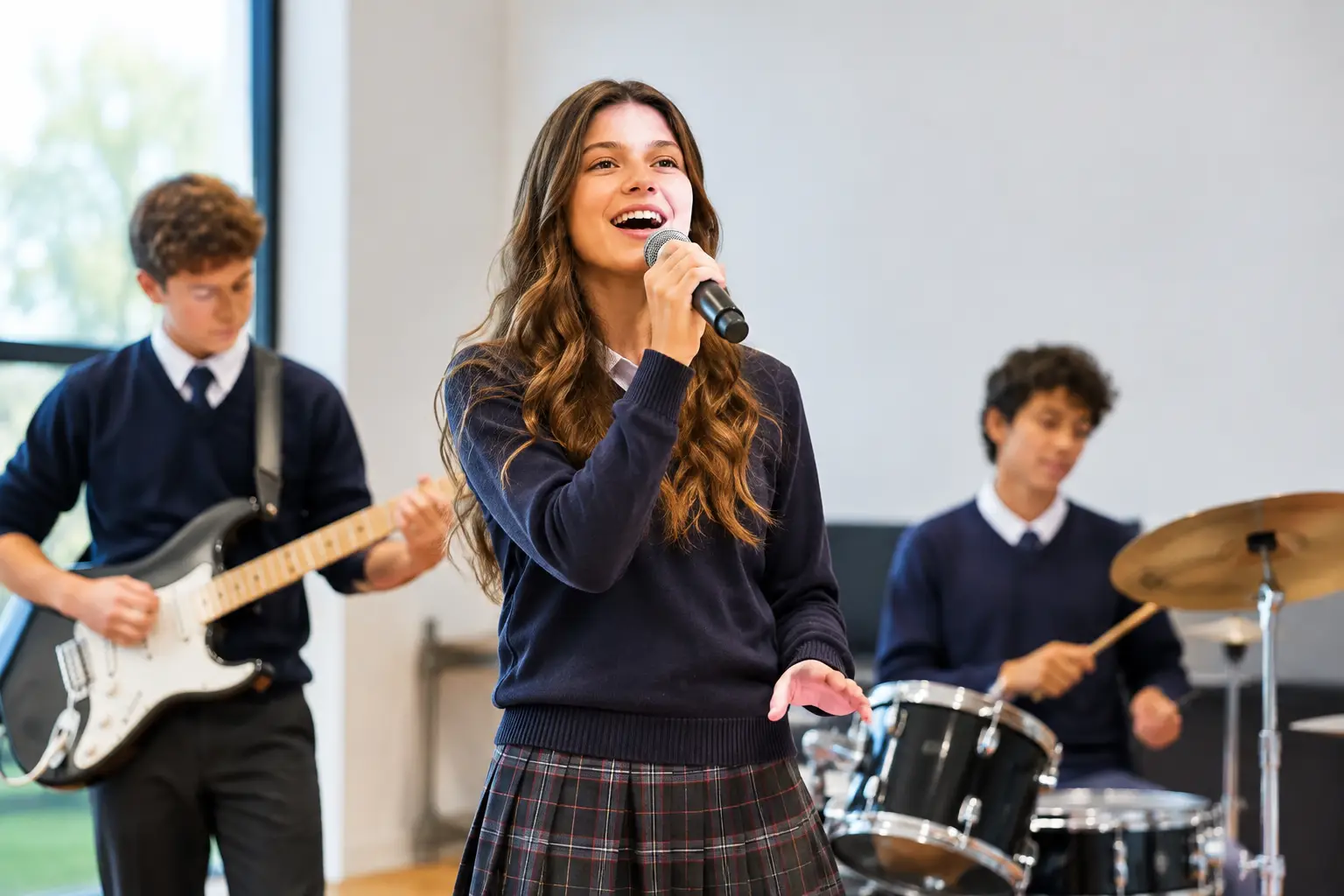
A school hall can change completely at 6pm. The sports markings are hidden, parents fill every available chair, and a pupil who was barely audible in rehearsal steps into a pool of light to deliver their first line. The best school production examples are not defined by a huge budget or West End scenery. They are built around clear storytelling, confident performers and technical choices that let every family in the room hear and see what matters.
For teachers and school teams, the production itself is only one part of the challenge. You are balancing rehearsal time, safeguarding, a mixed-age cast, a busy site and an audience with high expectations. A sensible technical plan removes pressure rather than adding another job to the list.
School production examples for every kind of cast
The traditional primary school production
A nativity, fairy tale or original Christmas show remains one of the most effective formats for younger pupils. The structure is familiar, scenes are short, and children can be grouped into narrators, singers, dancers and character roles so that everyone has a meaningful moment on stage.
Technically, simplicity wins. A pair of professionally positioned PA speakers, clear vocal microphones for key narrators, warm front lighting and a few coloured looks for songs can make a modest hall feel special. A projected winter scene, starfield or illustrated backdrop also creates atmosphere without asking staff to build large physical scenery.
The trade-off is that younger children can be unpredictable with microphones. Headset mics offer excellent clarity but need careful fitting and supervision. For a large ensemble, boundary microphones at the front of the stage and handheld radio mics for solo lines may be the more practical choice. The right approach depends on the age of the cast, how much movement is involved and whether the children are used to performing with sound equipment.
The full school musical
Musicals such as Matilda Jr., The Lion King Jr. or a school-written show give pupils a chance to combine acting, singing and choreography. They also create the biggest technical demands. Dialogue has to remain intelligible over a backing track, singers need foldback they can trust, and lighting changes must support scene changes without leaving the audience looking at a dark stage crew.
A strong musical production usually needs a properly designed sound system, a digital mixing desk, a mixture of headset and handheld microphones, and dedicated sound operation throughout the performance. Lighting should be programmed around scenes, not simply switched between colours. A cool blue look can establish an evening scene; a tight special can draw focus to a soloist; a brighter stage wash ensures every child in a large ensemble can be seen.
There is a temptation to add more effects because the show is bigger. In practice, disciplined production is more impressive than constant movement and colour. The audience should notice the story and the performers first. Lighting, sound and projection are there to shape the moment, not compete with it.
A play with a modern projected set
Projection is particularly useful where a school has limited storage, a shallow stage or several locations to portray. One production can move from a classroom to a forest, courtroom or city street in seconds using high-quality scenic visuals. It is an effective option for Shakespeare adaptations, mystery plays, leavers' productions and contemporary drama.
This format works best when projection is planned from the script stage. A bright projected image needs controlled ambient light, so a projector cannot simply be placed in a hall with every overhead fitting on. The projector position, screen size and sightlines matter too. Parents at the edge of the room should not be watching a distorted or obstructed image.
For dialogue-led drama, audio quality is often the difference between a moving performance and a frustrating one. A cast may project well in an empty rehearsal room but struggle once the hall is full of coats, chatter and several hundred people. Radio microphones and an experienced operator allow quieter performances to remain natural without asking pupils to shout every line.
A dance, showcase or variety evening
Not every school event needs a script. Dance showcases, talent evenings and performing arts celebrations are often more successful when they are treated as a live concert rather than a sequence of tracks played through classroom speakers.
A clean music playback system, confident stage lighting and quick, well-rehearsed transitions make the entire evening feel purposeful. Different dance styles benefit from different visual treatments: crisp white and saturated colour for street dance, softer washes for ballet, or carefully timed effects for a finale. The key is consistent coverage across the performance space, so performers do not disappear when they move beyond the centre.
These events also need firm control of music cues. A dedicated operator can start tracks at the correct level, manage fade-outs and keep the evening moving while teachers focus on pupils. If speeches or awards are included, a reliable wireless microphone is essential. Passing one microphone between people can work for a short presentation, but it can slow a showcase considerably if it has not been planned.
What these school production examples have in common
Regardless of the format, the strongest productions start with the audience experience. Can every spoken word be heard? Can grandparents in the back row see faces rather than silhouettes? Are scene changes covered with suitable music or light, rather than awkward silence? These are the questions that turn a good school performance into an occasion families remember.
They also account for the room itself. School halls tend to have hard walls, high ceilings and surfaces that reflect sound. Turning a PA system up is rarely the answer. Correct speaker placement, suitable equipment and careful mixing produce clearer speech at a comfortable volume. This matters particularly for matinee performances, where younger siblings and elderly relatives may be in the audience.
Safety and reliability are equally important. Cable runs should be secured, equipment should be professionally maintained and PAT tested, and there should be a clear plan for set-up, performance and pack-down. Schools will rightly ask about public liability cover, power requirements and access arrangements. Those details are not glamorous, but they protect the smooth running of the event.
Build the technical plan around the performance
The earliest production meeting should cover the practical decisions that are difficult to fix later: cast numbers, stage dimensions, rehearsal dates, access times, seating layout and the number of performances. It is also helpful to identify pupils with major speaking roles, solo songs or rapid costume changes. This informs the microphone plan before the first technical rehearsal.
A technical rehearsal is worth protecting in the diary. It does not have to be a complete stop-start run of the show, but it should test every cue, microphone, track and projected visual in the actual room. It gives pupils time to learn where microphones are positioned, gives staff confidence in the running order and reveals issues such as noisy fans, unsuitable lighting angles or an entrance that is not visible to the audience.
For a smaller production, a straightforward package may be the right investment: professional PA, two or three microphones, stage wash lighting and an operator. For a major musical, a full managed production service is often better value than assembling separate hires. The difference is not just equipment. It is having someone responsible for system design, operation, cueing and troubleshooting on the night.
The Grind Events Hire supports schools with premium sound, lighting, projection and microphone systems, alongside hands-on technical delivery. That means staff can stay with pupils and parents rather than trying to solve feedback, missing music cues or a microphone issue from the side of the stage.
Give pupils the conditions to shine
The most memorable school productions are rarely remembered for a particular fixture or speaker brand. They are remembered for the child who found their voice, the ensemble that nailed the final number and the applause that followed. Give the performance clear sound, considered lighting and dependable technical support, and pupils can concentrate on the part that belongs to them: stepping forward with confidence.