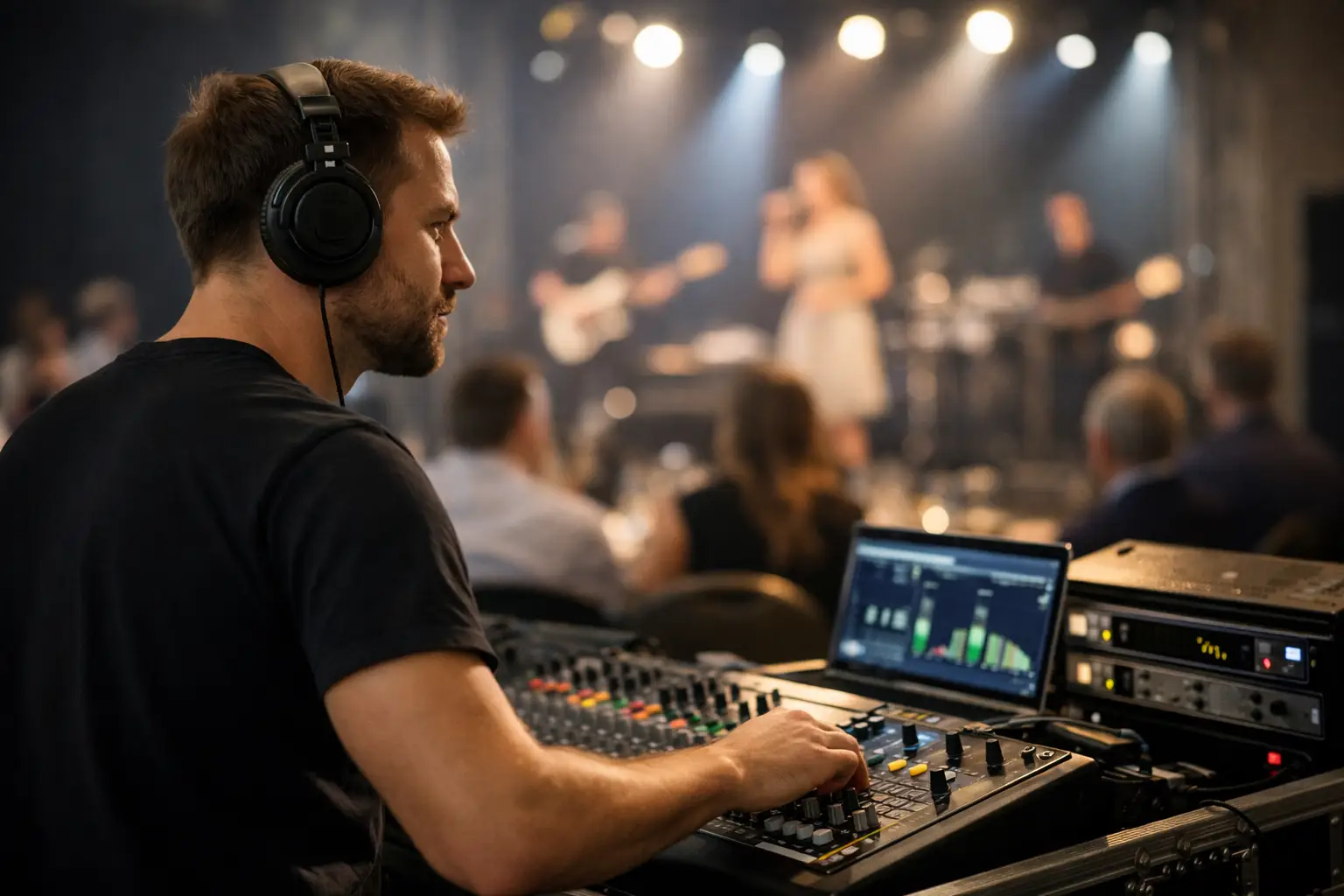
A full dancefloor means little if the speeches cannot be heard, the singer is fighting feedback or the music loses impact at the moment it should lift the room. Sound engineer hire is the difference between simply having speakers in a venue and delivering audio that feels clear, controlled and right for every guest.
For a wedding, party, conference or live performance, the sound system is only one part of the job. The room, guest numbers, running order, performers, microphones and venue restrictions all affect the result. A professional engineer brings the judgement to make those parts work together without putting more technical pressure on the organiser.
What a sound engineer actually does
A sound engineer is responsible for the quality, reliability and safe operation of event audio. That begins well before doors open. They assess the venue, understand the brief and choose an appropriate system, from discreet speech reinforcement in a function room to a high-output PA for a busy celebration or outdoor event.
On site, their work includes positioning and tuning loudspeakers, setting up wireless and wired microphones, managing mixing desks, checking playback sources and controlling levels throughout the event. If a presenter moves away from the lectern, a musician needs a monitor adjustment or a best man suddenly decides to use a video with sound, an experienced engineer is there to respond.
This is particularly valuable when several audio demands overlap. A corporate awards evening may include walk-on music, presenter microphones, video playback, stings, background music and a DJ later in the evening. A school production may need radio microphones, band inputs, theatre cues and clear dialogue for parents at the back of the hall. Each element must be prepared, tested and managed as part of one production.
When sound engineer hire makes sense
Not every event needs a dedicated engineer for its full duration. A small private gathering with a straightforward playlist may be well served by professionally specified equipment and clear instructions. However, once an event has live microphones, entertainment, important speeches, multiple performers or a detailed schedule, managed audio is usually the sensible choice.
Sound engineer hire is especially worthwhile where failure would be highly visible. Wedding ceremonies and speeches happen once. Charity auctions need every bid to be heard. Conference content has little value if delegates cannot follow it. At a branded event, weak audio can quickly undermine an otherwise polished presentation.
The size of the room is not the only deciding factor. A modest venue with hard walls, low ceilings and guests seated close together can be more challenging than a larger ballroom. Similarly, an outdoor setting introduces wind, weather, power distribution and sound spill considerations. The right approach depends on the event rather than a one-size-fits-all package.
The benefit is control, not just volume
A common misconception is that better event sound means louder sound. In practice, quality is usually about intelligibility, balance and coverage. Guests should be able to hear a wedding reading without harshness, enjoy a DJ set with proper energy and still have a conversation away from the dancefloor.
A professional engineer selects and positions equipment so that sound reaches the audience evenly. They can manage troublesome frequencies before they become feedback, balance a live vocalist against backing tracks and avoid the distorted, overdriven sound that often comes from equipment being pushed beyond its comfortable limits.
Premium systems from recognised manufacturers such as KV2 Audio, Allen & Heath and Sennheiser provide an excellent foundation, but equipment alone does not make an event sound professional. The person operating it must understand gain structure, speaker coverage, radio microphone coordination, room acoustics and the pace of a live event. That expertise protects the guest experience when plans change.
What to discuss before booking a sound engineer
The most useful conversations happen early, when the event format can still shape the technical plan. A good supplier will ask practical questions rather than simply quote for a number of speakers.
Start with the venue and audience. Share the room dimensions where possible, expected guest numbers, access times and any restrictions on noise, loading or rigging. It also helps to confirm whether the venue has its own system and, if it does, whether it is suitable for the job. In-built equipment can be useful, but it may not cover the whole space or support the microphone and playback requirements of your event.
Then consider the running order. Identify every moment where sound matters: arrivals, ceremony music, speeches, presentations, dinner background music, live acts, awards, video content and the evening party. A detailed schedule allows the engineer to prepare transitions rather than react to them in real time.
Finally, be clear about your content. Presentations should be supplied in their final format, with embedded videos tested in advance. Musicians should provide an input list showing microphones, instruments and monitoring needs. If wireless microphones are required, confirm how many people will use them, where they will move and whether they need hands-free options.
Choosing the right sound engineer for your event
Technical ability matters, but the best engineer is also calm, organised and comfortable working with people. They need to communicate clearly with venue teams, caterers, photographers, presenters and entertainers while staying focused on the production.
Look for a provider that can explain their recommendation in plain English. You should know what equipment is being supplied, who will operate it, how long they will be on site and what support is available if the schedule changes. For larger or higher-profile events, ask about backup planning, power requirements and contingency equipment.
Professional standards are also worth checking. Equipment should be maintained, electrically tested and appropriately insured. Public liability cover, risk-aware working practices and tidy cable management are not glamorous details, but they matter in busy venues where guests, staff and suppliers share the same space.
At The Grind Events Hire, sound engineering is approached as part of the wider production, not as an add-on after the room is already planned. That means audio can be coordinated with lighting, projection, DJ performance and event timings from the outset.
The trade-off between dry hire and managed production
Dry hire can be an effective, economical option when an experienced person is available to set up and operate the system. It suits simple requirements, familiar venues and events where there is flexibility if something takes longer than expected.
Managed production costs more because it includes planning, delivery, set-up, operation and technical responsibility. Yet it can represent better value when your event includes key speakers, entertainment or a tight schedule. Instead of asking a colleague, family member or venue employee to troubleshoot a microphone issue, you have a dedicated professional managing it.
The choice comes down to risk and complexity. If the event can tolerate a short pause while someone checks a connection, dry hire may be enough. If a missed cue, feedback burst or inaudible speech would damage the occasion, an engineer is a sensible investment.
Give your engineer the information that makes a difference
The smoothest events tend to have one agreed point of contact, a current schedule and realistic set-up time. Last-minute changes are part of live events, but early communication gives the technical team more options.
Make sure the engineer receives final names and pronunciations for presenters, the order of speakers, any music cue points and details of special moments. If a guest is bringing a guitar, a laptop or a surprise performance, tell the production team beforehand. Small details can affect the equipment list, stage layout and soundcheck time.
It is equally helpful to set expectations with speakers and performers. Ask them to arrive when requested, keep microphones close enough for clear pickup and avoid changing playback devices without checking first. These simple steps allow the engineer to focus on making the event feel effortless.
Great event audio is rarely noticed as a technical achievement. Guests simply hear every word, feel the music properly and stay engaged with what is happening in the room. Choose sound engineer hire early enough to plan well, and the technical side of your event can remain exactly where it belongs: confidently in the background.