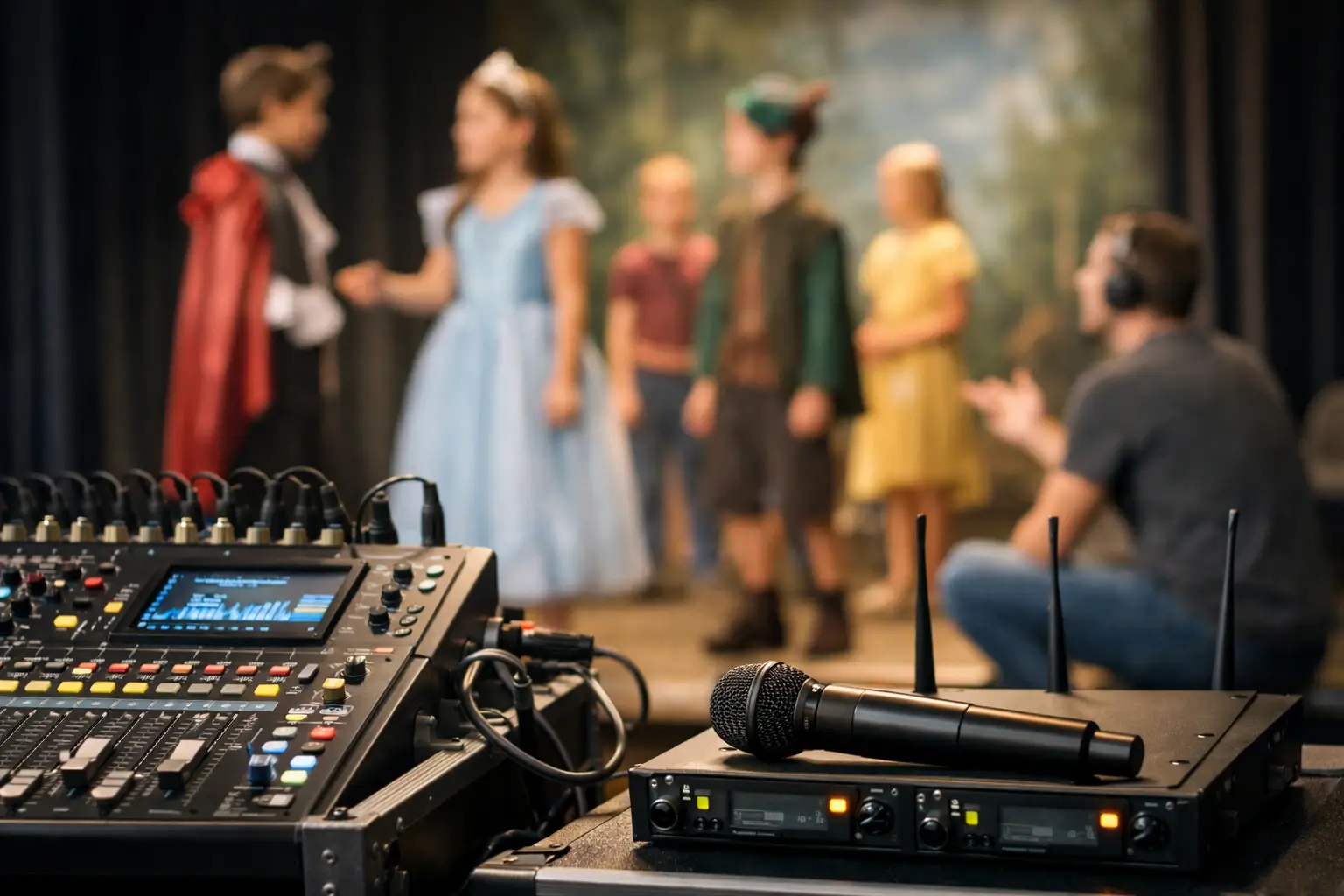
The front row hears every word. The back row hears only music, muffled dialogue and a radio microphone cutting out during the lead’s big moment. That is the difference professional sound hire for school production can make. A school show does not need to feel like a touring concert, but it does need every performer to be heard clearly, every cue to land on time and every member of the audience to stay engaged.
For teachers, school administrators and production teams, the challenge is rarely a lack of effort. It is balancing rehearsals, safeguarding, a changing cast, a busy hall and limited time to troubleshoot technical issues. The right sound package removes pressure rather than adding another job to the list.
Start with the room, not the equipment list
A sound system that works brilliantly in a small drama studio may struggle in a large school hall, sports hall or temporary performance space. High ceilings, hard walls and retractable seating can make speech bounce around the room. A system with too much volume will not fix this - it often makes dialogue less intelligible.
The first question is how many people need to hear the production, and where they will be seated. A modest audience in a carpeted hall may need a compact professional PA, while a larger auditorium could require carefully positioned speakers, additional front-fill coverage and separate monitoring for performers. The aim is even, comfortable sound across the audience, not simply maximum loudness.
It also matters whether the production includes a live band, backing tracks, recorded effects, narration or projected video. Each element changes the required inputs, playback equipment and sound desk setup. Planning around the actual show gives the technical team time to specify the right system rather than relying on a one-size-fits-all package.
Prioritise clear speech above everything else
Parents and families come to hear children perform. If they cannot follow the words, even a brilliant cast and set can lose impact. Clear speech should therefore be the foundation of every school production sound plan.
For smaller casts, a combination of discreet headset microphones for principal roles and carefully placed boundary or stand microphones for group scenes can work well. Headsets are particularly useful for musicals, where performers need freedom to move, sing and dance without changing their projection towards a fixed microphone.
However, radio microphones are not a shortcut. They need to be correctly fitted, labelled, checked and managed throughout the performance. Hair, costume changes, energetic choreography and nervous hands can all affect microphone placement. A professional system using dependable equipment from recognised manufacturers such as Sennheiser, paired with an experienced operator, gives the production team far more control when it matters.
For dialogue-led plays, it may be better to use fewer radio microphones and support the cast with sensible staging, rehearsal guidance and a sound system designed for speech. The right approach depends on the script, venue and performers. More microphones can improve coverage, but they also bring greater complexity and a higher risk of feedback if they are not managed properly.
Plan for the cast you have, not just the lead roles
A common issue is fitting microphones only to the principal characters, then discovering that an important line from the ensemble disappears during a busy scene. Review the script scene by scene. Note who speaks, where they stand and whether music or effects will be running underneath.
This does not always mean hiring a microphone for every performer. It means making deliberate choices. A group song may need a mix of headset microphones, area coverage and well-rehearsed vocal delivery. A scene played downstage may need less reinforcement than one performed at the rear of a deep stage.
Build a reliable playback and cue system
Sound effects and music cues can transform a production, but only when they are consistent. A laptop connected directly to a basic speaker is vulnerable to notifications, low battery, incorrect levels and last-minute confusion over file names. School productions deserve a more dependable approach.
A dedicated playback device or professionally configured computer should feed a sound desk, allowing the operator to control levels, fade music cleanly and trigger cues at the correct moment. Music should support dialogue, not compete with it. A capable Allen & Heath mixing desk, for example, gives an operator the control to balance microphones, band inputs and playback accurately throughout the show.
Create a cue sheet that includes the cue number, description, operator instruction and exact point in the script. Rehearse it with the cast rather than treating sound as an add-on at the final dress rehearsal. This is where timings become clear: a doorbell may need to ring before an actor reacts, while an emotional underscore may need to fade under the next line rather than stop abruptly.
If video is part of the show, audio and projection should be planned together. Film clips, animated backdrops and presentation content can introduce delay or unexpected volume changes. Testing the complete signal path before the audience arrives is essential.
Do not overlook foldback for performers
Audience sound is only one side of the production. Performers may also need foldback - speakers or monitors that allow them to hear music, cues or a live band on stage. This is especially useful for musicals, dance-led shows and performances where the band is positioned out of sight.
Foldback needs careful setup. Too much monitor level can spill into microphones and cause feedback, while too little leaves performers struggling to hear their starting notes or musical timing. It is a balance best set during rehearsal with the people actually using the stage.
For some productions, in-ear monitoring may be appropriate, particularly for a small principal cast or a technically demanding musical. For others, low-profile stage monitors are simpler and more practical. The decision should be based on the show and the confidence of the performers, not on adding technology for its own sake.
Allow time for a proper technical rehearsal
The technical rehearsal is where a school production becomes a finished event. It is the opportunity to test microphone allocation, speaker coverage, cue timing, walk-on music, radio frequencies and emergency contingencies before families take their seats.
Allow enough time for every cast member using a microphone to practise with it. Young performers need to understand that a headset should not be moved, tapped or covered by a costume collar. They should also know where to go if a pack needs replacing between scenes. Small, calm instructions prevent avoidable problems during the performance.
The operator should have a clear view of the stage, a copy of the running order and a direct way to communicate with the stage manager. If the show has interval music, announcements or an evacuation procedure, these should be included in the plan as well. Professional production is not only about impressive sound when things go right. It is about having a measured response when something changes.
Choose support that matches your responsibility
Dry hire can suit an experienced school team that already has trained technicians, suitable infrastructure and time for setup. It can be a cost-effective option for a straightforward event. Yet it places responsibility for installation, operation and fault-finding with the school.
For many productions, managed sound hire is the more reassuring choice. A technician can deliver and install the system, tune it for the room, manage the performance and pack down afterwards. This is particularly valuable where several radio microphones, a live band, projection or complex lighting cues are involved.
Ask practical questions before booking. Is the equipment PAT tested and insured? Is public-liability cover in place? Will the provider undertake a site visit or discuss the hall layout properly? Is technical support available throughout the event? These details matter because schools have a duty to provide a safe, well-managed environment for pupils, staff and visitors.
The Grind Events Hire provides professionally maintained sound, lighting and production support for school performances across North Lincolnshire, with equipment and technical planning matched to the scale of the show. The goal is not to overwhelm a school hall with equipment. It is to give every performer the confidence that their moment will be heard.
A better production starts before opening night
The most successful school shows sound effortless because the preparation happened early. Confirm the venue, cast size, running order and technical requirements while rehearsals are still taking shape. Share the script, music list and stage plan with the production provider, then leave room for changes as the show develops.
When sound is treated as part of the storytelling rather than a last-minute hire item, the result feels polished for the audience and calmer for everyone behind the curtain. Give the cast a system they can trust, and they can focus on the part that matters most: stepping on stage and giving their best performance.