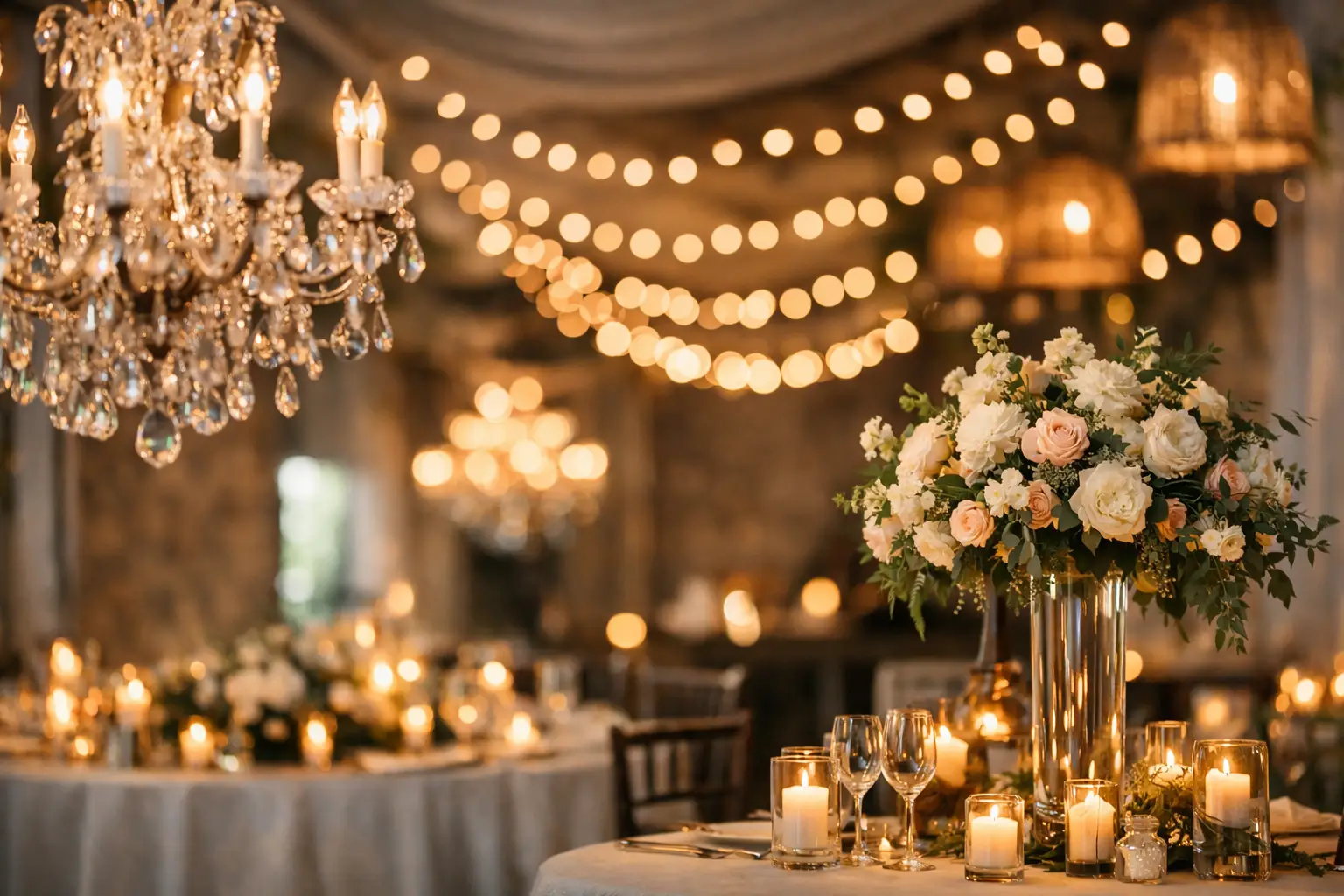
A beautiful room can disappear once daylight fades. Equally, an otherwise plain function suite can feel genuinely special with the right treatment. Wedding venue lighting hire is not simply about putting coloured lights around a dancefloor. It is about shaping each part of the day so guests can see, relax, celebrate and photograph it at its best.
The most successful lighting plans feel natural to guests, even when the technical work behind them is substantial. The ceremony looks calm and flattering, the wedding breakfast feels warm rather than dim, speeches are clearly visible, and the evening reception has enough energy to draw people onto the floor. That balance comes from planning the room, the schedule and the equipment together.
Start with the feeling, not the fixture
Couples often begin by asking for uplighters, fairy lights or a disco lighting package. Those are useful starting points, but the better question is: how should the venue feel at each point in the day? A rustic barn, hotel ballroom, village hall and marquee all need a different approach, even when the colour palette is the same.
Warm white light works particularly well for arrivals, dining and conversation. It complements skin tones, florals and table styling without turning the room orange or flat. Carefully placed architectural uplighting can add depth to bare walls, pillars and drapes, while pinspot-style treatment can make a cake table or top table stand out in photographs.
Later, the atmosphere can shift. A controlled change to richer colour around the room, paired with a professional dancefloor lighting rig, gives the evening reception a clear sense of occasion. The key word is controlled. Too much movement or too many competing colours can make a carefully styled room feel more like a nightclub than a wedding celebration. For some couples, that is exactly the point after 8pm. For others, a restrained, elegant look remains the priority all night. Neither is wrong, but it should be deliberate.
Wedding venue lighting hire should follow the room
Before equipment is selected, look at the venue properly. Ceiling height, wall finishes, existing lighting, access routes and available power all influence what is possible. A low-ceiling venue may benefit from discreet uplighting and compact effects rather than tall stands. A large room with dark walls may need more output to create the same visual impact as a light-coloured suite. In a marquee, the position of linings, roof poles and entrances becomes part of the design.
Existing venue lighting is another consideration. Some spaces have attractive dimmable chandeliers or wall fittings that should remain part of the scene. Others use bright, cool-white ceiling panels that can overwhelm every decorative detail. In the latter case, the lighting plan may include reducing or switching off house lights once it is safe to do so, then replacing them with a more flattering wash of professional event lighting.
A site visit is particularly worthwhile for venues with unusual layouts, strict installation rules or limited access. It avoids assumptions about where equipment can be placed, whether cabling needs to cross a route, and how long set-up will take. It also helps make sure the final design complements the venue rather than fighting against it.
Think in moments across the wedding day
One fixed lighting look rarely works from guest arrival through to the final dance. Planning around key moments gives better value from the same equipment because the room can evolve instead of being reset.
For a daytime ceremony, the priority is visibility and comfort. Guests should be able to see the couple and registrar without bright fixtures distracting from the front of the room. If the ceremony is close to a window, lighting may need careful positioning to avoid reflections or uneven video footage.
During the wedding breakfast, soft ambient colour and a warm room wash generally work best. This is when tables, flowers and place settings have their moment, and when photographers need enough light to capture natural reactions. Dim is not always romantic if it leaves guests struggling to read menus or servers working in shadow.
Speeches need another check. A speaker illuminated from behind can look dramatic in person but appear as a silhouette in photographs and video. A simple front fill, placed discreetly and balanced with the rest of the room, can make a major difference. If microphones and sound are also required, it makes sense to plan lighting and audio together rather than treating them as separate jobs.
For the evening reception, movement, beams and dancefloor effects can take over. Professional fixtures with good colour mixing and controlled output are more versatile than a collection of basic party lights. They can create energy without projecting light directly into seated guests' eyes, the band or DJ's workspace, or the camera lens.
The practical details guests never see
Professional wedding lighting is as much about what is hidden as what is visible. Cables should be routed safely, secured appropriately and kept away from busy walkways. Equipment needs stable positioning, tidy presentation and enough clearance from guests, catering teams and venue doors. If fixtures are flown or positioned overhead, the venue's rules and safe rigging requirements become essential rather than optional.
Power deserves the same attention. Lighting may appear modest, but a full production including sound, DJ equipment, special effects and catering can put significant demand on a venue's electrical supply. A competent supplier will assess available circuits and distribute the load sensibly. This reduces the risk of nuisance trips halfway through the first dance.
There is also a difference between hiring equipment and having it managed. Dry hire can suit an experienced organiser with a clear technical plan and the people to install it. For most weddings, a supplied, installed and operated package removes pressure from the couple, venue team and wedding party. Professionally maintained, PAT-tested equipment, appropriate insurance and a technician who understands the schedule provide genuine peace of mind.
Choose effects that add to the celebration
Special effects can create memorable photographs, but they need to suit both the venue and the moment. Low fog can give a first dance a floating effect, although it depends on the venue floor, ventilation and available space. Cold spark-style effects can add impact to an entrance or dance, subject to venue approval and sensible safety distances. A projected monogram or names on a wall can personalise the room, provided there is a suitable clear surface and the projector can be positioned without obstructing guests.
Less can often achieve more. A few well-placed fixtures, a thoughtful colour palette and a polished dancefloor setup usually deliver a stronger result than filling every corner with competing effects. If the venue already has character, lighting should reveal it. If the room is neutral, lighting can provide the personality.
Coordinate lighting with your suppliers
The best time to discuss lighting is before finalising room layouts and supplier timings. Your venue coordinator can confirm access, curfews, permitted fixing methods and house rules. Your florist or stylist may need to know where uplighters, draping or a cake-table spotlight will sit. Your photographer and videographer can advise where they will be positioned for the ceremony, speeches and first dance.
If you have booked a live band, DJ or both, their stage area should be planned as one production space. Sound, lighting, screens and microphones all need room, power and safe cable routes. A well-designed setup looks intentional in photographs and gives performers the practical conditions to do their best work.
At The Grind Events Hire, this joined-up approach is central to the service: professional lighting, sound and event production are planned around the venue and the experience you want guests to have, not supplied as disconnected boxes of equipment.
Questions worth asking before you book
Ask whether the supplier has worked in your venue or will carry out a site check. Confirm what is included in the price: delivery, installation, collection, technician attendance, programming and any late finish should all be clear. It is also sensible to ask about public-liability cover, PAT testing, contingency equipment and who will be your contact on the day.
Share your running order, especially ceremony times, room turnarounds, speeches and first dance. A good lighting supplier will use it to identify where the setup needs to be completed early, when a look should change and whether a technician needs to remain on site. That preparation is what allows the production to feel effortless when the room is full.
Your wedding lighting does not need to shout for attention. It should make the vows feel intimate, the tables look inviting and the dancefloor feel impossible to resist. When the technical planning is handled properly, you are free to notice the only thing that really matters: a room full of people enjoying the celebration you created.