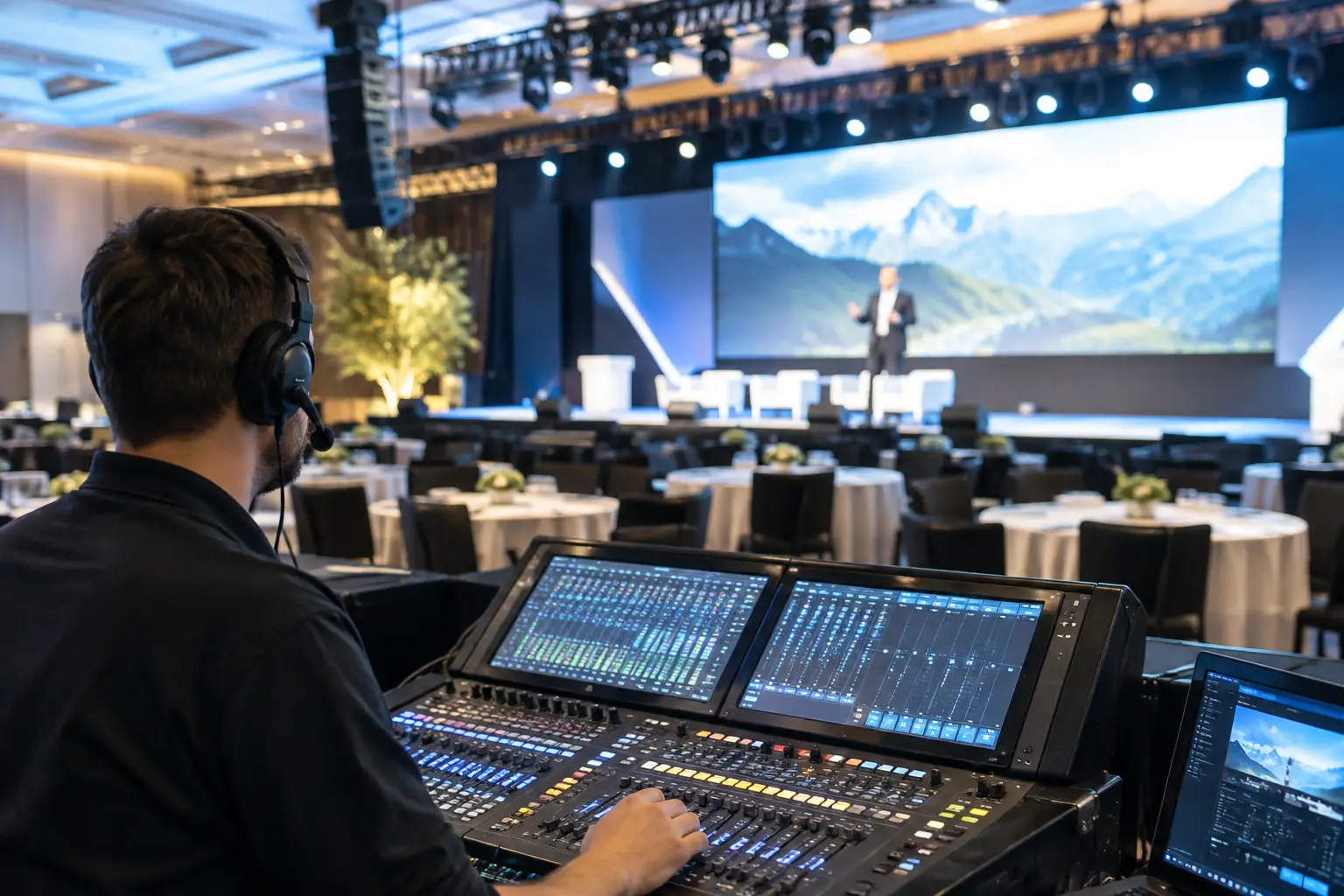
A full dance floor, a confident presenter and a room that looks exceptional rarely happen by accident. They are the visible result of careful technical planning and experienced delivery behind the scenes. So, what does event production include? It includes the people, equipment, preparation and on-site support required to make an event look right, sound clear and run to time.
For a small birthday party, production may be a professional DJ, a compact PA system and intelligent lighting. For a wedding, awards evening, school production or branded launch, it can extend to stage lighting, wireless microphones, projection, video playback, special effects, power planning and a technician managing every cue. The right level depends on the venue, audience, format and ambition of the event.
What does event production include in practice?
Event production is the technical and operational work that turns an idea into a live experience. It sits between the creative brief and the practical reality of getting guests into a room, delivering the programme and packing down safely at the end.
A professional production partner will begin by understanding what the event needs to achieve. Is the priority a packed wedding dance floor, intelligible speeches for 200 guests, a polished conference presentation or a dramatic school performance? The answer shapes the specification. More equipment is not always better. The goal is appropriate, reliable production that supports the occasion without overwhelming the room or the budget.
Sound systems and audio control
Sound is often the first element guests notice when it is poor. Muffled speeches, feedback from microphones or music that is too loud near the front can quickly affect the atmosphere. Audio production covers the selection, placement and operation of sound equipment so that voices and music are clear where they need to be.
This may include PA speakers, subwoofers, amplifiers, digital mixing desks, DJ equipment, playback devices and monitors for performers or presenters. In a corporate setting, the focus may be on speech clarity and discreet coverage. At a party or wedding, the system needs enough headroom for music to feel energetic without becoming harsh or distorted.
Microphones are another critical detail. Wired microphones suit some lecterns and fixed positions, while professional wireless handheld, headset and lapel microphones allow presenters, performers and hosts to move freely. A production team will also consider battery management, radio frequencies, backup options and who needs to speak at each point in the running order.
Recognised professional brands matter here, but they are only part of the picture. A well-maintained KV2 Audio system, Allen & Heath mixing desk or Sennheiser wireless microphone still needs correct setup, tuning and experienced operation to perform at its best.
Lighting that shapes the room
Lighting does much more than make a venue brighter. It sets the mood before guests arrive, directs attention during key moments and gives photographs and video a far stronger finish.
For celebrations, lighting may include a smart DJ booth, moving-head fixtures, uplighting, dance-floor effects and carefully chosen colours that complement the room. For a wedding breakfast, warm architectural uplighting can make a plain venue feel more considered. Later in the evening, the same system can become more dynamic for the party.
For schools, charity events and corporate functions, lighting can be more structured. Stage washes help audiences see performers, spotlights isolate a speaker or award winner, and programmed cues can match walk-on music, presentations or a show’s scene changes. An Avolites-controlled lighting rig gives technicians the control needed for complex cues, but a simpler setup may be the better choice for a short presentation in a daylight venue.
The trade-off is always practical. Large lighting rigs need suitable rigging points, floor space, power and setup time. An experienced supplier will recommend what will make a genuine difference rather than adding equipment that the room does not need.
Visuals, screens and projection
Visual production can be as simple as a screen for a slideshow or as involved as multiple displays, video playback and branded content for a product launch. It is particularly valuable when guests need to follow presentations, view award categories, watch a film or see close-up camera footage from a stage.
A proper visual plan considers screen size, viewing distance, ambient light and sightlines. A projector that looks excellent in a dark hall may struggle in a bright conservatory or a room with large windows. Likewise, a screen placed too low or too far to one side can leave half the audience unable to see essential content.
Production support also means testing laptops, presentation clickers, video files and audio feeds before guests arrive. It avoids the familiar last-minute problem of a connector not fitting, a video playing without sound or a presentation being formatted for the wrong screen size.
Planning before event day
The most valuable production work often happens before any equipment leaves the warehouse. This is where a supplier turns a rough brief into a workable plan.
A site visit can identify access routes, loading restrictions, ceiling heights, available power, noise limits and potential cable routes. At venues across North Lincolnshire, these details vary widely. A hotel function room, village hall, marquee, school theatre and industrial venue all present different technical considerations.
The production plan should also account for timings. When can the team load in? Does the room need to be ready before tables are laid? When do speeches begin? Is there a changeover from daytime conference to evening entertainment? A realistic schedule protects the guest experience and gives technicians enough time to test every element properly.
For larger events, the process may include a running order or cue sheet. This sets out when music starts, which microphone is live, when lighting changes, when a video rolls and who is responsible for each cue. Guests should never need to see this coordination, but they benefit from it throughout the event.
Safety, compliance and venue care
Event production includes responsibility as well as creativity. Equipment should be professionally maintained, electrically tested and installed with public safety in mind. That means secure speaker placement, managed cable runs, appropriate stands and fixtures, and a layout that does not create unnecessary trip hazards or block exits.
Event organisers should also ask about public liability insurance, particularly where venues, schools, councils or corporate clients have formal supplier requirements. The Grind Events Hire operates with £10 million public liability cover and PAT-tested equipment because those standards are fundamental, not optional extras.
Noise management is another area where experience matters. A capable system does not have to mean excessive volume. Production teams can balance the sound for the dance floor while keeping conversations possible at the bar or tables. In venues with sound limiters, the setup must be planned carefully to avoid sudden interruptions during speeches or peak moments of the party.
On-site technicians and live problem-solving
Dry hire can be suitable when a customer has the knowledge and time to operate equipment themselves. However, managed event production adds a technician or crew member who can set up, test, operate and respond if plans change.
That support becomes especially valuable when multiple elements need to work together. A presenter may arrive with a different laptop. A best man may need an extra microphone. A band may have a revised input list. A video may need to start at a precise moment after an awards announcement. With an experienced technician on site, these changes are handled calmly rather than becoming the organiser’s problem.
For weddings and private parties, this support can be more discreet but no less valuable. The focus is on keeping music, lighting and announcements running professionally, leaving the couple or host free to enjoy their guests.
Special effects and finishing touches
Special effects can create memorable moments when they are chosen with care. Options may include haze to reveal lighting beams, low fog for a first dance, confetti effects or cold-spark displays where appropriate. These features can transform a key photograph or build anticipation before a performance.
They also require checks. Some venues do not permit haze because of fire detection systems, while others have restrictions on confetti, flames or effects near low ceilings. Production planning establishes what is possible before the day, rather than discovering a limitation after the room has been dressed.
Choosing the right production level
A useful starting point is to separate the essentials from the enhancements. The essentials are the elements that allow the event to function: clear audio, reliable microphones, suitable lighting, safe installation and competent support. Enhancements are the details that add impact, such as branded visuals, moving lights, atmospheric effects or additional staging.
A good supplier will ask practical questions about guest numbers, venue, timings, content, performers, budget and desired atmosphere. Be clear about what matters most. If speeches and presentations are central, prioritise audio and visual reliability. If the event is built around entertainment, invest in a sound and lighting setup that gives the room genuine energy.
The best event production does not draw attention to technical effort for its own sake. It gives guests clear sound, the right atmosphere and confidence that every important moment will be seen, heard and remembered. Start with the experience you want people to have, then choose a production team with the equipment, preparation and calm expertise to deliver it.