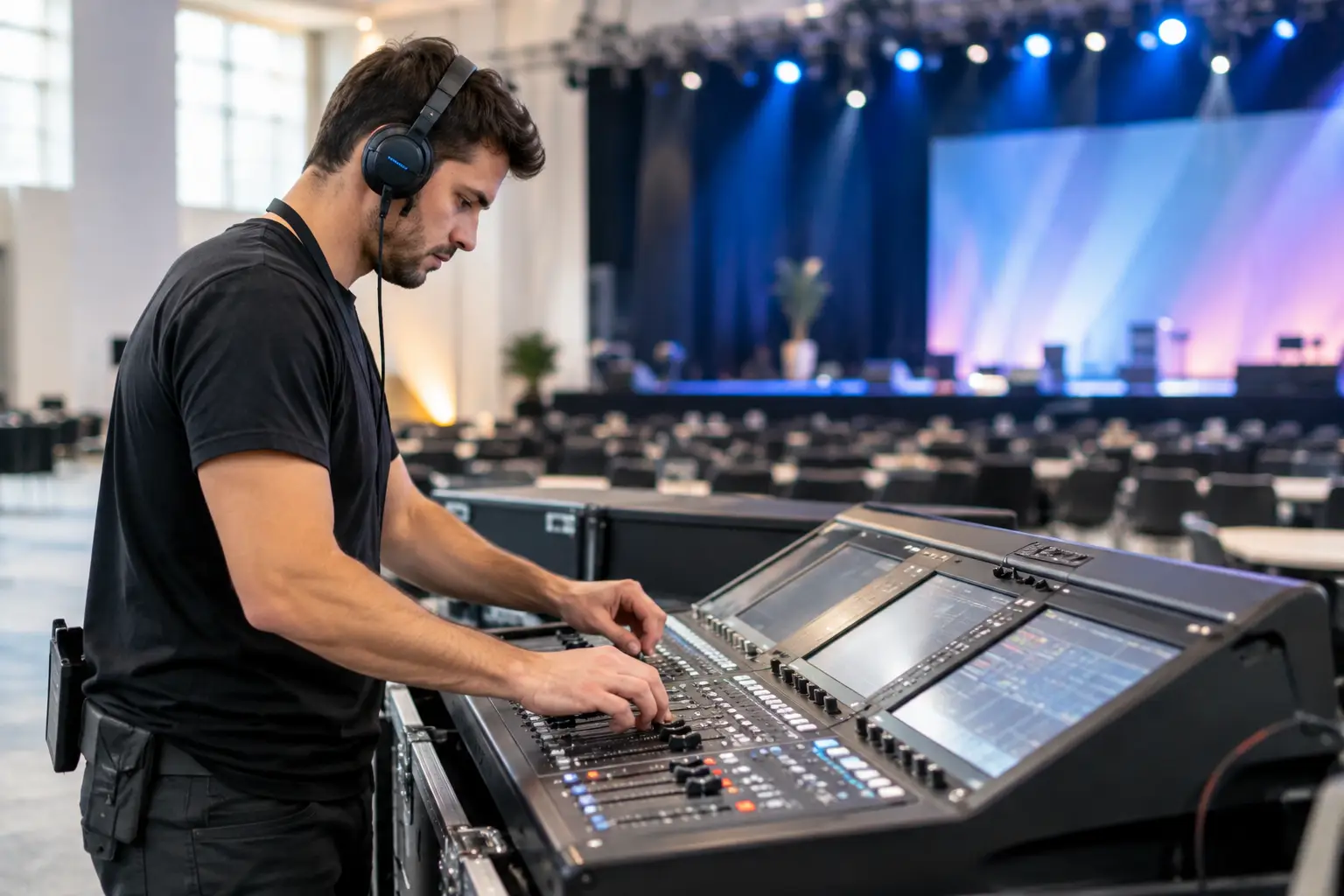
A microphone that cuts out during the speeches, a projector that cannot be seen from the back of the room, or music that feels harsh rather than full can change the mood of an event in seconds. Event technicians prevent those moments by planning, installing and operating the technology behind the experience. Their work may not always be visible to guests, but it is often the difference between an event that simply happens and one that feels professionally delivered.
For a wedding couple, that may mean every word of a ceremony is clear and the evening reception has the right energy. For a school, charity or corporate organiser, it can mean confident presenters, reliable playback, safe equipment and a production partner who deals with the detail before it becomes a problem.
What event technicians are responsible for
An event technician is responsible for the practical delivery of sound, lighting, visual equipment and technical effects at an event. The role begins well before guests arrive. It involves understanding the venue, the running order, the audience size, the type of content being presented and the standard the event needs to achieve.
Sound is usually the first priority. A technician selects and positions PA systems so music has impact without overwhelming the room, while speeches and announcements remain intelligible. This is not simply a case of bringing larger speakers. The right system depends on the room shape, ceiling height, guest numbers, noise limits, stage position and whether the event includes a band, DJ, presenter or remote contributor.
Lighting has an equally practical role. It can create warmth for a wedding breakfast, add movement to a party, make a stage look purposeful or ensure a speaker can be seen clearly on camera. Projection, displays and confidence monitors need careful consideration too. A screen that looks impressive in a dimmed ballroom may be ineffective in a bright hall with windows behind it.
The best technicians bring these elements together as one system. They manage cable routes, power requirements, wireless frequencies, signal flow and timing so each part supports the event rather than competing for attention.
Why professional event technicians matter
Good equipment is essential, but equipment alone does not guarantee a good result. A high-quality microphone still needs the right gain setting, placement and frequency management. A professional lighting rig still needs thoughtful programming and safe installation. A premium sound system only performs properly when it is matched to the space and operated by someone who understands it.
This is where professional standards make a noticeable difference. Technicians assess the venue in advance where required, build a realistic plan around access and set-up time, and test every critical element before the room opens. They also keep contingency in mind. Spare microphones, alternative playback options and a clear fault-finding process are not glamorous details, but they protect the guest experience.
For organisers, the value is calm. Instead of trying to diagnose a loose connection while guests are waiting, they have a knowledgeable person focused on the production. That allows them to welcome attendees, support speakers and enjoy the occasion.
The work starts in the planning stage
The most effective technical support is rarely booked as an afterthought. Early conversations allow the technician to ask the questions that shape the production: What is happening in the room? Where will guests be seated? Is there a live performance? Are presentations central to the event? Does the venue have restricted access, a low ceiling or a sound limiter?
A site visit can be particularly valuable for larger celebrations, branded events and unfamiliar venues. It reveals details that photographs often miss, such as narrow loading routes, limited power outlets, daylight on a projection surface or architectural features that affect speaker placement.
The running order matters just as much as the kit list. A technician needs to know when doors open, when background music changes to walk-in music, when speeches begin and whether there are video cues, awards stings or a first dance. With that information, the technical production becomes part of the event flow rather than an interruption to it.
Choosing the right level of support
Not every event needs a full production crew. A small private party may only require a compact sound system, lighting and a professional DJ. A board presentation in a controlled room may need a screen, a presentation clicker and one wireless microphone. In these situations, a well-prepared hire package can be the sensible choice.
However, attended technical support becomes more valuable as the event becomes more complex. Multiple speakers, live performers, video playback, stage lighting, audience questions and tight timing all create moving parts. The cost of getting them wrong can be greater than the cost of having an experienced technician on site.
There is a trade-off to consider. Dry hire can be more economical where an experienced venue team is available and the brief is straightforward. Managed production gives greater assurance where the organiser needs one accountable supplier to install, operate and remove the equipment. The right choice depends on risk, complexity and how much responsibility the organiser wants to retain.
Sound, lighting and AV should work as one
Events often suffer when sound, lighting and visual content are treated as separate purchases. A venue may have a screen but no suitable audio for video playback. A DJ setup may be capable of filling a dancefloor but unsuitable for clear conference speech. Decorative lighting may look attractive in person while leaving a stage too dark for photography or filming.
An integrated approach prevents these gaps. For example, a corporate awards evening may need background music during dinner, discreet uplighting around the room, a lectern microphone for hosts, handheld microphones for winners, a screen for nominee content and a focused stage wash for photographs. Each element needs to be planned around the others.
Professional brands also matter, particularly where reliability and sound quality are visible to the audience. Recognised equipment from manufacturers such as KV2 Audio, Allen & Heath, Sennheiser, Pioneer DJ and Avolites gives technicians dependable tools to work with. More importantly, properly maintained equipment is less likely to distract from the occasion.
Safety and presentation are part of the service
Technical production should look as professional as it sounds. Cables should be routed thoughtfully, stands should be secure, equipment should be positioned with guest movement in mind and the finished setup should complement the room. A cluttered stage or a cable run across a busy walkway is not just untidy - it can create a safety issue.
Event organisers should expect equipment to be PAT tested, insured and installed by people who understand safe working practices. For larger public events, schools, venues and corporate clients, public-liability cover and clear documentation may be essential requirements rather than optional reassurance.
Presentation matters because guests notice the overall impression, even when they cannot identify the technical reason for it. Clean staging, balanced lighting, tidy equipment and confident operation all signal that the event has been properly cared for.
How to get more from your technical team
The clearest brief usually produces the strongest result. Share the event schedule, venue contact details, room plan and any presentation files as early as possible. Let the technician know about special moments, from a surprise video message to an acoustic performance during a wedding ceremony. Small details can affect microphone choices, lighting positions and the time needed for testing.
It also helps to appoint one person who can make decisions on the day. That person does not need technical knowledge. They simply need to confirm last-minute changes, locate speakers and communicate any timing adjustments. This avoids conflicting instructions at a busy point in the setup.
At The Grind Events Hire, technical support is built around professionally maintained equipment, experienced operation and a practical understanding of what each event needs to achieve. Whether the brief is a refined wedding reception, a school production or a high-energy brand event, the aim is the same: dependable production that lets the occasion take centre stage.
The most memorable events feel effortless to the people in the room. That feeling is usually created by careful preparation, capable hands and event technicians who have already solved the problems guests never need to see.