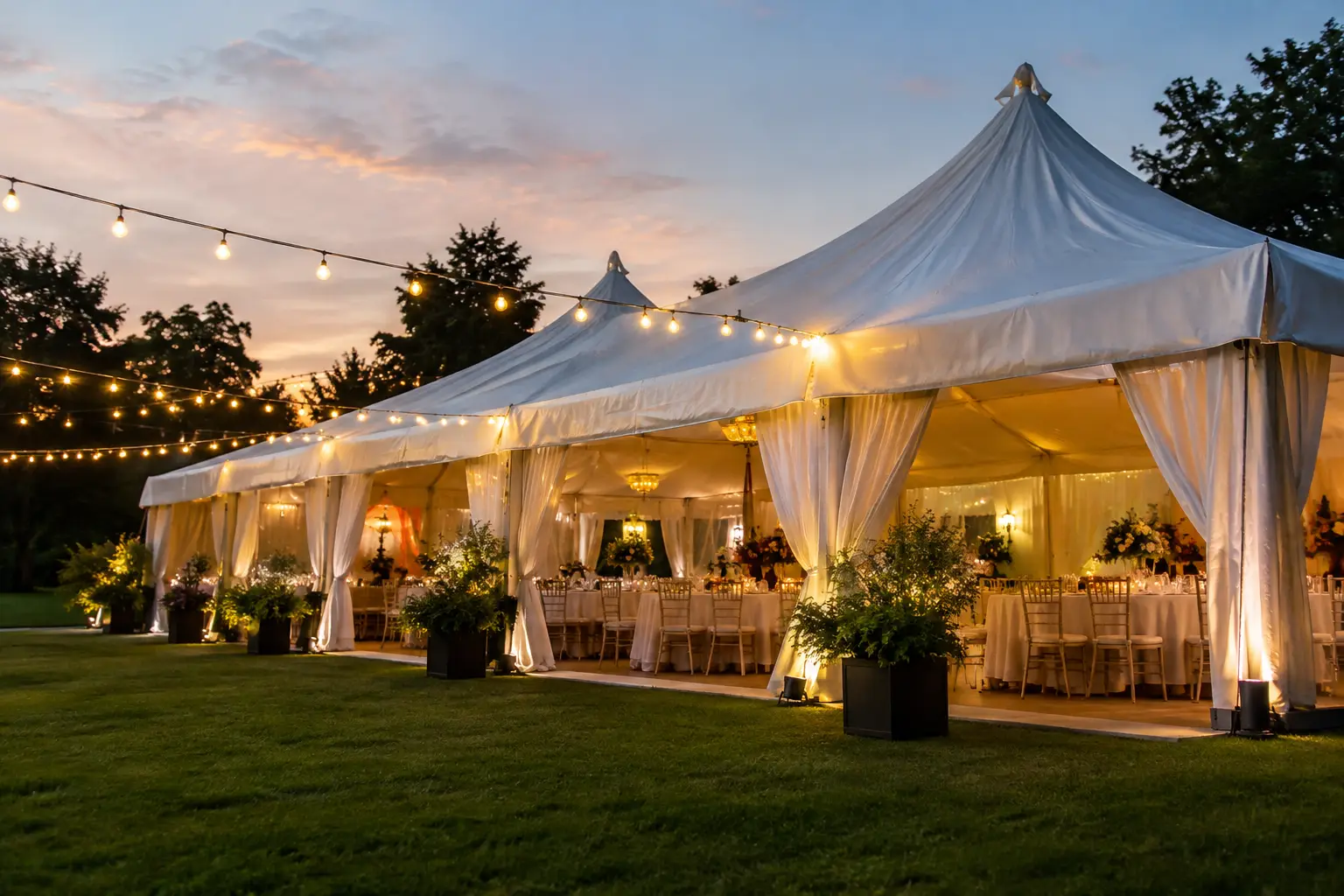
A marquee can look beautifully understated in daylight, then feel completely different after sunset. The question of which lighting suits marquees is therefore not simply about choosing pretty fittings. It is about creating enough light for guests to move safely, eat comfortably and enjoy the evening, while giving the space the atmosphere your occasion deserves.
A well-planned scheme makes a temporary structure feel intentional, welcoming and polished. A poorly planned one can leave a lovely marquee feeling flat, overly bright or inconveniently dark around the bar, toilets and entrance. The strongest results come from layering practical lighting with decorative and entertainment lighting, then tailoring the balance to the marquee, guest numbers and event timetable.
Start with the marquee and the event itself
There is no single fixture that suits every marquee. A clear-span wedding marquee with ivory linings calls for a different approach to a rustic pole tent, a corporate hospitality structure or a lively birthday party. Before selecting equipment, consider the internal dimensions, roof height, lining colour, window placement, flooring, furniture layout and whether the celebration continues after dark.
The time of year matters too. A July reception may only need its full lighting scheme from late evening, whereas an autumn wedding or winter fundraiser needs practical illumination much earlier. Clear or panoramic roof sections bring useful daylight but can turn into reflective surfaces at night, so fixture positions and dimming need careful thought.
It also helps to separate the event into zones. Guests need to see their way from the car park and entrance, recognise the bar menu, find their seats and use the toilets safely. The dining area needs a flattering, comfortable level of light. The dancefloor, meanwhile, can become more theatrical once the formalities are complete. Treating every part of the marquee in the same way rarely delivers the best experience.
Which lighting suits marquees for a wedding?
For most weddings, warm-white festoon lighting, fairy lights and discreet uplighting form an excellent foundation. They add warmth without competing with flowers, table styling or photography. A warm white temperature is generally more flattering for faces and works particularly well with ivory linings, timber furniture, foliage and soft neutral palettes.
Festoon strings suit larger marquees because they define height and add visual rhythm across open space. Installed in clean, evenly spaced runs, they can make an otherwise plain ceiling feel considered and celebratory. They are especially effective in sailcloth and rustic-style marquees, where the visible structure is part of the look.
Fairy-light canopies create a softer, more romantic ceiling effect. They work beautifully over a dancefloor or throughout a smaller marquee, particularly where the goal is an intimate, evening-led atmosphere. The trade-off is that a dense canopy can dominate the room visually, and it is not always the right choice for a formal corporate dinner or a contemporary minimalist wedding.
Uplighters are often the most flexible addition. Positioned around the perimeter, they can wash marquee linings in warm white, blush, amber or a colour matched to the wedding palette. They also give the room shape after dark. For speeches and dining, keep the look restrained; later, programmable uplighters can shift gently into richer colours for the party without changing the physical set-up.
Give dining, speeches and service areas proper light
Decorative lighting alone is not task lighting. Guests should be able to read place cards and menus, staff need to serve safely, and photographers need enough usable light to capture the room naturally. This is where a professional lighting plan earns its place.
For long banquet tables, low-level table lamps or carefully positioned overhead lighting can add an elegant glow. Avoid harsh bare lamps directly above tables, which can create deep shadows and unflattering light. If candles are part of the styling, consider venue and marquee-company rules first. LED alternatives can provide the same warmth with far less risk around fabric linings, flowers and guests.
Speech lighting should be planned around where people will actually stand, rather than where the organiser assumes they will stand. A small, subtle front wash can ensure the couple, host or presenter is visible without making the moment feel like a stage show. This is particularly valuable for corporate presentations, awards evenings and charity auctions, where speakers need to be seen clearly and video content may be recorded.
The bar, catering tent, entrance and toilet route deserve equal attention. These areas do not need to look theatrical, but they do need reliable, glare-free illumination. In practical terms, this is often the difference between a marquee that merely photographs well and one that works confidently for every guest.
Make the dancefloor feel like a destination
Once dinner and speeches are over, the lighting can become more expressive. A professional dancefloor lighting rig gives guests a clear signal that the evening has moved on. Moving heads, controlled colour washes, texture effects and intelligent light shows can create energy without filling the marquee with random flashes.
The key is proportion. A compact dancefloor does not need an arena-sized rig, and an overpowered effect can make a wedding reception feel less personal. Conversely, a larger marquee with a DJ, live band or evening entertainment needs more than one coloured light in a corner. The equipment should be scaled to the performance area, ceiling height and guest count.
For weddings and private parties, a programmed system gives the best of both worlds: calm, elegant lighting for arrivals and dining, then a more dynamic show when the dancefloor opens. For branded events, colours can be selected to support a campaign or company identity, although restraint still matters. Good production lighting enhances the room and the entertainment rather than distracting from either.
Do not overlook power, rigging and weather
Marquee lighting must be designed around the site as well as the visual brief. Temporary venues may have limited mains power, long cable runs or generators shared with catering, heating and bar facilities. Lighting is usually efficient when specified correctly, but the whole system must be assessed together to prevent overloaded circuits or unwelcome interruptions during the event.
Cables should be routed safely, protected where they cross walkways and kept clear of guest areas wherever possible. Fixtures need secure mounting points, appropriate distribution and professional installation. Nothing should be improvised from a marquee frame without the marquee supplier's approval and a clear understanding of its load capacity.
Outdoor elements need the same attention. Pathway lighting, entrance features and external festoon runs should be suitable for the conditions and positioned to avoid glare for drivers and neighbours. Wind, rain and uneven ground are normal realities of UK events, not last-minute surprises. Professionally maintained, PAT-tested equipment and experienced technicians provide reassurance when conditions change.
A practical lighting brief for your supplier
When requesting a quotation, share more than a colour preference. Provide the marquee plan, internal measurements, event date, guest numbers, running order, supplier access times and details of any band, DJ, catering team or presentation content. Mention the atmosphere you want: relaxed garden party, formal black-tie dinner, modern celebration or full evening party.
It is also worth asking who is responsible for installation, on-site changes and collection. A dry-hire package may suit an experienced venue team, but most wedding and corporate organisers benefit from a managed service. The supplier can coordinate equipment placement with the marquee company, caterer and furniture team, test the system before guests arrive and remain available if the schedule changes.
At The Grind Events Hire, this planning-led approach allows lighting, sound and entertainment to work as one production rather than a collection of separate hires. It also means the technical detail is handled with professional standards, leaving organisers free to focus on their guests.
The best marquee lighting is rarely the most complicated scheme. It is the scheme that makes every guest feel comfortable on arrival, makes the room look its best through dinner, and gives the evening enough energy that people stay on the dancefloor a little longer than planned.