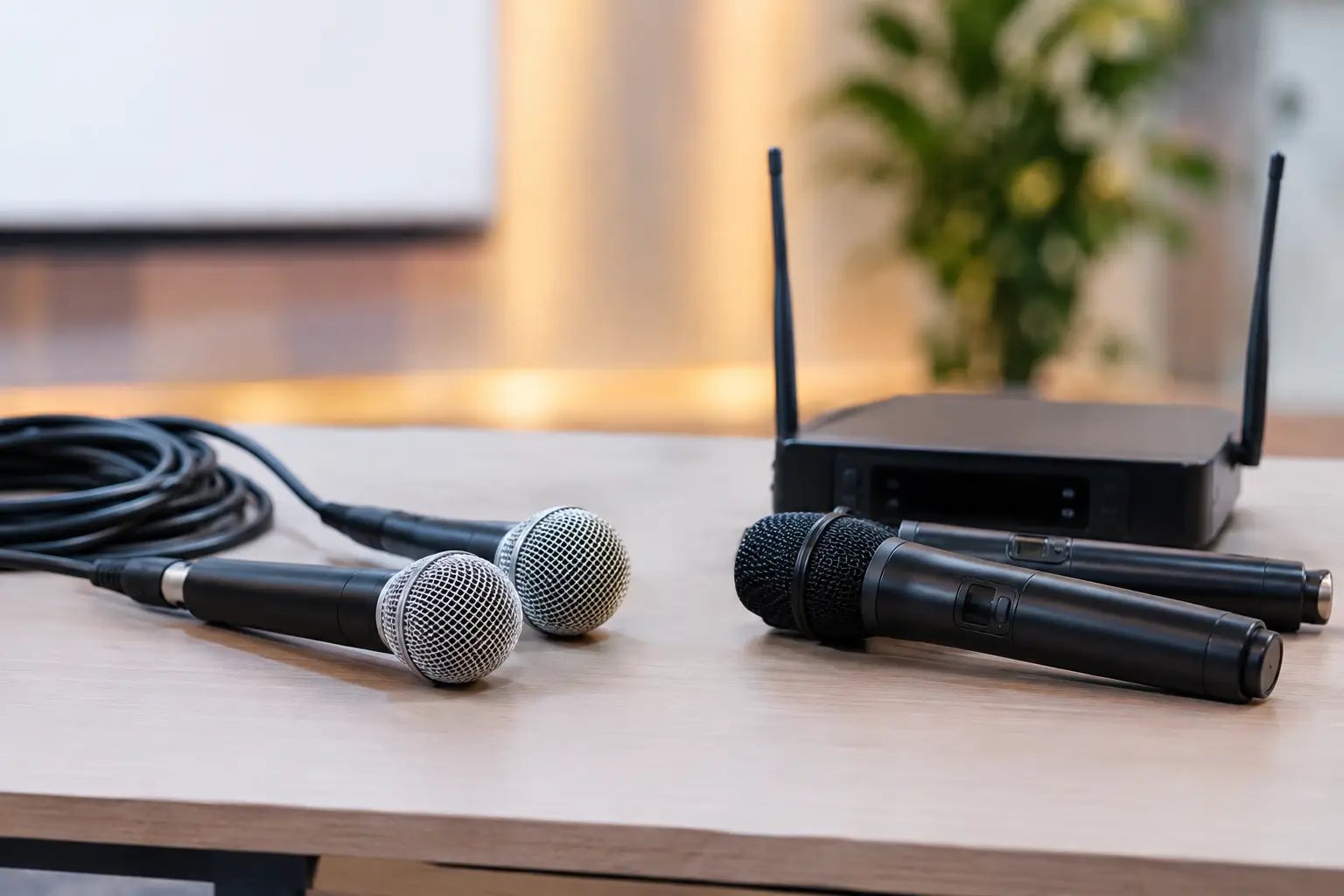
A microphone failure has a habit of becoming the moment everyone remembers. The wedding speeches begin, the charity auction reaches its key bid, or the presenter steps forward - then the sound drops, crackles or simply cannot be heard at the back of the room. Choosing between wired versus wireless event microphones is therefore about far more than convenience. It is about matching the equipment, setup and technical support to the way your event will actually run.
For some events, a wired microphone is the most dependable choice available. For others, wireless is essential to the experience. The right answer depends on the room, the number of speakers, how freely they need to move and how much control is needed over the production.
Wired versus wireless event microphones: the practical difference
A wired microphone connects directly to the sound system with an XLR cable. It does not rely on radio frequency, batteries or a receiver, making it a straightforward and highly reliable option for fixed speaking positions.
A wireless microphone sends audio from a handheld microphone, headset or lapel transmitter to a receiver connected to the PA system. It gives a speaker freedom to move, removes visible cables from key areas and can create a cleaner presentation - but it requires careful frequency coordination, battery management and professional setup.
Neither type is automatically better. A wired microphone often wins on simplicity and consistency. A quality wireless system can transform how a presenter, host or performer uses a space. The decision should be driven by the event, not by the assumption that wireless always looks more premium.
When wired microphones are the stronger choice
Wired microphones are an excellent fit for speeches from a lectern, a fixed panel table, a band performance or a simple announcement point. Once the cable is secured and the microphone is correctly positioned, there is very little to manage during the event.
They also avoid two common wireless concerns: battery changes and radio-frequency interference. Professional wireless systems are designed to perform reliably, but busy venues can contain many competing signals, from other production systems to Wi-Fi and mobile devices. A wired connection removes that particular variable altogether.
For live music, wired microphones remain the standard in many applications. Vocalists, drum kits, guitar amplifiers and acoustic instruments benefit from dependable physical connections, and the cable is rarely a problem when performers have a defined stage area. The same applies to school productions and community performances where several microphones may be needed and budgets need to work hard.
There is a practical cost advantage too. Where a speaker can remain in one place, wired microphones can deliver professional sound without adding unnecessary wireless channels. That budget can then be directed towards better loudspeaker coverage, lighting, staging or an experienced technician.
The limitation is obvious: cables affect movement. A speaker cannot easily walk into the audience, move across a wide stage or circulate between tables. Cable runs must also be planned safely, particularly where guests, children or staff will be walking nearby. Professional cable routing, tape and appropriate matting are not cosmetic details - they are part of a safe, polished event setup.
Where wireless microphones earn their place
Wireless microphones are often the right choice when movement is part of the job. A wedding host introducing key moments, a corporate presenter working a stage, a fitness instructor, an auctioneer or a performer engaging a crowd needs the freedom to move naturally without dragging a cable behind them.
For wedding speeches, a wireless handheld microphone can be particularly useful where speakers are seated around the room and may approach from different directions. It allows the microphone to be passed between speakers without reconfiguring cables or moving a lectern. The important detail is that someone needs to manage that handover calmly and ensure the microphone is held correctly.
Lapel microphones, often called lavalier microphones, are suited to presenters who need their hands free. They are discreet and useful for conferences, ceremonies and stage presentations, especially when combined with a properly fitted bodypack transmitter. However, they require more preparation than a handheld microphone. Clothing movement, jewellery, hair and placement can all affect sound quality, so fitting should never be rushed minutes before the audience arrives.
Headset microphones are often a better option than lapels for high-energy presenters and performers. Because the capsule stays close to the mouth, it can provide more consistent volume as the wearer moves. They are widely used for fitness, theatre, awards hosting and interactive presentations where clear speech matters more than an invisible microphone.
Sound quality is only one part of the decision
A wired microphone does not inherently sound better than a wireless microphone. With professional equipment, correct gain settings and an appropriate microphone capsule, both can deliver clear, natural speech and strong vocal performance.
What audiences notice is consistency. They notice whether every word is intelligible, whether the volume changes as a speaker turns their head and whether feedback interrupts the room. Those results come from the complete system: microphone selection, loudspeaker placement, mixer settings, room acoustics and the person operating the sound.
A good handheld microphone is usually the most forgiving option for inexperienced speakers. It can be passed around quickly, gives the operator clear control and works well for speeches, questions and audience participation. The speaker should hold it close to their mouth, rather than at chest level, for the best result.
Lapel microphones look discreet but demand more attention. They can be ideal for a single presenter, yet they are more susceptible to rustle and changes in level when someone turns away. For a high-stakes keynote or ceremony, the sensible approach is often to have a handheld microphone ready as a backup.
Reliability depends on preparation
The phrase “wireless reliability” can sound contradictory, but professionally managed wireless systems are used every day in theatres, conferences, broadcast environments and major live events. The distinction is between properly coordinated equipment and a microphone simply switched on in a crowded room.
A professional setup begins with suitable licensed radio frequencies, a scan of the local environment where required, compatible receivers and fully checked batteries. Each microphone should be labelled, tested and assigned to the right speaker before doors open. The receiver antennas need sensible positioning, rather than being hidden behind equipment or enclosed in a metal rack without consideration.
For larger events, frequency planning becomes especially important. Multiple wireless channels need to work together without interfering with one another. This is one reason a production partner will ask how many microphones are required, where the event is taking place and whether other suppliers are bringing radio equipment.
Battery policy matters as well. Rechargeable systems can be excellent when managed correctly, while high-quality disposable batteries provide predictable performance for long sessions. Either way, a professional team does not start a key event on uncertain batteries. Spare microphones, spare batteries and a planned backup route are part of complete peace of mind.
Choose the format around the people using it
The most useful question is not “wired or wireless?” It is “who needs to speak, where will they stand, and what happens if the schedule changes?” A wedding may need one wireless handheld microphone for speeches, with a wired microphone available for the DJ or master of ceremonies. A conference may need a headset for the main presenter, a lectern microphone for formal addresses and handhelds for audience questions.
For a panel discussion, individual wired microphones can be a tidy, reliable option if everyone remains seated. If panellists will stand, swap positions or work a larger stage, wireless handhelds may be more practical. For school productions, headset microphones can give young performers the freedom to move, but they need careful fitting and disciplined handling backstage.
Room size should influence the choice too. In a small private room, a single wired microphone and compact PA may be entirely sufficient. In a large hotel suite, marquee, sports hall or outdoor setting, a wireless system can help speakers stay connected to the audience while moving across a wider performance area. The PA system still needs to be designed for even coverage, not simply turned up louder at the front.
Plan the microphone system with the wider production
Microphones should never be hired in isolation from the rest of the event sound. The available mixer channels, speaker positions, stage layout, video playback, music, lighting and running order all affect the final setup.
At The Grind Events Hire, this is where hands-on event production support makes a practical difference. Professionally maintained systems from recognised brands, PAT-tested equipment and experienced technical planning help prevent avoidable issues before guests arrive. For corporate teams and venues, documentation, insurance and dependable onsite operation can be just as valuable as the microphone itself.
Ask for a microphone plan that reflects the real running order. Identify every person who will speak, whether they need to move, who is responsible for passing microphones, and where backups will sit. If a best man decides to speak from the middle of the room or a presenter adds audience questions on the day, the production should be ready to adapt.
The best microphone choice is the one your guests never have to think about: clear speech, confident presenters and no distraction from the moment they came to share.