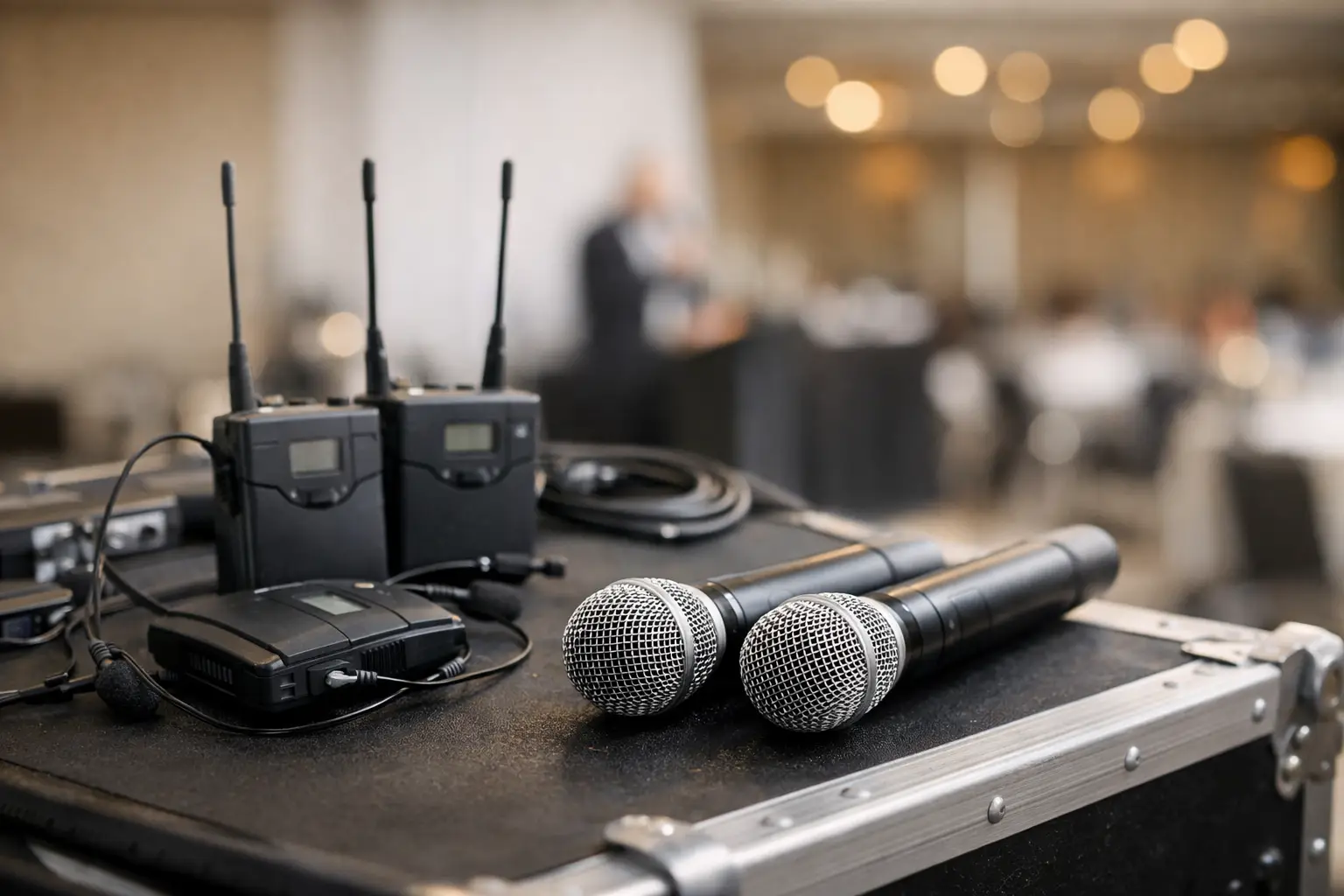
A microphone failure is rarely a small problem. If the best man cannot be heard, a presenter is tied to one spot, or a school production loses dialogue halfway through a scene, the whole room feels it. Professional wireless microphone hire for events gives speakers, performers and hosts the freedom to move while keeping every important word clear, controlled and properly amplified.
The right system is not simply a handheld microphone switched on before guests arrive. It is a planned part of the production, matched to the room, the number of users, the PA system and the way your event will run. From wedding speeches in a busy function suite to a multi-speaker corporate presentation, choosing well protects the guest experience and removes one more technical worry from your list.
Why wireless microphones need proper planning
Wireless systems work by transmitting audio over radio frequencies rather than through a physical cable. That brings obvious benefits: cleaner staging, fewer trip hazards and far more natural movement for the person speaking. It also introduces variables that a wired microphone does not have.
The venue’s construction, local radio activity, the position of the receiver, the distance between transmitter and aerials, and the number of systems operating at once can all affect performance. A reliable setup starts with frequency coordination, sensible receiver placement and equipment that is maintained to professional standards.
This matters most when several microphones are live together. A conference panel may need four handhelds and a headset for the host. A school show might require a larger number of bodypack systems operating across a stage. In these situations, choosing frequencies at random is not a professional approach. The systems need to work together without interference, with spare capacity and a technician who understands what to do if the plan changes.
Choosing wireless microphone hire for events
The first question is not usually, “Which microphone is best?” It is, “Who needs to be heard, and how will they use it?” The answer determines the most suitable microphone type.
Handheld microphones for speeches and audience interaction
Wireless handheld microphones are the familiar choice for speeches, awards, Q&As and vocal performances. They are straightforward to pass between speakers and give the user a clear visual cue: hold the microphone close, speak across the grille and wait for the sound engineer’s signal.
For weddings and private parties, one quality handheld can cover most speeches when it is passed carefully between speakers. Corporate events may benefit from separate microphones for the host and each panel position, avoiding awkward handovers and keeping the programme moving. A professional Sennheiser system, correctly set up with an appropriate PA, gives a confident, polished result without putting technical demands on your guests.
Lapel microphones for hands-free presentations
A lapel, or lavalier, microphone clips discreetly to clothing and connects to a small bodypack transmitter. It is particularly useful for presenters, celebrants, lecturers and hosts who need both hands free for notes, demonstrations or natural gestures.
The trade-off is that placement matters. Clothing can rub against the capsule, necklaces can create noise, and a poorly positioned lapel can sound distant. A trained technician will place and test the microphone before doors open, then explain how to wear the transmitter comfortably and securely.
Headset microphones for active presenters and performers
Headset microphones keep the capsule consistently close to the mouth, making them a strong choice for fitness instructors, performers, energetic hosts and speakers moving across a wide stage. They can provide more stable sound than a lapel mic when someone turns their head frequently or speaks at different volumes.
They are more visible than a lapel, so they may not suit every formal setting. For a product launch, workshop or stage production, however, the additional clarity often outweighs the visual consideration.
Match the microphone system to the room
A quality microphone cannot compensate for poor system design. In a compact wedding venue, the microphone, loudspeakers and guests may all be close together. That requires careful speaker positioning to achieve clear speech without feedback. In a larger hall, coverage, delayed loudspeakers and the presenter’s movement become more significant.
Feedback is the familiar whistling or ringing sound caused when a microphone picks up amplified sound from the speaker and sends it around the system again. It is not solved by turning every control up or down at random. Correct microphone choice, microphone technique, loudspeaker placement and professional tuning are what keep speech intelligible at a comfortable volume.
Venue acoustics also make a difference. High ceilings, hard walls and glass surfaces can create reflections that make speech less clear. A competent production partner will assess the space and specify a suitable sound system, whether that means a focused compact PA for an intimate room or premium KV2 Audio reinforcement for a larger audience.
Plan for the event, not just the equipment list
The best technical plans follow the running order. A microphone requirement that looks simple on paper can become complicated once timings, entrances and handovers are considered.
Ask where every speaker will stand, whether they will move, who is introducing them, and when music or video will play. Consider whether guests will ask questions from the floor, whether there is a live band, and whether a recording or livestream requires a separate audio feed. These details help prevent last-minute changes that put pressure on the event team.
For larger events, a short production schedule is invaluable. It should show when equipment can be loaded in, when sound checks take place, when presenters arrive and who has authority to make changes on the day. Schools, charities and corporate teams often have multiple contributors, so clear communication is just as valuable as the equipment itself.
Battery management belongs in that plan too. Professional wireless microphone hire should include fresh, tested batteries or fully charged rechargeable packs, along with suitable spares. The receiver should be monitored throughout critical parts of the event, not left unattended after a quick sound check.
When dry hire is enough, and when support is worth it
Dry hire can be a sensible option for an experienced venue team or an organiser with a capable sound engineer on site. If the system is small, the room is familiar and there is time to test it properly, a pre-configured wireless package may be all that is required.
Managed delivery, setup and technical support are usually the stronger option where timings are tight or the event carries reputational pressure. This includes weddings, awards evenings, conferences, public-facing charity events and productions with several wireless channels. The cost is higher than collecting a microphone case, but it buys preparation, professional installation and someone accountable for the result.
At The Grind Events Hire, this can mean supplying wireless microphones as part of a complete sound and production package rather than treating them as an isolated add-on. The microphone, PA, lighting, playback and presentation equipment are then designed to work together, with insured and PAT-tested equipment and practical support from planning to pack-down.
Questions to settle before booking
Before confirming your hire, establish how many microphones will be used at the same time, not merely across the whole event. Confirm the venue address and room layout, the expected audience size, and whether there are other suppliers using wireless equipment. If a venue already has an installed system, check whether you are using its loudspeakers or bringing a complete PA.
It is also worth clarifying whether you need a lectern microphone, a microphone stand, a headset, playback for walk-on music, or audio for a video call or recording. These are small details until the moment they are missing.
For ceremonies and speeches, build in a calm sound check before guests are seated. For corporate presenters, ask them to practise wearing the microphone and using their clicker at the same time. A few minutes of preparation prevents fumbling, noisy clothing and uncertainty when the room is full.
The goal is simple: your guests should notice the message, the performance or the celebration, not the technology behind it. With the right wireless microphone system and experienced technical support, the people at the heart of your event can speak naturally, move confidently and be heard exactly as they should be.