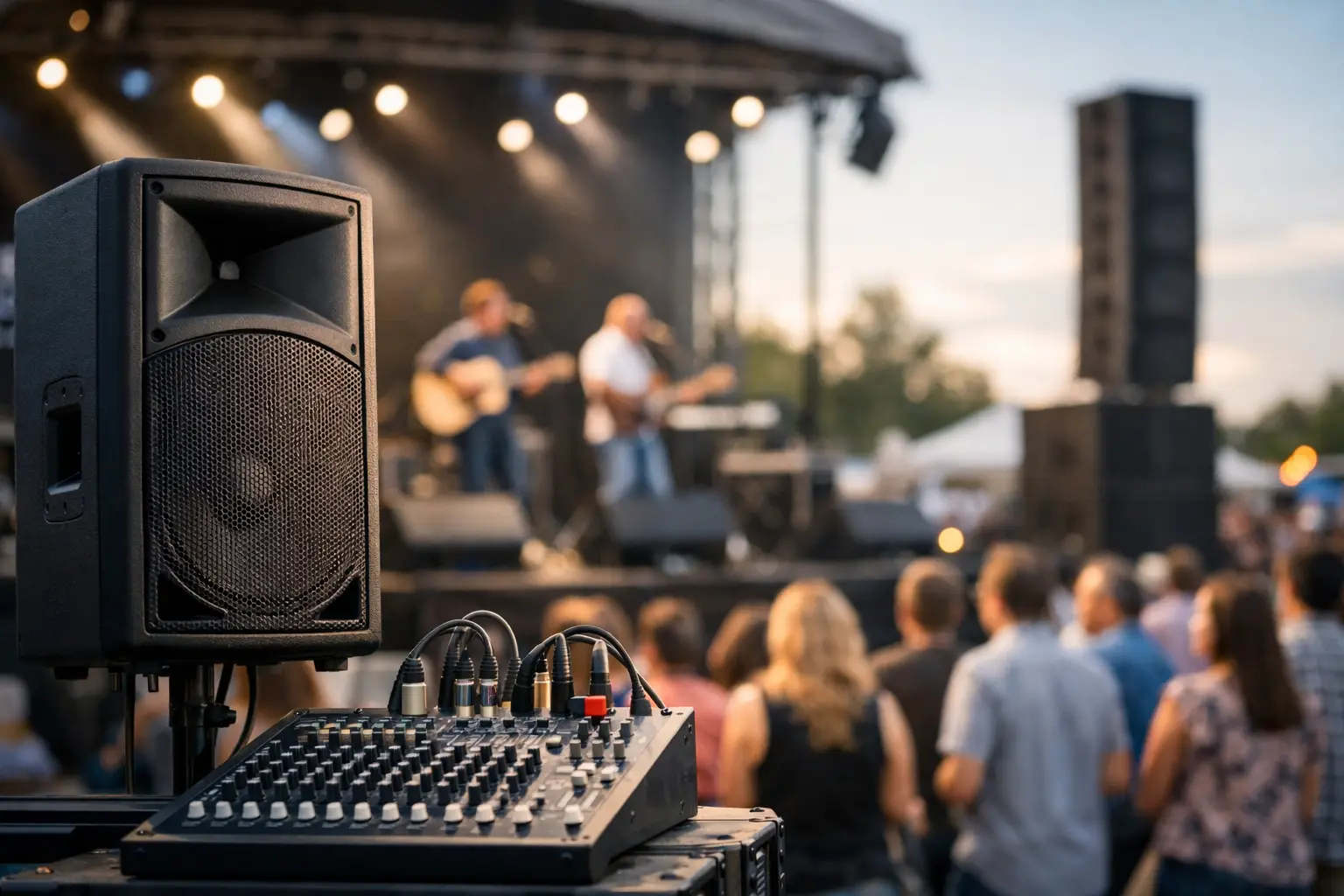
A packed dancefloor is not the moment to discover that the speakers are running out of headroom. Equally, a small wedding breakfast should not feel as though it has been set inside a nightclub. Good PA system sizing is about matching the sound system to the room, audience and purpose of the event, so every guest hears what matters at a comfortable level.
For an event organiser, the question is rarely just, “How loud will it go?” The better question is, “Will it provide even, clear sound for everyone without overwhelming the room?” That distinction is where professional planning makes a visible difference.
What PA system sizing really means
PA system sizing is the process of selecting the right combination of loudspeakers, subwoofers, amplification, microphones and control equipment for a particular event. It considers coverage, clarity, sound pressure level, programme material and the acoustic behaviour of the venue.
A system can have plenty of power on paper and still be wrong for the job. Two large speakers at the front of a long, narrow room may leave guests near the stage uncomfortable while people at the back struggle to hear speeches. A compact system may suit background music perfectly but lack the low-frequency extension and reserve needed for a DJ set at a 250-guest party.
The goal is controlled coverage. Guests should hear clear speech, music with appropriate impact and a consistent experience wherever they are seated or standing. The equipment should also have enough capacity in reserve that it is not being pushed to its limits all evening.
Start with the event, not the speaker wattage
Wattage is one of the least useful figures for most event clients. It does not tell you how efficiently a loudspeaker converts power into sound, how far it will throw, how well it will control dispersion or whether it is suitable for speech. Professional PA system sizing begins with the event brief.
A civil ceremony, for example, may need discreet speakers, a reliable wireless microphone and gentle coverage for readings and music. The priority is speech intelligibility, a tidy setup and equipment that complements the setting. A wedding reception in the same venue can require a very different system later in the day, particularly if there is a live band or DJ and a full dancefloor.
For corporate events, clear voice reinforcement is often the main requirement. Delegates need to hear presenters without strain, including those at the rear and to either side of the room. Add video playback, walk-on music or panel microphones and the system design needs to account for several sources and smooth level control.
School productions and charity shows introduce another level of complexity. Multiple performers, backing tracks, handheld or headset microphones, stage monitors and frequent cues all place different demands on the PA. This is not simply a case of adding more speakers. It needs a properly managed audio system and an experienced operator where appropriate.
Audience size is useful, but venue shape matters more
Guest numbers provide a starting point, but they cannot size a PA on their own. One hundred people seated for dinner in a carpeted function suite need far less output than one hundred people standing in a hard-surfaced village hall for a party.
Ceiling height, room width, surface materials, window areas and the position of the stage all affect the result. Hard walls and glass create reflections that can make speech muddy. Low ceilings can concentrate energy and make a system feel aggressive. An L-shaped room may need delayed fill speakers so the second area receives sound at the correct time, rather than simply more volume from the front.
Outdoor events require separate consideration. There are no walls to reinforce the sound, and wind can noticeably affect high frequencies. A PA that feels substantial indoors may sound thin and underpowered in an open field. Neighbouring properties, local restrictions, generator provision and weather protection must also be considered before equipment is specified.
A site visit is valuable for larger or more involved events. Where that is not practical, accurate room dimensions, photos, a floorplan and an honest description of the event format give a production team enough information to make a dependable recommendation.
Coverage first, then level
The right system distributes sound across the audience rather than firing excessive volume at the first few rows. Loudspeakers have a coverage pattern, commonly expressed as horizontal and vertical angles. Correct placement uses that pattern to cover listeners while reducing spill onto walls, ceilings and empty areas.
For a small private party, a pair of quality full-range speakers and appropriate low-frequency support may be all that is needed. For a wider room or a larger guest count, the answer may be additional speakers positioned and time-aligned to maintain consistency. In a conference room, compact front-of-room speakers may deliver clearer results than a larger dance-event system.
Subwoofers deserve the same care. They add the weight and impact that makes dance music feel exciting, but too much low end can overwhelm conversation, cause vibration issues and make a room feel tiring. Their quantity and placement should suit the music, the room and any venue constraints. A premium system from a recognised manufacturer is useful, but only when it is deployed properly.
Leave headroom for the moments that matter
Music and speech do not behave in the same way. A spoken presentation can be clear at a modest level, while a DJ set or live band has peaks that require considerably more system capacity. Headroom is the reserve available above the normal operating level, allowing the system to reproduce those peaks cleanly without distortion or limiting.
This matters because a PA driven too hard often sounds harsh before it sounds loud enough. Vocal clarity falls away, bass becomes less controlled and the chance of equipment protection circuits engaging increases. Guests may describe the result as “too loud”, when the real issue is poor quality at the level being asked of the system.
Sizing with headroom also provides operational confidence. If the room fills later than expected, the band is more energetic than planned or the audience responds to the dancefloor, the system has the capability to rise to the occasion without compromising sound quality.
Do not overlook microphones and mixing
A well-sized PA cannot compensate for the wrong microphone or poor gain control. For speeches, the presenter should have a microphone that suits the format, whether that is a handheld wireless model for confidence and flexibility, a lectern microphone for a formal address or a discreet headset for an active presenter.
The number of microphones matters too. A top table with several speakers needs a plan for handovers. A panel discussion needs enough channels for each participant. A school production may require careful frequency coordination so multiple wireless systems operate reliably together.
The mixing position is equally important. For an event involving live performance, an engineer needs to hear a representative version of what the audience hears. Setting sound from behind a wall, side-stage or in an empty room leads to poor decisions once guests arrive. Professional audio is not just about equipment on stands; it is about active control throughout the event.
Common PA sizing mistakes
The most frequent mistake is choosing on price or claimed wattage alone. A cheaper package may appear comparable, yet offer limited coverage, tired equipment, no backup plan and no technical support if a problem arises. Another is trying to use one system for two conflicting requirements, such as discreet dinner music and a high-energy late-night party, without allowing for a planned changeover or suitable configuration.
Venue assumptions can also cause issues. “It only holds 150 people” does not reveal whether those guests are seated, whether the room opens into a second area, whether there is a stage, or whether a noisy bar is located at the rear. Finally, avoid relying on the venue’s existing system without checking its condition, connections, microphone provision and suitability for the programme.
Choosing the right level of support
Dry hire can work well for a straightforward gathering when someone competent is available to set up and operate the equipment. For weddings, corporate presentations, productions and events where the experience matters, managed delivery and technical support offer greater peace of mind.
The Grind Events Hire plans systems around the real demands of the event, using professionally maintained equipment from trusted production brands alongside insured, PAT-tested equipment and experienced technical support. That means the recommendation can account for the audience, venue layout, programme, access times and the finish expected by guests.
When requesting a quote, provide the date, venue, guest numbers, room dimensions, running order and whether you need speeches, DJs, live performers, video or multiple event areas. These details turn a rough equipment request into a system specification that genuinely fits.
The best PA is not necessarily the biggest one in the room. It is the one that lets every toast land clearly, every presenter sound confident and every dancefloor feel exactly as energetic as it should.