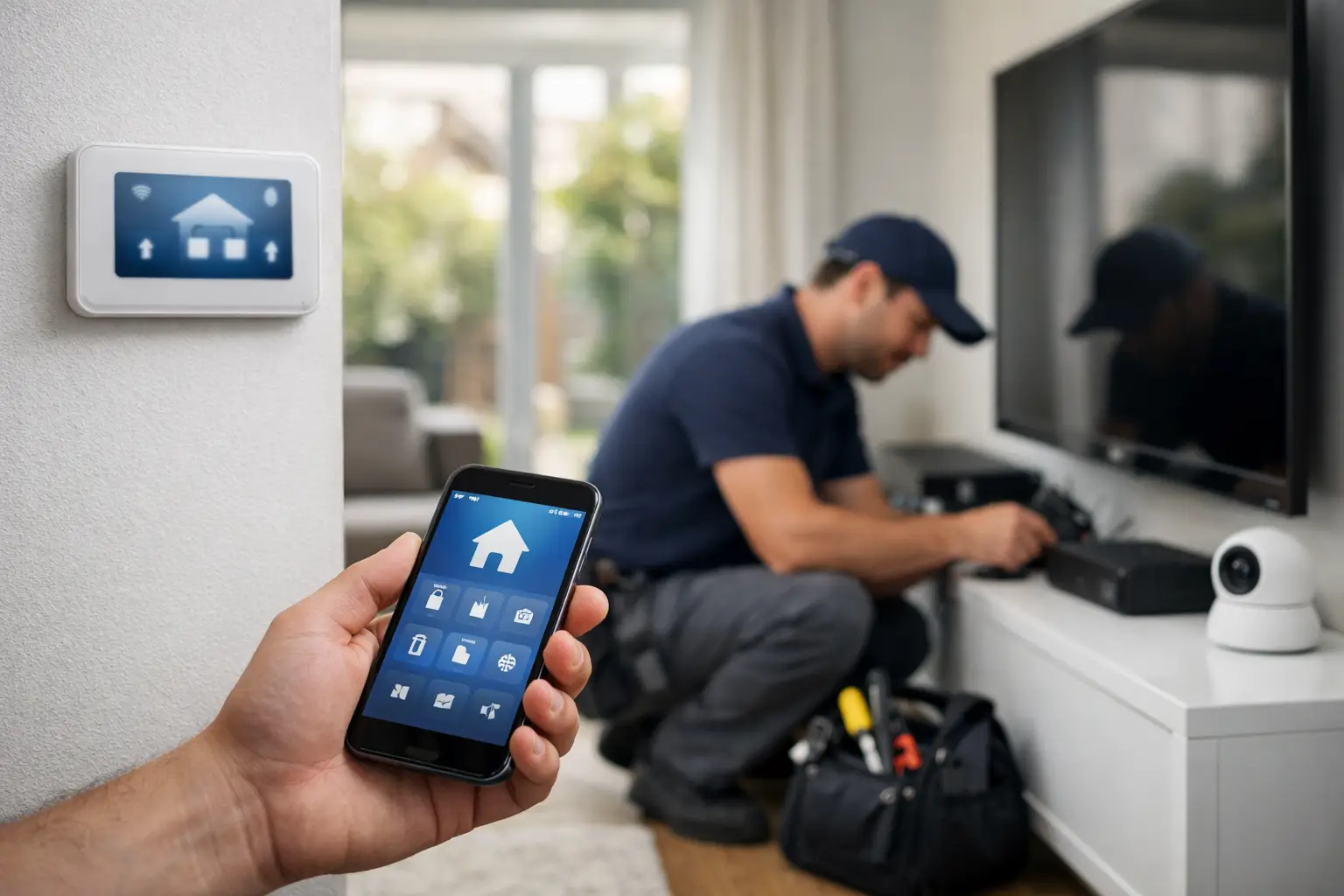
A smart home should remove small frustrations, not replace them with a collection of apps nobody wants to open. The best smart home installation in Scunthorpe makes arriving home, settling in for the evening, checking the door or controlling the heating feel straightforward. It should also work reliably when the weather is poor, the house is busy and the person using it is not especially interested in technology.
That is where proper planning makes the difference. Smart devices are easy to buy, but a well-considered installation is about how the whole property works together: the Wi-Fi, power supply, room layout, family routines and the controls people will actually use. A few good decisions before equipment is fitted can prevent years of unreliable connections, confusing automations and unnecessary replacements.
Start with the everyday problem, not the product
It is tempting to begin with a voice assistant, a video doorbell or colour-changing bulbs. Those products can be useful, but they should be the answer to a clear requirement. Think instead about the moments in your day that could work better.
Perhaps you want the driveway and entrance lit safely when you return late. Perhaps you are often away and want to know who is at the door, or you would like heating that reflects when the home is occupied rather than following a fixed timetable. For some households, multi-room audio and simple TV control are the priority. For others, it is security, energy use or accessible controls for a family member.
A professional specification starts there. It identifies the rooms, routines and users that matter, then selects technology that supports them. This keeps the project focused and avoids spending on impressive features that are rarely used after the first week.
What a smart home installation in Scunthorpe should include
There is no single package that suits every house. A compact terrace, a new-build family home and a larger rural property will have different cabling, Wi-Fi coverage and security requirements. Even so, most successful systems are built around a few connected foundations.
Reliable network coverage
The network is the part nobody sees until it fails. Smart speakers, cameras, heating controls, televisions and lighting all depend on a stable connection. If parts of the property already have weak signal, adding more smart devices will not solve the issue.
A proper survey considers broadband entry point, wall construction, room layout and outdoor areas. In some homes, a well-positioned mesh system is sufficient. In others, wired access points are the more dependable choice, particularly where security cameras, garden offices or multiple streaming devices are involved. Wired connections are not always essential, but they remain preferable for fixed, high-demand equipment where practical.
Controls that make sense without a mobile phone
Mobile phone control is useful when you are away, but it should not be the only way to operate your home. Wall switches, remotes, physical buttons and carefully chosen voice control all have a place. Guests, children and visiting relatives should still be able to turn on a light without needing an account or a tutorial.
Good design also avoids over-automation. A hallway light that responds at night can be genuinely helpful. A living room that unexpectedly changes scene because a sensor has made the wrong assumption soon becomes irritating. Automations need clear triggers, sensible timings and an easy manual override.
Lighting, heating and security with a purpose
Smart lighting works particularly well where it improves comfort, safety or atmosphere. Entrance lighting, kitchen task lighting, stairways and outdoor areas are often stronger starting points than fitting every bulb in the property. Dimmable scenes can also make a real difference in media rooms and open-plan living spaces, provided the fittings and lamps are compatible.
Heating control can reduce wasted energy, but the savings depend on the property and how it is used. Zoning may be worthwhile in a large home or where rooms have very different patterns of occupancy. In a smaller, consistently used property, a simpler smart thermostat may deliver most of the benefit without additional complexity.
Security should be selected with equal care. A video doorbell, smart lock, alarm integration or external camera may be appropriate, but cameras need thoughtful positioning, adequate lighting and a reliable connection. Privacy matters too. Avoid pointing cameras towards neighbours' private spaces, and make sure household members understand who can access recordings and alerts.
Choose an ecosystem before buying individual devices
Compatibility is one of the most common weak points in DIY smart homes. Devices may each work perfectly in their own app but fail to communicate with one another in a useful way. Before purchasing, decide which ecosystem will sit at the centre of the installation and whether it supports the equipment you want now and later.
The right choice depends on the household. Some people want straightforward voice control; others prefer a dedicated control platform, local control that remains functional during an internet outage, or a system that can be operated from wall-mounted panels. There is no universal winner.
Ask practical questions. Can the lights, heating and security equipment be controlled in one place? What still works if broadband drops out? Is there a subscription charge for recording or remote access? Can a new owner understand the system if you sell the property? These details matter more than a long feature list.
It is also wise to favour recognised manufacturers with ongoing support rather than products that rely on a little-known app. A lower initial price can be poor value if a service disappears, software is no longer updated or replacement parts cannot be obtained.
When professional fitting earns its place
Some smart devices are designed for simple self-installation. A plug-in smart speaker or portable sensor can be a sensible way to test whether a feature suits your home. The balance changes when the project involves mains wiring, integrated audio, ceiling speakers, security equipment, network infrastructure or several systems that need to operate together.
Professional installation brings three valuable things: safe fitting, correct configuration and accountability. Electrical work must be undertaken appropriately, while network equipment needs placement and set-up that reflects the building rather than a generic online guide. The final handover should include clear instructions, labelled equipment where relevant and support for the people who will use the system every day.
This is also where experience in technical production transfers well to residential work. Signal flow, speaker placement, control systems and dependable power are not afterthoughts in professional AV. The same standards help create a home system that sounds good, looks tidy and behaves predictably. The Grind Events Hire applies that practical, production-led mindset to technology installations as well as events.
Plan for change, not just the first installation
A smart home is not a one-off purchase. Broadband providers change, software updates arrive, family routines shift and you may add an extension, garden room or electric vehicle charger later. Leave room in the design for those changes.
Where possible, use accessible routes for cables and avoid hiding essential network equipment in cramped cupboards with no ventilation. Keep a record of device names, passwords, network details and any automation rules. If a control platform uses cloud accounts, make sure the property owner holds the main account rather than an installer or former occupant.
It is worth agreeing a realistic budget in stages. Start with the infrastructure that supports everything else, then add room-by-room improvements as priorities become clearer. Spending first on reliable Wi-Fi, power provision and compatible controls is often more valuable than filling the house with devices immediately.
A better result starts with a proper conversation
The right installation should feel almost invisible once it is complete. Lights respond when needed, sound is clear where you want it, heating is easier to manage and security gives useful reassurance without constant false alerts. More technology is not automatically better. The aim is a home that remains simple, dependable and comfortable for the people living in it.
Before committing to equipment, take time to describe how you use each space and which everyday irritations you want to remove. That conversation is the best foundation for a smart home that continues to earn its place long after the novelty has worn off.